


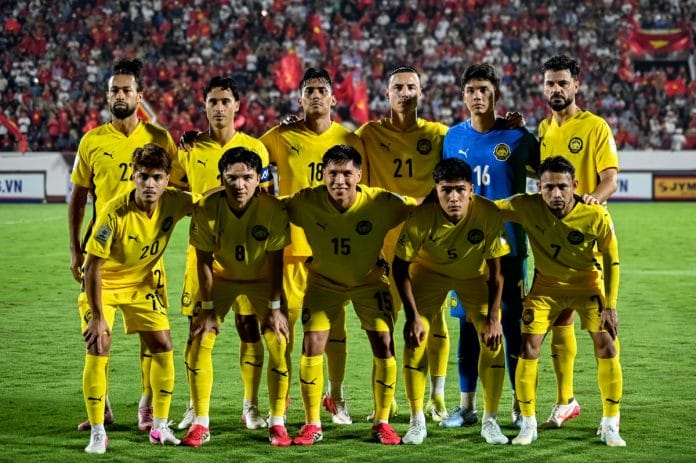
By the time the final whistle blew in Kuala Lumpur and Harimau Malaya defeated Taiwan 3-1 in their last Group D fixture of the 2026 FIFA World Cup qualifiers, the scoreboard told only half the story.
Malaysia had won the match. Yet the campaign was over.
Third place behind Oman and Kyrgyzstan meant another World Cup dream extinguished before it had truly begun. Once again, Malaysians were left clinging to nostalgia rather than progress — replaying memories of Mokhtar Dahari thundering past defenders, Soh Chin Aun marshalling the backline with authority, Hassan Sani dazzling crowds, and R. Arumugam standing like a fortress between the posts.
There was a time when Malaysia belonged in Asian football conversations. Japan did not yet dominate the continent. South Korea had not become a global footballing brand. Malaysia was respected, feared even, in regional football.
Today, Japan and South Korea are World Cup regulars. Their players star in England, Germany, Spain and Italy. Meanwhile, Malaysia struggles to establish itself even within Southeast Asia. Vietnam, Thailand and Indonesia have surged ahead in different ways — some through academy reform, others through aggressive professionalisation and youth investment.
Malaysia, by contrast, has spent years searching for shortcuts.
And perhaps that is the core problem.
The country’s failure to qualify for the World Cup is not the result of one bad generation, one poor coach, or one unlucky campaign. It is the consequence of decades of fragmented planning, weak governance, inconsistent development, political interference and an obsession with immediate results over sustainable growth.
The harshest truth is this: Malaysian football has been trying to harvest without properly planting.
A Crisis Years in the Making
The warning signs have been visible for years.
In 2018, Malaysia dropped to 178th in the FIFA rankings — the lowest position in the nation’s history. Instead of triggering deep structural reform, the decline accelerated a dangerous trend: the pursuit of instant competitiveness through naturalisation and heritage recruitment.
At first, it appeared understandable. Countries across the world use heritage players. Morocco, Algeria and even Indonesia have tapped diaspora talent successfully. But in Malaysia, naturalisation increasingly evolved from supplementary strategy into dependency.
But what happened next?
The scandal that erupted in 2025 — involving falsified documentation linked to seven naturalised players — did not merely damage results. It shattered credibility. FIFA suspended the players, fined FAM 350,000 Swiss francs, annulled international results and effectively humiliated Malaysian football on the global stage.
What began as an attempt to close the gap with Asia’s stronger nations instead exposed how deep the rot had become.
Many have said “The whole world knows that Malaysian football is a cheat.”
Those words stung because they struck at something deeper than rankings or results. They questioned identity itself.
What does Malaysian football actually stand for today?
Grassroots: The Foundation That Never Fully Formed
Every successful football nation shares one common trait: a functioning grassroots ecosystem.
Japan built one after failing to qualify for the 1994 World Cup. The Japanese Football Association responded not with panic, but with patience. They introduced the now-famous “100-Year Vision,” investing systematically in youth coaching, academies, school competitions and professional league structures.
South Korea modernised its coaching and university pipeline. Vietnam industrialised coach education. Thailand standardised a national football curriculum.
Malaysia talked.
That distinction matters.
FAM technical director Scott O’Donell’s assessment following Malaysia Under-23’s disastrous 2024 AFC U-23 Asian Cup campaign was revealing. Most players, he noted, barely featured for their clubs domestically. Match fitness was poor. Competitive minutes were insufficient. The development structure itself was failing young players.
The National Football Development Programme (NFDP), once marketed as a transformational initiative, gradually became another bureaucratic layer lacking urgency, accountability and measurable outcomes.
The consequences are visible everywhere.
Talented children in smaller towns still depend largely on luck to be discovered. School football remains inconsistent in quality. Certified coaching standards vary wildly. Facilities outside major urban centres remain inadequate. Parents continue to prioritise academics because football pathways appear unstable and financially uncertain.
In elite football nations, development systems reduce uncertainty. In Malaysia, they often amplify it.
The result is a shrinking pool of technically elite local players capable of competing internationally.
Former national coach and the late B. Sathianathan highlighted this issue years ago when he noted how quickly quality drops when experienced players leave the squad.
That should terrify Malaysian football administrators.
A strong football nation is not measured by its first eleven. It is measured by the depth of its pipeline.
The Governance Problem
Football problems are often tactical on the surface but political underneath.
Malaysia’s football governance crisis did not emerge overnight. It developed slowly through years of reactive leadership, inconsistent policy and insufficient professional expertise.
Football today is not merely sport. It is economics, infrastructure, talent management, entertainment, branding and long-term strategic planning. Yet too often, Malaysian football continues to operate with outdated governance.
The fallout from the heritage player scandal exposed how fragile the administrative structure truly was. Sponsors lost confidence. Public trust eroded further. Internal accountability mechanisms appeared weak. Crisis management became reactive rather than proactive.
Perhaps most damaging was the perception that no one genuinely seemed in control.
This matters because football ecosystems depend heavily on trust.
Private investors will not commit long-term funding to unstable structures. Young players will hesitate to dedicate their lives to uncertain pathways. Fans eventually grow exhausted by repeated disappointment and controversy.
Integrity, therefore, is not just a moral issue. It is an economic one.
Without transparent governance, football cannot sustainably grow.
Why Japan and South Korea Left Malaysia Behind
The comparisons with Japan and South Korea are painful precisely because Malaysia once believed it belonged in the same conversation.
But while Malaysia stagnated, those nations evolved relentlessly.
Japan transformed football into a national development project. The J.League became more than a domestic competition; it became a cultural institution tied deeply to schools, communities and youth development. Clubs invested heavily in academies, sports science and long-term coaching philosophies.
South Korea embedded discipline and tactical education into every developmental level. Their players now transition seamlessly into Europe because their football education begins early and remains consistent.
Malaysia, meanwhile, still struggles to establish alignment between schools, academies, clubs, leagues and the national team.
Former Germany and Real Madrid star Mesut Özil perhaps summarised the solution most simply during the Malaysia-Türkiye Leadership Summit in 2026:
“What’s important in football is making good investments in academies and young people.”
It sounds obvious. Yet Malaysia continues searching for alternatives to this basic truth.
There are none.
Football Is Also an Industry
One uncomfortable reality must also be acknowledged: Malaysian football has not fully evolved into a sustainable industry.
Malaysian football remains heavily dependent on government funding, with private investment relatively weak compared to regional and global football economies.
That dependence creates vulnerability.
When political priorities shift or budgets tighten, football suffers immediately. Sustainable football nations diversify income streams through sponsorships, broadcasting, merchandising, fan engagement and commercial partnerships.
Malaysia still has enormous untapped potential in this regard.
The fan passion exists. Stadium atmospheres during major fixtures prove that. Social media engagement around Harimau Malaya remains powerful. Local football identity still resonates emotionally across generations.
But emotional attachment alone cannot modernise football.
Professionalism must.
That includes stronger club licensing, better financial regulation, smarter commercial strategies and more competent sports business management.
Football administration can no longer function purely as ceremonial leadership. It requires executives who understand data analytics, sports economics, branding and long-term operational planning.
The Real Question
Malaysia’s World Cup dream is still possible.
But only if the country accepts one uncomfortable reality: qualification cannot be manufactured through shortcuts.
Not through forged documents.
Not through political slogans.
Not through endless roundtables producing little action.
World Cup qualification requires something Malaysia has struggled to sustain consistently for decades — patience.
The irony is that Malaysians themselves already understand this principle deeply. Nation-building, business success, education and economic growth all require long-term investment and discipline.
Football is no different.
The reforms required are neither mysterious nor impossible.
Grassroots development must become systematic. Governance must become professional. Coaching education must modernise. Clubs must operate sustainably. Youth pathways must become clearer and fairer.
Most importantly, everyone within the ecosystem must align around one shared vision.
They are built collectively — by coaches, schools, clubs, sponsors, communities, former players and supporters all pulling in the same direction.
Malaysia now stands at a crossroads.
One path leads toward more short-term fixes, recurring scandals and familiar disappointment.
The other demands difficult reform, institutional humility and generational commitment.
Only one of those roads leads to the World Cup.
And perhaps the most important question is no longer whether Malaysia can qualify someday.
It is whether Malaysian football is finally ready to do the hard things required to deserve it.


