


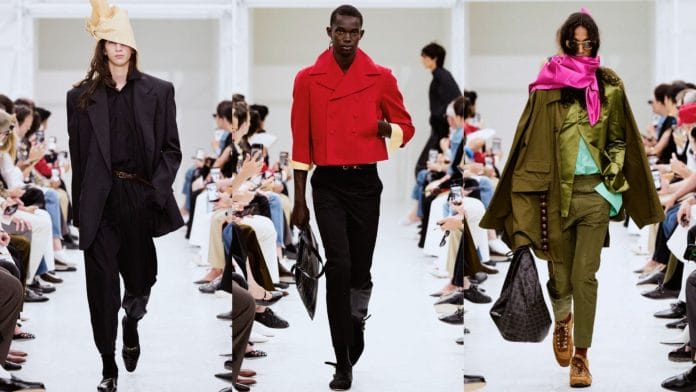
Celine’s first standalone menswear show under Michael Rider didn’t try to impress through spectacle. Presented at the Tennis Club de Paris for Spring Summer 2027, it focused instead on how clothing behaves in real life—how structure holds up, how it shifts, and where it starts to loosen.
At the core of the collection is contrast. Rider works with tailoring that is sharp and controlled, but rarely static. It sets the tone, then immediately gets interrupted. Slim trousers play a central role, acting as the base of many looks, but they’re constantly offset by volume on top—oversized jackets, cocoon-like coats, and soft outer layers that change the proportions entirely. Nothing settles into one fixed shape for long.
That sense of push and pull runs through everything. Capri pants and slim denim appear alongside ballooned trousers and cape-style coats, not as opposing ideas, but as different points on the same spectrum. The same approach shows up in the styling. Familiar pieces are adjusted in small but noticeable ways that change how they’re understood. Sweaters are worn like scarves.
Gloves are no longer just for function—they become part of how the outfit looks overall. Bags are carried in new ways so they feel less like separate items and more like part of the clothing. Nothing is overly complicated, but small styling changes shift how everything is read.
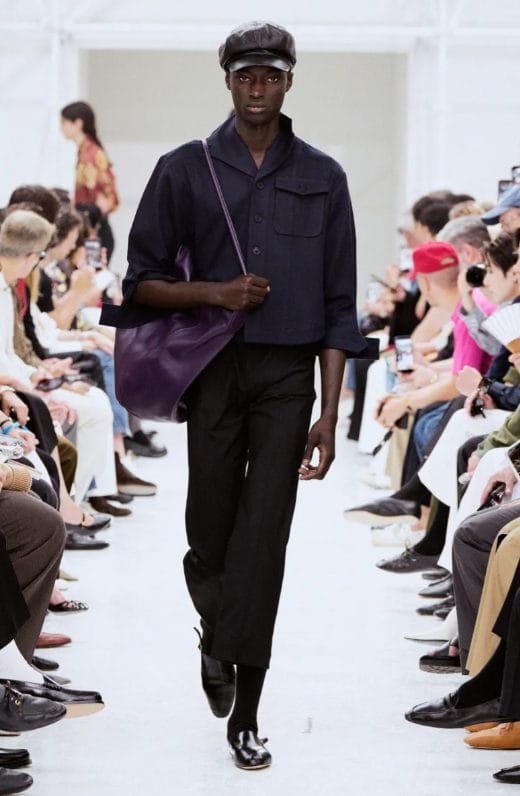
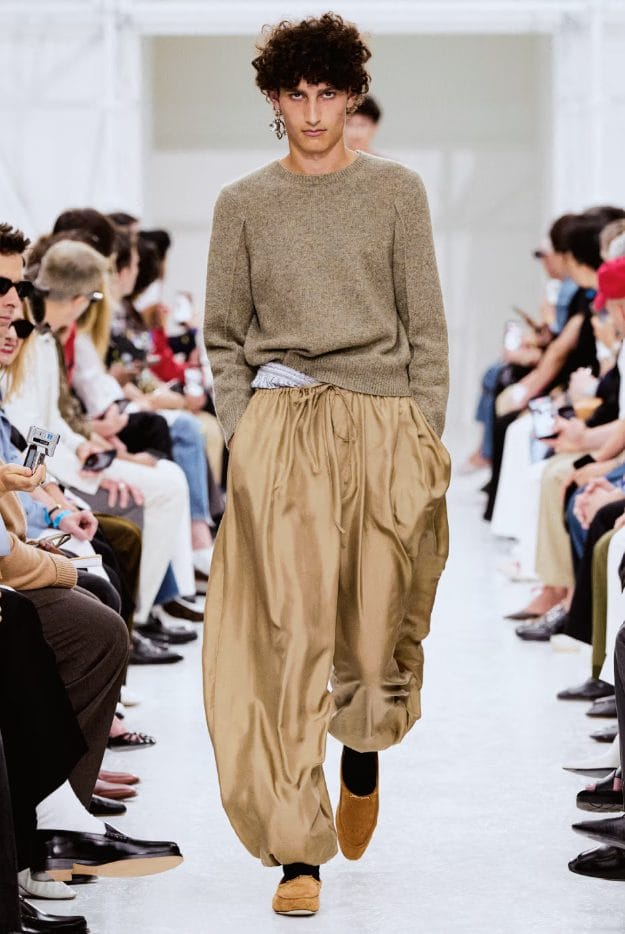
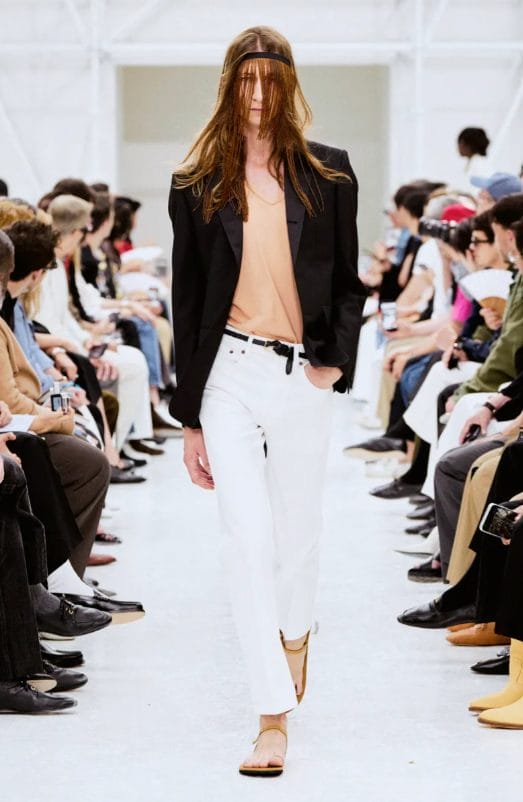
Accessories take this idea further. Fringe is placed so it moves across the body instead of simply hanging down. Belts are worn off to one side or at an angle. Fabric is tied and gathered into shapes that feel improvised, as if the clothes are being adjusted in the moment. It feels experimental, but still controlled and intentional, not messy.
Footwear adds a more practical, everyday feel to the collection. A collaboration with Reebok updates classic-style sneakers with a worn-in look, alongside pointed boots, sandals, and simple flats. The idea is shoes that feel easy to wear in real life, not just designed for the runway. Bags follow the same approach, ranging from soft crescent shapes to large carryalls that are made to be both useful and visually considered.
Colour adds the main contrast to the restraint. Neutrals like black, white, camel, and soft tones form the base, then get interrupted by stronger shades—deep blues, reds, greens, and magenta. Zebra prints and scattered patterns appear in small doses, adding energy without changing the overall tone.
In the end, the collection holds to one clear idea: clothing doesn’t need to choose between opposites. Strength and softness, structure and ease, all exist at the same time—and are allowed to stay unresolved.


