


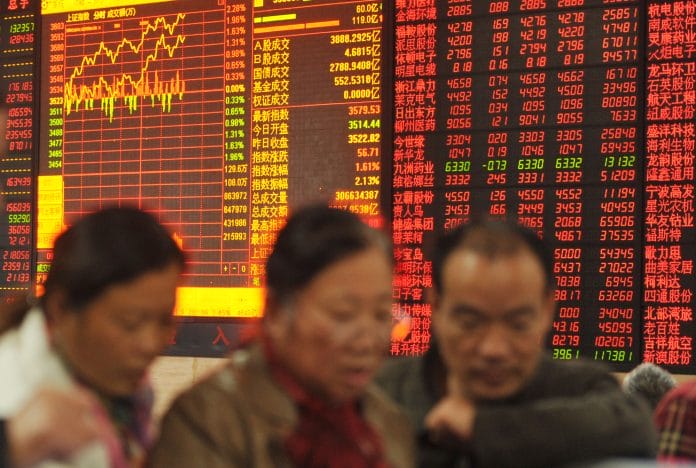
Asian equities slipped on Thursday as investors continued to unwind positions in heavyweight chipmakers following a strong quarterly run, while global markets turned cautious ahead of key US labour data that could shape interest rate expectations.
The pullback extended into the new quarter, with MSCI’s broadest index of Asia-Pacific shares outside Japan falling 0.8%, while Japan’s Nikkei dropped 1.1%, deepening losses from the previous session.
South Korea’s KOSPI led regional declines, sliding 2.7% after already falling 2% on Wednesday. The index had surged 68% in the second quarter, driven largely by artificial intelligence-linked demand for memory chips.
The sharp reversal hit major semiconductor names, with SK Hynix dropping 7.7% and Samsung Electronics falling 6.2% as traders locked in profits after the sector’s strong rally.
Hong Kong’s Hang Seng Index bucked the regional weakness, rising 1.8% in early trade.
The recent volatility comes after an aggressive foreign investor rotation across Asian equities. Investors have been trimming exposure to high-performing AI-driven markets such as South Korea and Taiwan while shifting towards cheaper laggards.
Attention is now focused on US non-farm payrolls data due later in the global session, with markets watching closely for signals on the Federal Reserve’s interest rate path.
Economists polled by Reuters expect US employers to have added 110,000 jobs in June, though forecasts range widely between 25,000 and 200,000, highlighting the potential for a surprise. The unemployment rate is expected to hold steady at 4.3%.
“For equity traders, there is probably no single rigid playbook to work from. Ideally, equity players want a Goldilocks outcome: respectable job creation, a stable unemployment rate,” said Chris Weston, head of research at Pepperstone.
“Anything that avoids a marked increase in the implied probability of near-term rate hikes is likely to be welcomed by equity bulls.”
In bond markets, US Treasury yields continued to edge higher as investors positioned for a potentially strong jobs report that could reinforce expectations of tighter monetary policy.
The US 2-year yield rose 1 basis point to 4.1785% and is up 9 basis points for the week so far. The 10-year yield held at 4.4811% after climbing 10 basis points over the same period.
Higher yields supported the US dollar, which remained firm against major currencies.
The euro slipped 0.4% overnight after European Central Bank President Christine Lagarde said inflation and growth risks were now more balanced. It was steady in Asian trade at $1.1379.
The yen stayed near multi-decade lows at 162.59 per dollar after briefly touching 162.84, keeping Japanese authorities under watch for possible intervention.
Gold rose 0.5% to $4,050 an ounce, recovering after a difficult quarter as investors weighed shifting rate expectations and geopolitical risk.

