


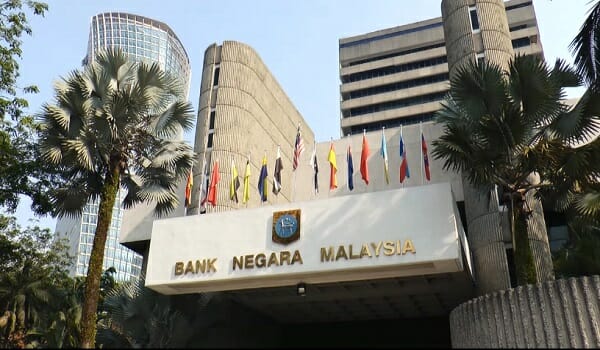
Bank Negara Malaysia (BNM) is widely expected to leave the Overnight Policy Rate (OPR) unchanged at 2.75% at its Monetary Policy Committee (MPC) meeting on Thursday, with CIMB maintaining that a stable inflation outlook and moderating global risks strengthen the case for an extended pause through 2026.
In a research note, CIMB said the central bank is likely to retain its neutral monetary policy stance, in line with unanimous market expectations, following easing inflationary pressures and the de-escalation of geopolitical tensions in the Middle East.
The research house noted that the recent 60-day ceasefire between the United States and Iran, together with a memorandum of understanding between the two countries, has helped push global crude oil prices back towards pre-conflict levels, reducing upside risks to domestic inflation.
Malaysia’s headline inflation edged up marginally to 2.0% year-on-year in May from 1.9% in April, while core inflation remained unchanged at 2.0%. At the same time, inflation breadth eased, indicating that price pressures remain relatively contained across the economy.
CIMB has consequently lowered its inflation forecast to reflect softer Brent crude oil prices, narrower refining crack spreads and the implementation of the BUDI Diesel programme, which is expected to reduce subsidised diesel prices and shave around seven to eight basis points off headline inflation in the coming months.
Despite the more benign outlook, the research house cautioned that second-round inflationary pressures have yet to disappear.
It observed that recent price increases have remained concentrated in fuel and electricity, with limited pass-through to other components of the consumer price index. Nevertheless, it expects second-round effects to contribute between 60 and 70 basis points to food and core inflation over the next three quarters as higher production costs gradually filter through the supply chain.
Producer price data suggest that cost pressures are shifting from raw materials towards intermediate and finished goods, while manufacturing input costs continue to contribute to producer inflation even as the impact from crude fuel prices has largely subsided.
On the growth front, CIMB believes BNM’s assessment is unlikely to change materially despite stronger-than-expected export performance in recent months.
The research house argued that the apparent strength in exports masks softer underlying demand, noting that April’s export surge was driven primarily by re-exports rather than domestic shipments.
It also highlighted that much of May’s export growth stemmed from higher prices for solid-state drives, rather than stronger shipment volumes. Similar trends were evident across Malaysia’s broader exports and major electrical and electronics product categories, suggesting export values have been lifted more by price effects than by an increase in actual volumes.
As a result, CIMB believes the underlying growth momentum remains softer than headline trade data suggest.
Looking ahead, the research house said inflation will remain the primary determinant of future monetary policy.
Historically, BNM has only raised interest rates outside formal tightening cycles when Malaysia’s economy expanded by more than 5% and headline inflation was around or above 3%.
“Neither condition is present today,” CIMB said, citing a moderating inflation outlook and continued uncertainty over economic growth despite some support from exports.
The bank said a sustained rise in food inflation above 5%, potentially driven by lingering Middle East-related supply disruptions or the return of El Niño weather conditions, could push headline inflation above 3% by late 2026 or early 2027, increasing the likelihood of future policy tightening.
Conversely, if broader cost pass-through remains subdued, inflation could undershoot current forecasts, reinforcing the case for BNM to leave interest rates unchanged.
On balance, CIMB expects the central bank to maintain the OPR at 2.75% for an extended period, with any future rate increase likely to depend on persistent second-round inflation coinciding with economic growth strengthening meaningfully above 5%.

