


The renewable energy (RE) sector is expected to regain momentum in the second half of 2026, underpinned by expanding data centre investments, improving project visibility and growing battery energy storage system (BESS) opportunities, according to Hong Leong Investment Bank (HLIB) Research.
The research house maintained its “Overweight” call on the sector, saying Malaysia remains on track to achieve its target of having renewable energy account for 32% of installed generation capacity this year, laying the groundwork for longer-term National Energy Transition Roadmap (NETR) targets of 35% by 2030 and 70% by 2050.
HLIB noted that while engineering, procurement, construction and commissioning (EPCC) contract awards slowed during the first half of 2026 as developers delayed investment decisions amid geopolitical uncertainty and volatile material prices, market conditions have become more favourable.
The firm expects project activity to accelerate in the second half as construction progresses and more renewable energy projects move towards execution and delivery.
A major structural growth driver remains Malaysia’s rapidly expanding data centre industry, which is expected to significantly increase demand for renewable electricity over the coming years.
However, HLIB said the rollout of the Corporate Renewable Energy Supply Scheme (CRESS) has been slower than anticipated due to relatively high and uncertain System Access Charges (SAC), currently set at 20 sen per kilowatt-hour for firm power and 40 sen per kilowatt-hour for non-firm power.
The research house believes the current pricing structure has reduced the commercial attractiveness of CRESS and is calling for regulatory refinements, particularly a recalibration of SAC rates, to improve the scheme’s bankability and accelerate adoption.
Such reforms could become a key catalyst for a sector re-rating in the second half of the year.
Meanwhile, global solar photovoltaic (PV) module prices are expected to remain largely stable through the end of 2026 despite recent cost pressures.
China’s decision to eliminate its 9% export value-added tax rebate for photovoltaic products in April contributed to an 8% to 9.6% increase in module prices year-to-date.
Nevertheless, HLIB expects long-term pricing to remain supported by structural oversupply, with global module prices likely to stay within the range of US$0.11 to US$0.12 per watt.
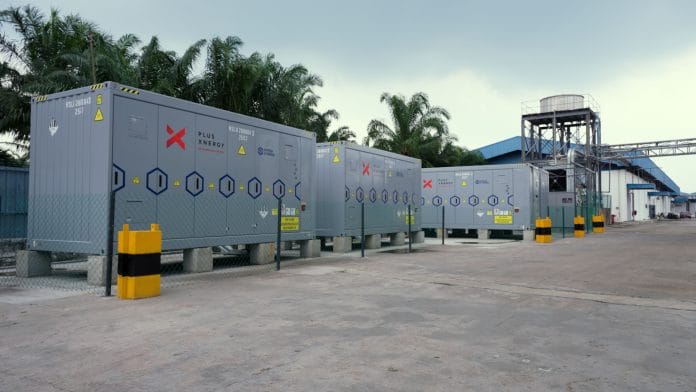
The research house also identified battery energy storage systems as the next major growth engine for Malaysia’s renewable energy industry.
It said the transition towards grid-scale energy storage accelerated after the Energy Commission awarded 400MW/1,600MWh of storage capacity under the MyBeST programme, alongside Sabah Electricity’s 100MW/400MWh project in Lahad Datu.
Future large-scale renewable energy developments, including the upcoming Large Scale Solar 6 (LSS6) programme and CRESS projects, are expected to incorporate mandatory storage requirements.
HLIB added that battery procurement could accelerate during the second half of 2026 as developers seek to secure equipment before China’s removal of export VAT rebates on battery products takes effect on Jan 1, 2027, potentially raising costs.
The research house believes both Solarvest Holdings Bhd and Samaiden Group Bhd are well positioned to benefit from the emerging billion-ringgit BESS market due to their strong balance sheets and healthy operating cash flows.
Rooftop solar installations are also expected to gather pace over the coming months, supported by the government’s SuRIA Home rebate programme and the possibility of higher electricity surcharges linked to elevated fuel prices.
Although initial adoption under the Solar for Self-Consumption (Solar ATAP) framework was slower than expected, HLIB said market acceptance has improved significantly.
Industry checks indicate that Solar ATAP registrations had exceeded 10,000 applications as of May, signalling growing confidence among residential and commercial consumers.
However, HLIB expects rooftop solar to contribute only modestly to the earnings of listed renewable energy companies, as their primary revenue exposure remains concentrated in utility-scale EPCC projects.
HLIB maintained its BUY recommendations on Solarvest Holdings Bhd, with a target price of RM3.59, and Samaiden Group Bhd, with a target price of RM1.78, citing their strong market positioning and the likelihood of securing larger order books as Malaysia’s renewable energy investment cycle continues to expand.


