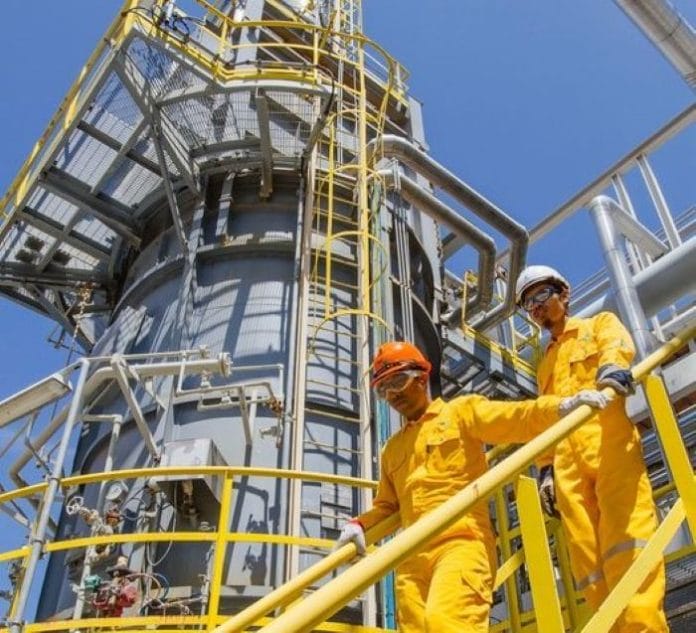
Malaysia’s Producer Price Index (PPI) for local production declined 2.0% in 2025, marking a sharper contraction than the 0.3% increase recorded in 2024, as falling crude petroleum and manufacturing prices weighed on overall producer inflation, according to the Department of Statistics Malaysia (DOSM).
In a statement, DOSM said the decline was mainly driven by the mining sector, which contracted 8.2%, and the manufacturing sector, which fell 2.1%, reflecting weaker prices for petroleum-related products and selected export-oriented industries.
However, the decline was partially offset by higher prices in the agriculture, forestry and fishing sector, which rose 3.2%, as well as increases in the water supply and electricity and gas supply sectors of 4.7% and 1.9%, respectively.
Energy prices drag producer inflation
The mining sector posted its second consecutive annual decline, with the extraction of crude petroleum index falling 8.6% in 2025 after declining 2.8% in the previous year.
Similarly, the extraction of natural gas index decreased 6.9%, extending the previous year’s 0.2% decline.
Manufacturing also remained under pressure, recording a 2.1% decrease following a marginal 0.3% contraction in 2024.
The steepest decline came from the manufacture of coke and refined petroleum products, which dropped 12.8%, while the manufacture of chemicals and chemical products and the manufacture of computer, electronic and optical products declined 5.0% and 4.4%, respectively.
The declines were partly cushioned by stronger prices in the manufacture of food products, which increased 5.8%.
Palm oil supports agriculture
Within the agriculture, forestry and fishing sector, producer prices continued to rise, although at a slower pace than the previous year.
The sector recorded a 3.2% increase in 2025 compared with 7.9% growth in 2024, mainly supported by the growing of perennial crops, which rose 5.3%.
The increase was largely driven by higher prices for oil palm fresh fruit bunches, which climbed 5.4%.
Other subsectors posting gains included growing of non-perennial crops (2.0%), fishing (1.6%), aquaculture (0.2%) and animal production (0.1%).
Logging was the only agriculture-related subsector to record a decline, falling 6.9%.
All production stages record declines
Producer prices weakened across all stages of production during the year.
The index for crude materials for further processing fell 3.7%, compared with a 0.7% increase in 2024.
Intermediate materials, supplies and components declined 1.8%, while finished goods prices fell 1.2%, reversing the 1.9% increase recorded a year earlier.
Service producer prices continue to rise
Despite weaker producer prices for goods, Malaysia’s Services Producer Price Index (SPPI) continued to record modest growth.
The SPPI averaged 116.9 points in 2025, rising 0.9% from the previous year, slightly faster than the 0.7% increase recorded in 2024.
The increase was mainly driven by accommodation and food and beverage service activities, which rose 3.4%, followed by arts, entertainment and recreation (1.8%) and education (1.3%).
Health services recorded a 0.7% increase, while professional services and real estate activities rose 0.6% and 0.2%, respectively.
Meanwhile, transportation prices declined 0.4%, while the information and communication sector recorded a marginal 0.1% decrease.
The latest data indicate that while producer prices for goods remained under pressure amid softer global energy prices and weaker manufacturing output, services inflation continued to reflect resilient domestic demand across tourism, hospitality and consumer-related sectors.