Barisan Nasional’s (BN) commanding victory in the Johor state election has reinforced expectations of policy continuity in Malaysia’s southern economic powerhouse, with investors now turning their attention to the rollout of the Johor-Singapore Special Economic Zone (JS-SEZ) blueprint and the possibility of further electoral contests in the coming months.
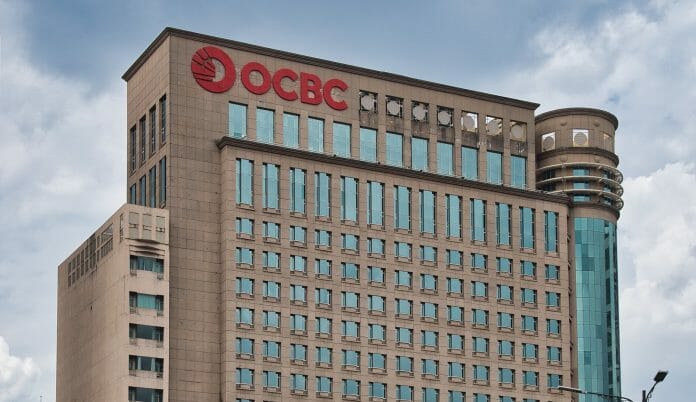
In a research note, OCBC Malaysia said BN’s emphatic win removes near-term political uncertainty in Johor and allows the state government to refocus on economic priorities, particularly investments, infrastructure development and cross-border initiatives with Singapore.
BN secured 48 of the 56 state seats contested in the July 11 election, improving on its 40-seat tally in the 2022 polls and surpassing the two-thirds majority threshold. Pakatan Harapan (PH), led federally by Prime Minister Datuk Seri Anwar Ibrahim, won the remaining eight seats, down from 12 previously, while Perikatan Nasional (PN), Bersama and other parties failed to win any seats.
BN’s share of the popular vote climbed sharply to 59.7% from 43.1% in the previous state election, while PH also improved its vote share to 32.6% from 26.4%, largely at the expense of smaller parties.
OCBC described the outcome as a resounding endorsement for the incumbent state administration, noting that the close alignment between the federal and Johor governments would likely ensure continuity in economic policymaking.
The research house maintained that the election result is unlikely to trigger significant changes to Johor’s economic direction, arguing that major policies have already been jointly developed by both administrations.
Instead, attention is expected to shift back towards implementing key development initiatives, including the long-awaited JS-SEZ blueprint, which is expected to be unveiled in the fourth quarter of 2026 after receiving Cabinet approval.
Johor has continued attracting strong investment flows, with manufacturing investment approvals reaching RM24.6 billion in 2025 compared with RM13.6 billion a year earlier. Construction activity has also remained resilient, while cumulative approved investments under the JS-SEZ have reached RM76.98 billion since 2024, including RM5.49 billion approved during the first quarter of 2026.
OCBC said the stronger political mandate should further support the execution of these projects without major policy disruptions.
Beyond Johor, the research house expects Malaysia’s political calendar to remain active. BN heads into the Negeri Sembilan state election on Aug 1 with significant momentum, while the possibility of an early general election within the next 12 months cannot be ruled out.
Although heightened political activity could weigh on investor sentiment in the short term, OCBC believes the policy differences between BN and PH remain relatively limited on economic issues.
The bank also noted that many of Malaysia’s structural reforms have already been embedded into legislation, providing greater policy certainty regardless of future political developments. Recent laws include the Government Service Efficiency Commitment Act, mandatory Employees Provident Fund contributions for foreign workers, the Carbon Capture, Utilisation and Storage Act, and the Government Procurement Act.
On the economic front, OCBC said recent data continue to point to resilient domestic demand despite external uncertainties. However, following the release of May distributive trade data, the bank marginally lowered its second-quarter 2026 gross domestic product (GDP) tracking estimate to 6.0% year-on-year from 6.2% previously.
Labour market conditions also remain healthy, with unemployment edging up only slightly to 3.0% in May from 2.9% in April.
OCBC expects Bank Negara Malaysia to maintain the Overnight Policy Rate at 2.75% throughout 2026 before raising it to 3.00% in early 2027 as part of a gradual normalisation of monetary policy.