


The glove manufacturers are expected to deliver stronger earnings for the second quarter of FY2026 on the back of higher average selling prices (ASPs) and improved margins, although profitability is likely to moderate in subsequent quarters as raw material costs ease, according to Kenanga Research.
The research house said earnings across the sector should strengthen in 2QFY26 (March–June 2026), supported by a temporary spike in glove prices following a sharp increase in nitrile costs caused by geopolitical tensions in the Middle East.
Nitrile prices surged by more than 50% during the quarter as crude oil prices climbed, prompting glove makers to raise ASPs to between US$26 and US$29 per 1,000 pieces to preserve margins.
Kenanga noted that the trend was reflected in Top Glove Corporation Bhd’s latest quarterly results, where third-quarter FY2026 earnings more than doubled quarter-on-quarter due to margin expansion driven by higher ASPs.
However, the research house expects earnings to taper from 3QFY26 onwards as nitrile prices and glove selling prices normalise.
According to its channel checks, nitrile glove ASPs have already fallen from around US$28 per 1,000 pieces in May to between US$21 and US$23 in July, with prices potentially easing further to US$18–20 in August.
While some customers have delayed purchases in anticipation of lower prices, Kenanga said buyers who had postponed orders during the price spike are now returning to the market.
Margin improvements support recovery
Beyond pricing, Kenanga said Malaysian glove makers continue to improve their cost structures through automation and operational efficiencies, supporting a sustained recovery in profitability.
Hartalega Holdings Bhd has recorded three consecutive quarters of margin improvement, with EBITDA margins rising to 16% in its latest fourth quarter from 13% previously.
The improvement was driven by the commissioning of Plant 9, which features enhanced automation, artificial intelligence-based defect detection and digitalised production processes.
The new facility has reduced manufacturing costs by approximately 16% and labour requirements by 8%, while lowering energy and chemical consumption.
Similarly, Top Glove’s EBITDA margin expanded from 10% in 4QFY2025 to 17% in 3QFY2026, while Kossan Rubber Industries Bhd maintained margins between 11% and 15% over recent quarters.
Kenanga said production costs across the industry have declined by roughly 20% over the past two years through savings in labour, utilities, chemicals, packaging and operational efficiency, narrowing the cost gap with Chinese manufacturers.
Kossan remains preferred sector pick
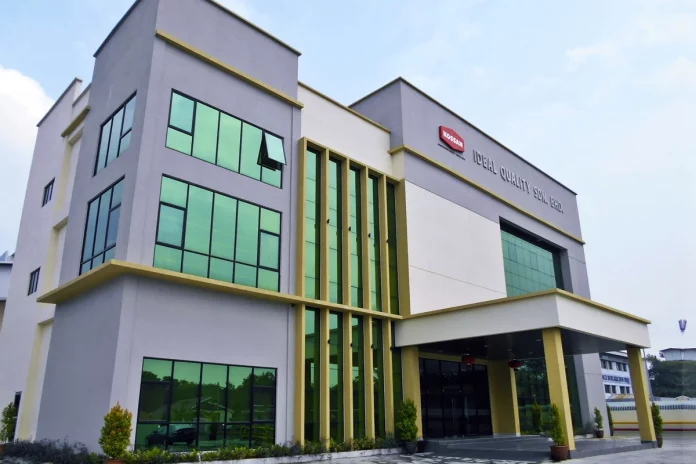
Kenanga retained Kossan as its preferred stock in the glove sector, citing its strategic shift towards specialty and cleanroom gloves, which command significantly higher margins than standard medical gloves.
The research house estimates specialty gloves fetch ASPs 60% to 80% higher than generic nitrile gloves, while cleanroom gloves command premiums of up to three times.
Kossan plans to expand its cleanroom glove production capacity from 300–400 million pieces annually to 800 million pieces by FY2027, serving both semiconductor and pharmaceutical customers.
Kenanga estimates the expansion could potentially double annual cleanroom glove revenue from RM100 million to RM200 million, with pre-tax profit rising from RM12 million to RM24 million.
The research house also highlighted Kossan’s strong balance sheet, noting it is trading at around 12 times earnings excluding its RM1.6 billion net cash position and below book value despite being among the country’s most profitable medical glove manufacturers.
Sector-wide, glove companies are trading at about 22.6 times FY2026 earnings and 21.7 times FY2027 earnings, roughly half a standard deviation below their five-year historical average forward price-to-earnings multiple.
Kenanga maintained its positive stance on Kossan, citing its earnings resilience, focus on higher-margin products and continued operational improvements.


