


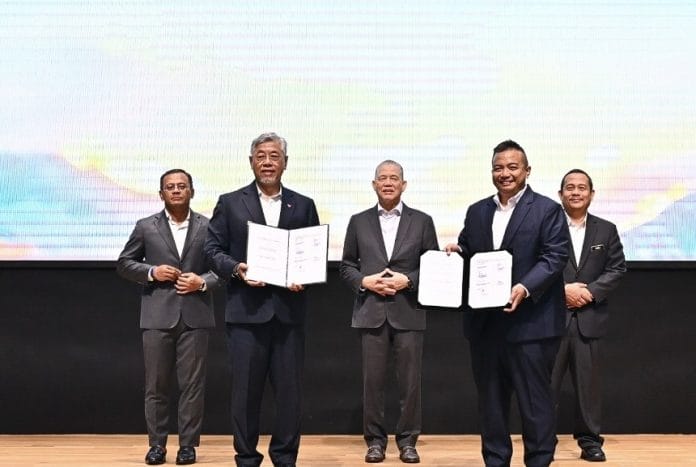
Tenaga Nasional Berhad (TNB) and Air Selangor have signed two strategic agreements, the Electricity Supply Agreement (ESA) and a Cooling Energy Supply Agreement (CESA), which marks a significant milestone in the expansion of integrated utility solutions to improve the efficiency of essential public infrastructure while supporting the country’s energy transition and water security agenda.
Under the ESA, TNB will supply high-voltage electricity to the Sungai Rasau Water Treatment Plant in Kuala Langat, Selangor, which is set to become Southeast Asia’s largest water treatment facility with a treatment capacity of 1,400 million litres per day (MLD).
Scheduled for full completion by 2031, the plant is expected to provide clean and treated water to approximately 9.62 million consumers across Selangor, Kuala Lumpur and Putrajaya.
The agreement also makes the Sungai Rasau Water Treatment Plant the first water treatment facility in Malaysia to receive a direct high-voltage electricity supply at 132kV, a move expected to enhance operational reliability and efficiency at one of the nation’s most strategic water infrastructure assets.
In addition, TNB’s wholly owned subsidiary, TNB Engineering Corporation Sdn Bhd (TNEC), will provide Gas District Cooling services to Air Selangor’s facility at Jalan Pantai Baharu, Kuala Lumpur, under a 20-year concession through the CESA.
The partnership makes Air Selangor the first water utility company in Malaysia to adopt district cooling services, which are expected to deliver higher system reliability, improved energy performance and greater operational efficiency compared with conventional standalone cooling systems.
Chief Executive Officer Datuk Ir. Ts. Shamsul Ahmad said the partnership demonstrates how closer integration between the energy and water sectors can strengthen the resilience of Malaysia’s critical infrastructure while supporting the country’s long-term development agenda.
Both organisations said the collaboration reinforces their complementary roles in ensuring the uninterrupted supply of Malaysia’s two most critical public utilities.


