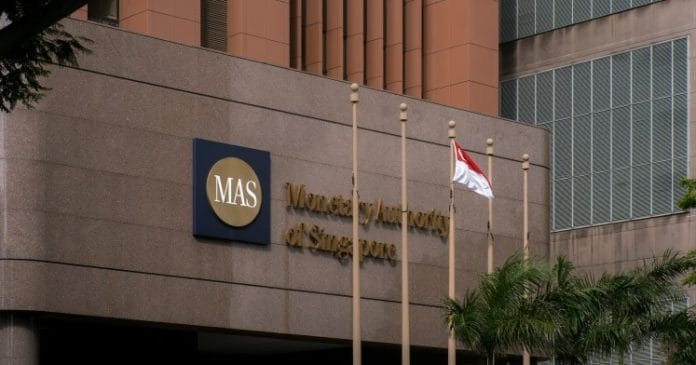
Singapore’s central bank has tightened monetary policy for a second consecutive review, albeit by a smaller margin, as stronger economic growth and a firmer inflation outlook continue to support a modest tightening bias, according to CIMB Securities.
The Monetary Authority of Singapore (MAS) increased the rate of appreciation of the Singapore dollar nominal effective exchange rate (S$NEER) policy band “very slightly” during its July 2026 Monetary Policy Statement (MPS).
The move followed a pre-emptive tightening in April and came as a surprise to many economists, with 13 out of 18 analysts having expected the MAS to leave policy unchanged.
CIMB Securities estimates the latest adjustment represents a 25-basis-point steepening of the S$NEER policy slope from 1.0% to 1.25%, making it the smallest policy tightening in recent years.
Growth outlook strengthened
The research house said MAS adopted a more optimistic assessment of Singapore’s economy compared with its April review.
Second-quarter 2026 advance GDP growth exceeded expectations, supported by robust technology-related activities that offset supply disruptions affecting oil-related sectors.
Looking ahead, MAS expects growth to remain firm through the second half of 2026, driven by continued artificial intelligence (AI)-related capital expenditure, alongside resilient construction and financial services activity.
The central bank also revised its assessment of Singapore’s output gap, now expecting it to widen slightly this year, reflecting stronger-than-trend economic growth during the first half of 2026.
This marks a shift from its previous expectation that the output gap would remain broadly neutral.
Inflation outlook remains firm
Despite the policy adjustment, MAS maintained its 2026 inflation forecasts, keeping core inflation at between 1.5% and 2.5%, while retaining the same range for headline inflation.
However, the central bank expects inflation to trend higher over the coming quarters before moderating in the second half of 2027.
According to CIMB, higher electricity tariffs, food prices and imported input costs are expected to contribute to rising inflation, while adverse weather conditions affecting Singapore’s food import sources could further pressure food prices.
Domestic cost pressures, however, are expected to remain relatively contained amid moderating wage growth, suggesting imported inflation will remain the key driver.
Another tightening possible in October
Following the latest decision, CIMB Securities has revised its policy outlook and now expects MAS to implement another modest tightening in October.
The research house forecasts a further 25-basis-point increase in the S$NEER policy slope to 1.5%, replacing its earlier expectation that policy would remain unchanged.
It said the smaller July adjustment suggests MAS believes inflation remains manageable following April’s tightening but is maintaining a cautious stance as imported cost pressures begin feeding into consumer prices.
The widening positive output gap also raises the possibility that stronger domestic demand could contribute to more persistent inflationary pressures.
Nevertheless, CIMB said future policy decisions will remain data dependent, with softer inflation or weaker economic growth potentially prompting MAS to pause further tightening.
Overall, the research house believes the July policy move reinforces MAS’ confidence in Singapore’s economic resilience while signalling a measured approach to managing inflation risks.