


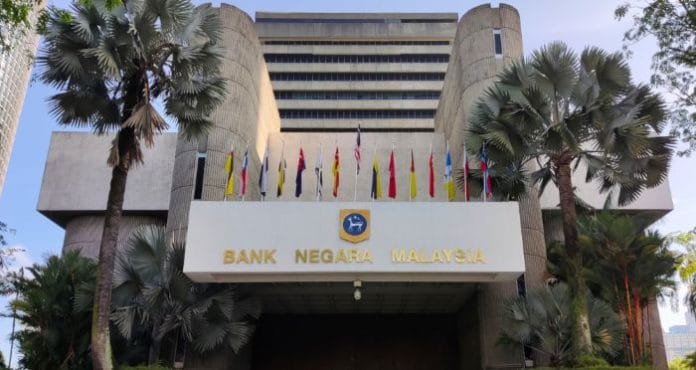
Malaysia’s inflation moderated further in June while private sector credit growth remained resilient, although financial markets continued to face volatility amid shifting expectations over US monetary policy, according to Bank Negara Malaysia’s latest Monthly Highlights and Statistics report.
Headline inflation eased to 1.9% in June from 2.0% in May, while core inflation also moderated to 1.9%, reflecting easing external cost pressures and lower inflation across several core consumer items.
Bank Negara said the moderation in headline inflation was primarily driven by lower retail fuel inflation, particularly for RON97 petrol and diesel.
Core inflation also softened mainly due to base effects from higher streaming service prices recorded in June last year, alongside lower inflation for jewellery and watches following softer global gold prices.
Meanwhile, Malaysia’s wholesale and retail trade growth moderated to 3.1% in May from 6.2% in April.
Retail trade remained resilient, expanding 4.4% compared with 3.9% previously, supported by stronger sales at non-specialised retail stores and higher sales of automotive fuel.
However, the improvement was offset by slower wholesale trade growth and weaker motor vehicle sales, with softer performance recorded in specialised wholesale businesses, household goods wholesalers and vehicle dealerships.
Despite the softer pace of domestic trade, credit growth remained steady.
Credit to the private non-financial sector held firm at 6.4%, supported by continued expansion in outstanding loans and corporate bonds.
Business loan growth strengthened further to 7.2%, driven mainly by larger companies borrowing for working capital purposes.
Household loan growth moderated slightly to 5.3%, reflecting slower growth in personal financing.
Malaysia’s banking sector continued to demonstrate resilience, with gross and net impaired loan ratios remaining broadly unchanged at 1.4% and 1.0%, respectively.
The loan loss coverage ratio, including regulatory reserves, stood at 124.6% of gross impaired loans, indicating continued prudent provisioning.
Liquidity conditions also remained robust, with the banking system recording an aggregate Liquidity Coverage Ratio of 149.7%, ensuring sufficient buffers against potential liquidity shocks.
On the financial markets front, Bank Negara said global sentiment continued to be influenced by expectations that the US Federal Reserve could raise interest rates before the end of 2026.
The expectations were supported by stronger-than-anticipated US labour market data, elevated inflation readings and updated economic projections from the Federal Reserve.
Against this backdrop, the ringgit weakened 2.6% against the US dollar during June, while its Nominal Effective Exchange Rate (NEER) declined 1.6%, broadly in line with regional currency movements.
Malaysia Government Securities (MGS) also came under pressure, with the benchmark 10-year yield rising 4 basis points, partly reflecting higher net bond issuances.
Meanwhile, Bursa Malaysia’s benchmark FBM KLCI declined 1.1% during the month, underperforming the regional average as foreign investors continued to reduce their holdings of Malaysian equities.
Bank Negara’s latest report suggests that while domestic inflation remains contained and banking sector fundamentals continue to be strong, Malaysia’s financial markets remain sensitive to evolving global monetary policy expectations and external market developments.


