



Malaysia wants to become an “AI Nation” by 2030. The ambition is within reach, but achieving it will require more than investment in data centres, digital infrastructure and artificial intelligence (AI) technology.
The bigger challenge is building the capabilities to use AI at scale and capture more of the economic value it creates. That means moving beyond technology deployment and strengthening local expertise in chip design, engineering, research, software and AI applications.
BusinessToday spoke with Arthur D Little Southeast Asia Associate Director Qizhen Tan, who shared his insights on how Malaysia can build on its semiconductor strengths to capture a larger share of the AI value chain.
Tan believes that Malaysia’s AI ambition is achievable. However, success will depend on how effectively AI is integrated into businesses, government and the workforce.
“AI leadership is ultimately determined by ecosystem readiness rather than technology investment alone,” he said to BusinessToday.
From Investment to Adoption
Malaysia has made progress in building the infrastructure needed for AI. It has attracted significant data centre investment, strengthened its digital infrastructure and introduced a national AI strategy. But infrastructure is only the first step.
“Technology investment may initiate transformation, but institutional readiness determines whether that investment translates into productivity and economic value,” Tan noted.
For Malaysia, this means shifting the focus from attracting investment to deploying AI at scale. Businesses need to redesign processes around AI rather than simply add new tools. Government agencies also need to identify where AI can improve public services.
For businesses, that means moving beyond experimenting with AI tools and redesigning processes around them. For government, it means identifying where AI can improve public services and decision-making.
Small and medium enterprises will be particularly important as they account for the vast majority of businesses in Malaysia, making widespread AI adoption critical to raising productivity across the wider economy.
That also provides a more useful way to assess the country’s AI progress. The number of data centres or investment announcements matters less than whether AI is creating higher-value jobs, improving productivity, strengthening industrial competitiveness and delivering better public services.
In other words, becoming an AI Nation is not primarily an infrastructure target; it is an economic transformation target.
Building On The Semiconductor Base
Malaysia’s semiconductor industry gives it a starting point that many countries do not have. The country is already established in assembly, testing and packaging. Penang, in particular, has developed a deep semiconductor ecosystem supported by multinational companies, suppliers and engineering talent.
As AI increases demand for computing power, some of these capabilities are becoming more important. Tan sees opportunities in advanced packaging, chip testing and high-performance computing infrastructure. But he also sees an opportunity to use AI to improve Malaysia’s existing manufacturing base.
AI can be applied to predictive maintenance, automated quality inspection, production optimisation, supply chain planning and energy management. This creates a more immediate route to economic value. Malaysian manufacturers do not need to develop their own foundation models to benefit from AI. They can use existing technology to improve yields, reduce downtime and lower operating costs.
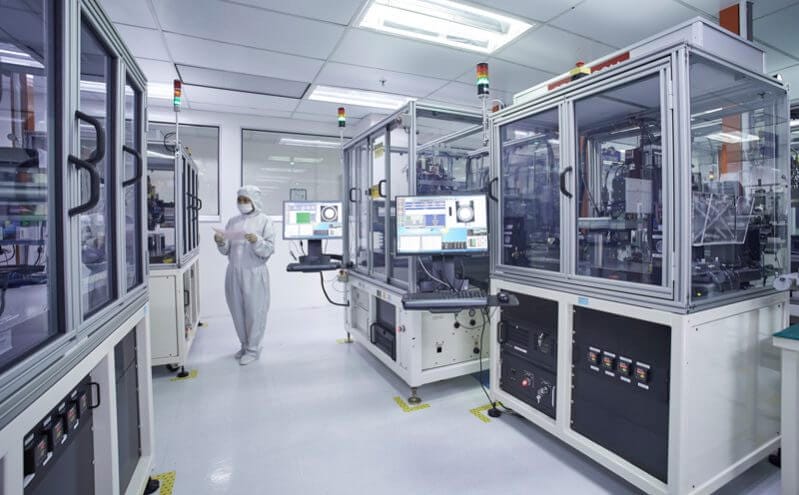
The semiconductor and AI industries can also become more closely connected.
“Semiconductor expertise and AI capability should not develop in parallel; they should reinforce one another to accelerate innovation and commercialisation,” Tan said.
This offers a direct path to economic value. A manufacturer does not need to develop its own AI model to benefit. Using existing AI technologies to reduce defects, improve yields or minimise downtime can translate directly into lower costs and higher productivity.
The same principle applies to the semiconductor industry itself. AI can be used across chip design, testing, manufacturing and process optimisation.
The result is a potential feedback loop: Malaysia’s semiconductor capabilities can support AI development, while AI can make Malaysia’s semiconductor and manufacturing operations more competitive.
Moving Beyond Assembly And Testing
That integration points to the larger issue of value capture. Moving up the semiconductor value chain does not mean abandoning assembly, testing and packaging. These remain important parts of Malaysia’s industrial base.
It means building more high-value activities around them. Those activities include advanced packaging, IC design, semiconductor equipment, R&D and engineering. Malaysia already has some evidence that this transition is possible. Homegrown IC design company Oppstar has established a position in chip design, while SkyeChip, acquired by Arm, demonstrated that Malaysian engineering talent can contribute to advanced semiconductor design for global markets.
Multinational investments are also moving towards more sophisticated capabilities. Intel has invested in advanced packaging and 3D chip packaging in Penang, while Infineon is expanding its power semiconductor operations in Kulim.
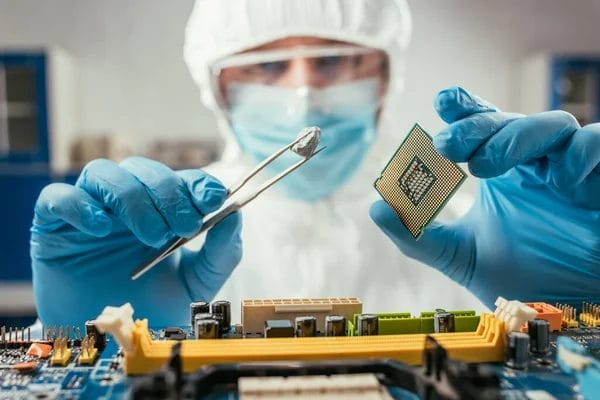
These developments are significant as AI increases the complexity of semiconductor systems. More computing power is driving demand not only for advanced chips, but also for the technologies and engineering capabilities needed to package, connect, test and power them.
Malaysia therefore has an opportunity to capture more value at several points in the chain. The National Semiconductor Strategy reflects this direction, with priorities including IC design, advanced packaging, R&D, talent development and stronger local supply chains. The harder task is developing the companies and talent needed to deliver those ambitions.
Turning Investment Into Local Capability
Foreign investment will continue to be important to Malaysia’s technology strategy. But the value of an investment should not be measured only by its capital expenditure. What matters just as much is what it leaves behind. That includes technology transfer, skilled talent, local suppliers, research partnerships and opportunities for Malaysian companies to participate in global supply chains.
“Foreign investment should be viewed as the beginning of Malaysia’s AI journey rather than its final objective,” Tan said.
This is where local companies become important. Malaysia needs more businesses that can develop proprietary technologies, supply multinational firms and eventually export their own products and services.
The same applies to AI. Attracting global technology companies can accelerate capability building. However, Malaysia will need a stronger pipeline of homegrown companies in order to capture more of the value created by the sector.
University research is another part of the equation. Stronger links between universities, semiconductor companies, AI startups and research institutions could help channel more ideas from laboratories into commercial applications.
That would also help connect Malaysia’s existing industrial strengths with emerging AI capabilities.
The Workforce Needs To Keep Pace
Building those capabilities will require more than a larger pool of AI specialists. Malaysia also needs workers across existing industries who understand how to use AI effectively. Manufacturing engineers, finance professionals, healthcare workers, educators and civil servants will all encounter AI in different ways. They will not all need to become AI developers, but they will need enough understanding to use the technology in their respective fields.
“The greatest gap is no longer producing AI specialists alone; it is equipping the broader workforce with sufficient AI literacy to work effectively alongside AI technologies,” Tan said.
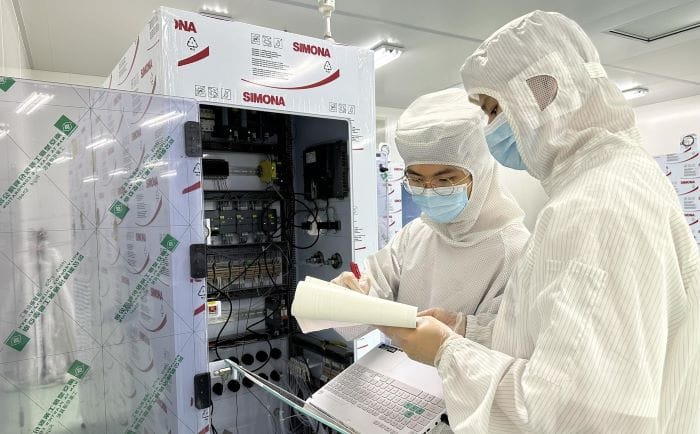
That makes workforce development an ongoing requirement rather than a one-off training exercise. It also changes the role of company leadership. Teaching employees to use AI tools is only one part of the process. Leaders need to consider how AI changes workflows, organisational structures, decision-making and business models.
Universities, technical institutions, employers and government will therefore need closer coordination. Technical skills remain important, but so do critical thinking, problem-solving, ethics and the ability to work across disciplines.
Finding A Distinct Role In The AI Economy
Malaysia does not need to compete across every part of the AI value chain. Its existing strengths point to a more focused opportunity: Bringing together semiconductors, advanced manufacturing, engineering and applied AI.
The country’s growing data centre capacity can support this development, but the economic opportunity extends beyond hosting computing infrastructure. Cloud services, cybersecurity, digital engineering, AI deployment and specialised professional services can all develop around it.
Malaysia’s manufacturing base can also serve as a testing ground for AI applications. Industrial environments provide clear use cases and measurable outcomes, making it easier to determine whether an AI solution actually improves productivity.

This could give Malaysia a more specific position in the regional AI economy rather than requiring it to compete as a broad, general-purpose AI hub. The direction is already visible. Malaysia has the semiconductor manufacturing base, the engineering workforce and the industrial ecosystem. The next task is to add more design, R&D, software, intellectual property and AI capabilities to that base.
As Tan put it, the longer-term ambition should be for Malaysia to become “an indispensable innovation partner within the global AI value chain”.
For Malaysia’s 2030 AI target, that may be the more meaningful measure of progress. The question is not simply how much AI infrastructure the country attracts, but how much of the resulting economic value is created by Malaysian companies, engineers and institutions.


