


Standard Chartered expects US bond yields to remain rangebound as the US Treasury seeks to contain rising borrowing costs, while a softer US dollar could provide further support for gold and equities.
In a strategy commentary by Rajat Bhattacharya and Sundeep Gantor, the bank said US bond markets had reached a “pain threshold” for the Trump administration after the 30-year Treasury yield climbed to its highest level since 2007.
The US Treasury’s surprise decision to “at least” double its buybacks of 10- to 30-year bonds to US$4 billion, coupled with Treasury Secretary Scott Bessent’s pledge to increase purchases if necessary, is aimed at containing the rise in yields.
However, Standard Chartered said the scale of the programme remained modest relative to the roughly US$30 trillion stock of marketable US Treasuries and was therefore unlikely to drive yields significantly lower.
The bank identified rising US debt and monetary policy uncertainty as the primary drivers of higher yields, while heavy bond issuance by major AI hyperscalers has added to pressure on the market.
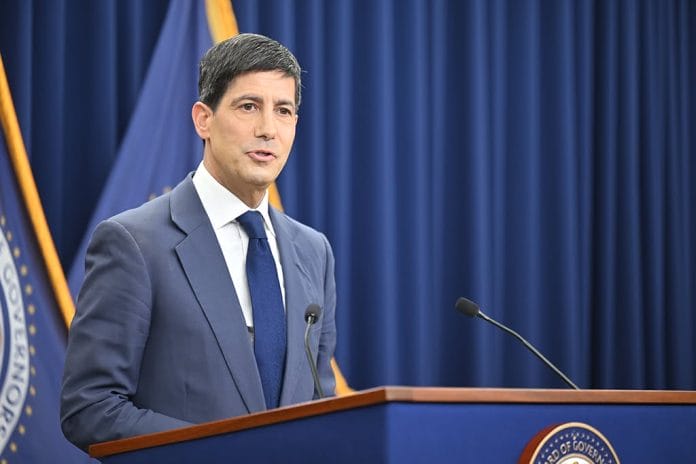
Standard Chartered said investors would closely watch Federal Reserve Chair Kevin Warsh’s speech at the Jackson Hole economic symposium for clues on the central bank’s policy reaction function.
While fiscal uncertainty is unlikely to disappear soon, with US national debt having crossed US$40 trillion and expected to rise further amid higher defence spending, the bank believes the Fed could reduce monetary policy uncertainty by clarifying how long it is prepared to keep interest rates unchanged while waiting for inflation to return to its 2% target.
The latest US economic data, including softer payrolls, cooling inflation and weaker retail sales, support the bank’s view that inflation peaked in the second quarter.
Standard Chartered expects gradual disinflation, as oil and tariff pressures fade, to bring core inflation towards 2% by 2027.
This would allow the Fed to keep rates unchanged through this year before beginning rate cuts in 2027, although the challenge for Warsh will be keeping bond markets patient in the meantime.
Against this backdrop, Standard Chartered expects long-term US bond yields to trade within a range rather than continue rising sharply.
The bank favours three- to five-year maturity bonds, which it expects to benefit from continued disinflation and a softening US labour market.
Standard Chartered also expects the US dollar to act as the “pressure release valve” as the Treasury attempts to contain bond yields.
A weaker dollar would be welcomed by the Treasury, according to the bank, and should provide further support for gold.
The bank added that rangebound rather than rising bond yields would generally be supportive of equity valuations.
Beyond fixed income, Standard Chartered said its conviction in the artificial intelligence theme has strengthened following another strong earnings season and meetings with AI industry leaders in the US and Asia.
The bank has raised its estimate for AI capital expenditure growth to 85% year-on-year in 2026, reaching US$750 billion, and expects spending to rise to US$1 trillion in 2027.
It also raised its long-term AI capex growth assumption to a 33% compound annual growth rate (CAGR) for 2025-2030, from 32% previously.
The revised forecasts are consistent with its recent discussions with industry participants in Taiwan and South Korea, while the bank also sees upside potential for hyperscalers’ cloud revenue amid strong token demand and robust backlog growth.
Standard Chartered reiterated its positive view on Big Tech and semiconductor stocks within its global technology allocation.
The bank said accelerating cloud demand, rising token usage, expanding backlogs and continued management commitment to AI investment reinforced its conviction that the AI investment cycle remains in its early stages.
It sees no signs of a slowdown in the AI investment cycle and believes stronger AI monetisation and higher capital expenditure forecasts could provide further support for US technology and communications services stocks.
Overall, Standard Chartered’s strategy favours 3-5 year US bonds, a softer US dollar, gold and continued exposure to US technology and semiconductor stocks, while expecting longer-term Treasury yields to remain broadly rangebound.


