


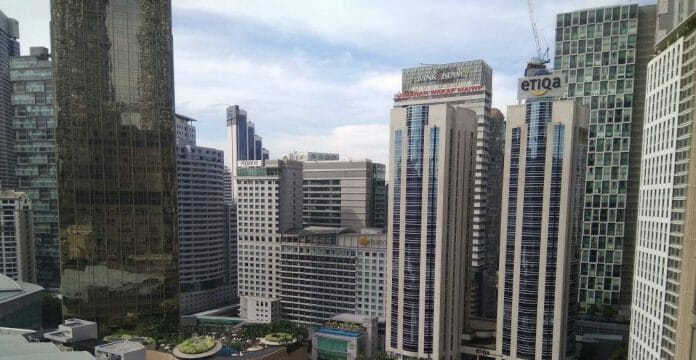
Bank Islam Malaysia Bhd (BIMB) recorded a 2Q26 net profit of RM139.1 million, up 20.9% quarter-on-quarter (QoQ) and 9.8% year-on-year (YoY), bringing its first-half (1H26) earnings to RM254.2 million, according to Hong Leong Investment Bank (HLIB) Research.
HLIB said the results were broadly in line with expectations, with 1H26 earnings accounting for 52.4% of its full-year forecast and 49.4% of the Street’s estimate.
On a QoQ basis, BIMB’s total income increased 15.2%, driven by a 38.9% jump in non-financing income (NOFI) and a 7.5% rise in net financing income (NFI).
The stronger income growth also resulted in positive “Jaws”, with total income growth exceeding operating expenditure growth by 8.9 percentage points, supporting the improvement in profitability. However, the earnings uplift was partly offset by a 63.6% increase in provisions.
On a YoY basis, total income grew 11.2%, although higher provisions and operating expenses continued to weigh on the bottom line. Provisions rose 109.2%, while other operating expenses increased 39%, resulting in a more modest 9.8% increase in quarterly earnings.
For 1H26, total income expanded 5.1% YoY, while total income growth outpaced operating expenses by 1.2 percentage points. However, substantially higher provisions and other operating expenses, which rose 17% and 24% respectively, largely offset the improvement, leaving earnings broadly flat at 0.5% YoY growth.
HLIB highlighted that financing growth accelerated to 7.5%, an improvement of 1.6 percentage points QoQ, while deposit growth moderated to 5.1%, down 4.2 percentage points QoQ.
Net financing margin improved by five basis points QoQ to 2.12%, which HLIB said was likely supported by stronger financing growth and improved asset yields.
However, asset quality and provisioning trends warrant closer attention. Net credit cost surged 17.8 basis points QoQ to 47 basis points, despite the gross impaired financing (GIF) ratio improving by four basis points to 0.98%.
HLIB said the divergence between credit cost and the GIF ratio suggests rising provisioning needs and emerging pockets of credit risk that could create a greater drag on earnings.
Looking ahead, HLIB expects BIMB to face a more challenging earnings environment despite healthy financing growth and improving margin trends.
Financing growth remains ahead of the industry, while active balance sheet recalibration should continue to support the net financing margin. Management has retained its FY26 NIM guidance of 2.07% to 2.10%.
However, softer treasury income, near-term cost pressures and strategic investments, including organisational recalibration, could constrain earnings conversion. Management expects return on equity (ROE) to ease towards 5.0% to 5.5% in the near term.
Asset quality is another area of concern, with HLIB noting that the 0.98% GIF ratio remains benign but past-due-not-impaired financing within personal financing, particularly the growing AKPK segment, is pointing to emerging stress.
In response to the higher pre-emptive provisioning, management has raised its FY26 credit cost guidance to 35% to 40%.
HLIB said core revenue momentum remains intact, but there is limited scope for meaningful near-term earnings acceleration as higher credit costs and operating expenses are likely to dilute the benefits of financing growth and NIM improvement.
The research house made no changes to its earnings forecasts and maintained its HOLD recommendation on BIMB, with a recalibrated Gordon Growth Model target price of RM1.90, based on 0.5 times CY27 price-to-book value.
HLIB said the valuation is close to one standard deviation below BIMB’s five-year mean price-to-book valuation, given that ROE remains about two percentage points below its FY20-24 average.
It viewed the stock’s risk-reward profile as balanced, with limited upside amid potential emerging credit headwinds.
“A consistent and proven track record in delivering its growth strategy will be key to restoring investor confidence,” HLIB said.


