


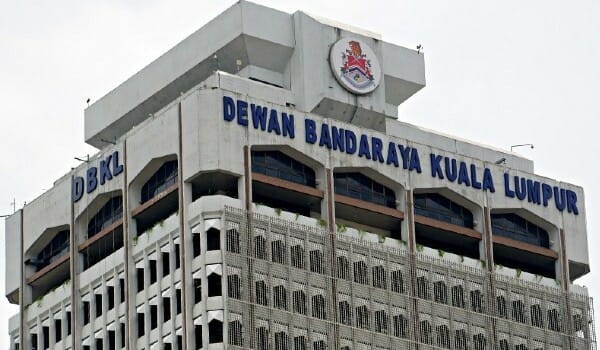
Kuala Lumpur residents and sustainable urban development advocates have called on Dewan Bandaraya Kuala Lumpur (DBKL) to expand its development capacity study for Bangsar into a citywide assessment, arguing that future development intensity should be determined by the ability of existing infrastructure and communities to accommodate further growth.
The Kuala Lumpur Residents Action for Sustainable Development Association (KLRA+SD) welcomed DBKL’s commencement of a six-month study examining the cumulative impact of existing, approved and future developments on infrastructure capacity in Bangsar.
In a letter dated Aug 28 addressed to Kuala Lumpur Mayor Datuk Seri TPr Fadlun Mak Ujud, the association said the Bangsar exercise represents an important shift away from assessing development applications solely on an individual basis towards considering the cumulative pressures created by multiple developments within the same locality.
KLRA+SD said different parts of Kuala Lumpur have different physical, infrastructural and environmental limits, which should be taken into account when determining how intensively an area can be developed.
The group said Kuala Lumpur has undergone substantial redevelopment and intensification over recent decades, while infrastructure and road networks in many established neighbourhoods were originally designed to support considerably lower levels of development.
As a result, individual projects could comply with planning requirements when assessed separately but collectively place substantial pressure on the same roads, drainage networks, utilities and public facilities.
KLRA+SD therefore welcomed indications that the Bangsar study could consider reducing the permitted density of future projects where the necessary infrastructure improvements cannot be undertaken.
“The maximum development intensity permitted on a parcel of land should not automatically be regarded as an entitlement to develop to that intensity irrespective of the carrying capacity of the surrounding area,” the association said.
It added that land ownership and development rights must operate within the wider planning, infrastructure and public-interest considerations of Kuala Lumpur.
While welcoming Bangsar as a starting point, KLRA+SD proposed that the methodology developed through the six-month exercise subsequently be extended to other areas experiencing significant development pressures before ultimately being applied across Kuala Lumpur.
A citywide carrying-capacity assessment, it said, could consider existing and committed developments, permitted and proposed plot ratios and gross floor areas, road and public transport capacity, drainage and flood mitigation systems, water and electricity supply, telecommunications infrastructure, public facilities and open spaces.
Pedestrian and cycling infrastructure, environmental constraints and other community and infrastructure requirements should also form part of the assessment.
The resulting framework could give DBKL a stronger evidence base when deciding both the appropriate intensity and sequencing of future developments across different parts of the capital.
KLRA+SD said such an approach could also complement implementation of the Kuala Lumpur Local Plan 2040 by ensuring planning decisions remain responsive to the actual and changing capacity of individual areas.
Crucially, the residents’ group said carrying-capacity studies should not merely identify infrastructure shortcomings after developments have already been approved.
Where an area has reached or exceeded its practical carrying capacity, the findings should be allowed to influence subsequent planning decisions, including future development densities and plot ratios, infrastructure requirements and the sequencing of new projects.
Where necessary infrastructure upgrades cannot reasonably be undertaken, the assessment should provide grounds for reconsidering the intensity of future developments in the affected locality.
Such a framework, KLRA+SD said, would establish a more balanced relationship between development and infrastructure provision rather than allowing infrastructure deficits to accumulate as development continues.
KLRA+SD also called for the methodology, assumptions and findings underpinning the Bangsar study — and any subsequent citywide assessment — to be made publicly available, subject to legitimate confidentiality and security considerations.
The association welcomed DBKL’s proposed use of artificial intelligence and three-dimensional modelling, saying the technologies could improve the city’s ability to assess and communicate the cumulative effects of development.
However, it stressed that public confidence would depend not only on the technology itself but also on transparency surrounding the underlying data, assumptions and methodology.
Residents, residents’ associations and other stakeholders should therefore be given opportunities to review and provide feedback on the findings at appropriate stages, it said.
KLRA+SD also proposed that DBKL consider subjecting the methodology and findings to independent technical review where the results could have significant implications for future development intensity.
The association said the Bangsar exercise could ultimately provide the foundation for a more systematic approach to managing Kuala Lumpur’s continued growth.
Instead of asking only whether an individual project complies with planning requirements, KLRA+SD said the planning system should address a broader question: whether the surrounding area has sufficient capacity to accommodate a proposed project alongside existing, approved and reasonably foreseeable developments.
“We believe that this should become an integral consideration in the planning of Kuala Lumpur,” the group said.
KLRA+SD consequently urged DBKL to expand the carrying-capacity methodology beyond Bangsar, use the assessments to determine development intensity and infrastructure requirements, publish the methodology and key findings, and consider independent technical reviews to strengthen public confidence.
The association stressed that such an approach should not be regarded as an obstacle to development.
Rather, it said, it could provide a more sustainable basis for determining where development should occur, how much additional development individual areas can reasonably accommodate and what infrastructure must be in place before further intensification proceeds.
The letter carries support from residents’ representatives and community organisations across Kuala Lumpur, including neighbourhoods in Cheras, Seputeh, Wangsa Maju, Kepong, Lembah Pantai, Segambut, Bandar Tun Razak and other parts of the capital. The supporting list runs to 78 entries, including a Hillpark task force representing residents from several developments and neighbourhoods in the Kerinchi and Bangsar South area.


