


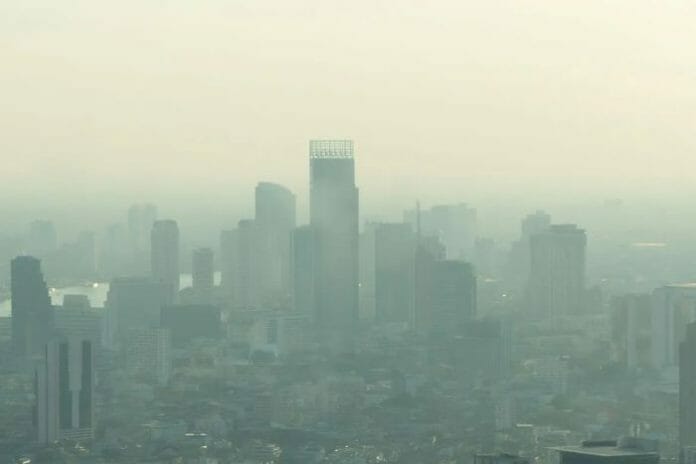
Singapore’s central region has slipped into the unhealthy air quality range as haze pushed the 24-hour Pollutant Standards Index (PSI) above 100 on Friday morning.
National Environment Agency (NEA) readings at 7am showed the central region recording a 24-hour PSI of 101, crossing into the unhealthy band of 101 to 200.
The other regions remained within the moderate range, with the west recording a PSI of 87, east 86, north 76 and south 74.
The 24-hour PSI is used as Singapore’s daily air quality indicator and forms the basis of NEA’s daily health advisories. It takes into account six pollutants including PM2.5, PM10, ozone, sulphur dioxide, nitrogen dioxide and carbon monoxide.
The agency said it will issue daily haze advisories once the 24-hour PSI enters the unhealthy range, defined as a reading above 100.
Separately, the one-hour PM2.5 reading measures the average level of fine particulate matter over a single hour. PM2.5, which consists of particles measuring 2.5 micrometres or smaller, is the dominant pollutant during haze and can pose health risks.
The latest readings come after the ASEAN Specialised Meteorological Centre raised its alert to Level 2 for the southern ASEAN region at the start of August, signalling an increasing risk of transboundary haze.
The alert is triggered by rising hotspot activity and moderate to dense smoke haze observed over two or more consecutive days.
Singapore’s 28-member inter-agency haze task force remains on standby to activate its respective action plans should air quality deteriorate further. Chaired by NEA, the task force coordinates measures to minimise and manage the impact of haze, with agencies adopting tiered responses based on air quality readings and forecasts.
The task force meets annually ahead of the dry season in June to review its plans. It has met twice this year, including in January following peatland and vegetation fires in east Johor and again in April.
Members of the public can monitor haze conditions and updates through NEA’s website, the haze microsite, the myENV application and its social media channels.
CNA


