



Short answer? Yes, it can.
Ten years after Train to Busan first sent audiences screaming aboard a KTX train, the Korean zombie thriller has returned to cinemas in a 4K remastered release. Having watched it again on the big screen last night, I went in wondering whether the film that scared me back in 2016 would still have the same bite a decade later.
It does. In fact, in some ways, it hits harder now.
Ten Years Later, And It Still Got Me
I first watched Train to Busan when I was 17. Back then, I remember feeling the suspense, the chaos and the sadness, but watching it again at 27 gave me something I didn’t quite have the first time around: a deeper appreciation of the people trapped inside that train.
And yes, somehow, despite knowing exactly what is coming, Train to Busan still managed to get me.
There were a few jumpscares where I genuinely went, “Ah dang it, I forgot about that,” only to immediately remember why I had been sitting on the edge of my seat ten years ago. The film still knows how to build tension, particularly when it confines its characters into those narrow train carriages and gives them very little room to escape.
Seok-woo Hits Differently At 27
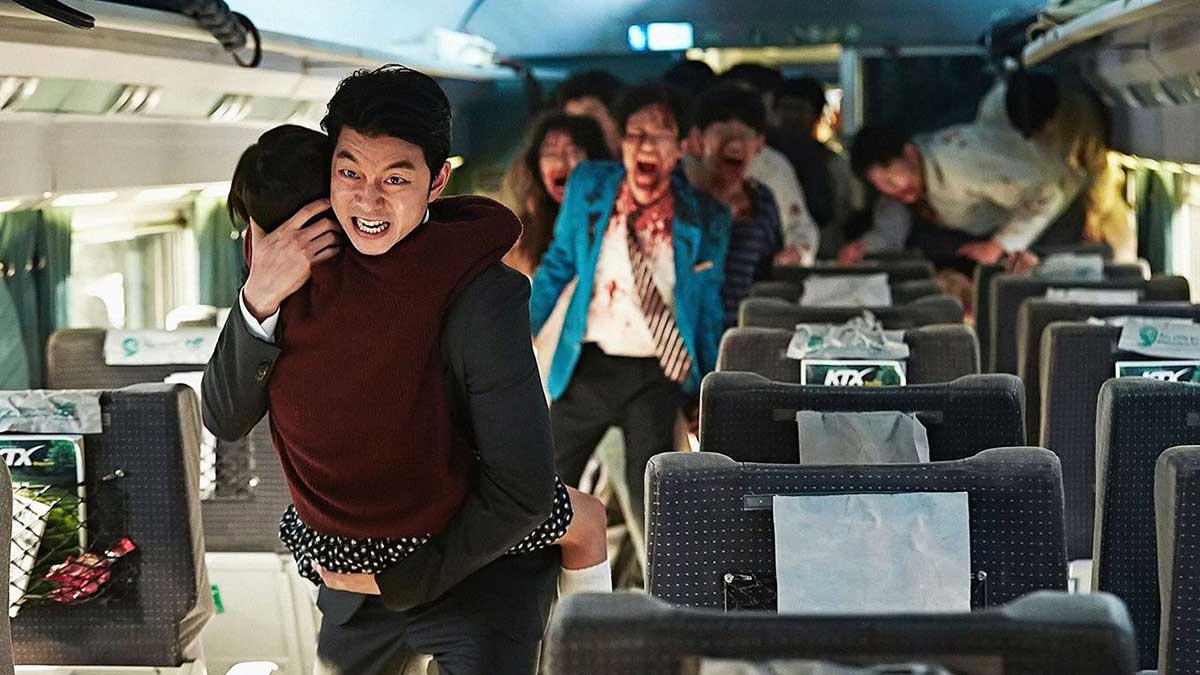
What surprised me most, however, was how much more I connected with Gong Yoo’s Seok-woo this time around.
When I first watched the film, his transformation from a selfish, work-obsessed fund manager into someone willing to sacrifice himself for others was certainly sad. But at 17, I don’t think I fully felt the weight of that journey.
Ten years later, I did.
Seok-woo begins the film as someone who puts himself first. His relationship with his daughter Su-an is strained, partly because his obsession with work has made him emotionally distant. Yet as the outbreak spreads, the same man slowly starts putting other people’s lives ahead of his own.
And what makes that development work is that it doesn’t come out of nowhere.
A lot of it stems from Su-an herself. Her instinct to care about others, even when Seok-woo doesn’t, gradually forces him to confront the kind of person he has become. By the time we reach the final stretch, his sacrifice isn’t simply a sad ending designed to make us cry. It feels like the culmination of everything the film has been building towards.
That’s something I appreciated far more at 27 than I ever could have at 17.

Finally, People In A Zombie Film Actually Make Sense
Then there is the actual zombie survival aspect, which remains one of the film’s biggest strengths.
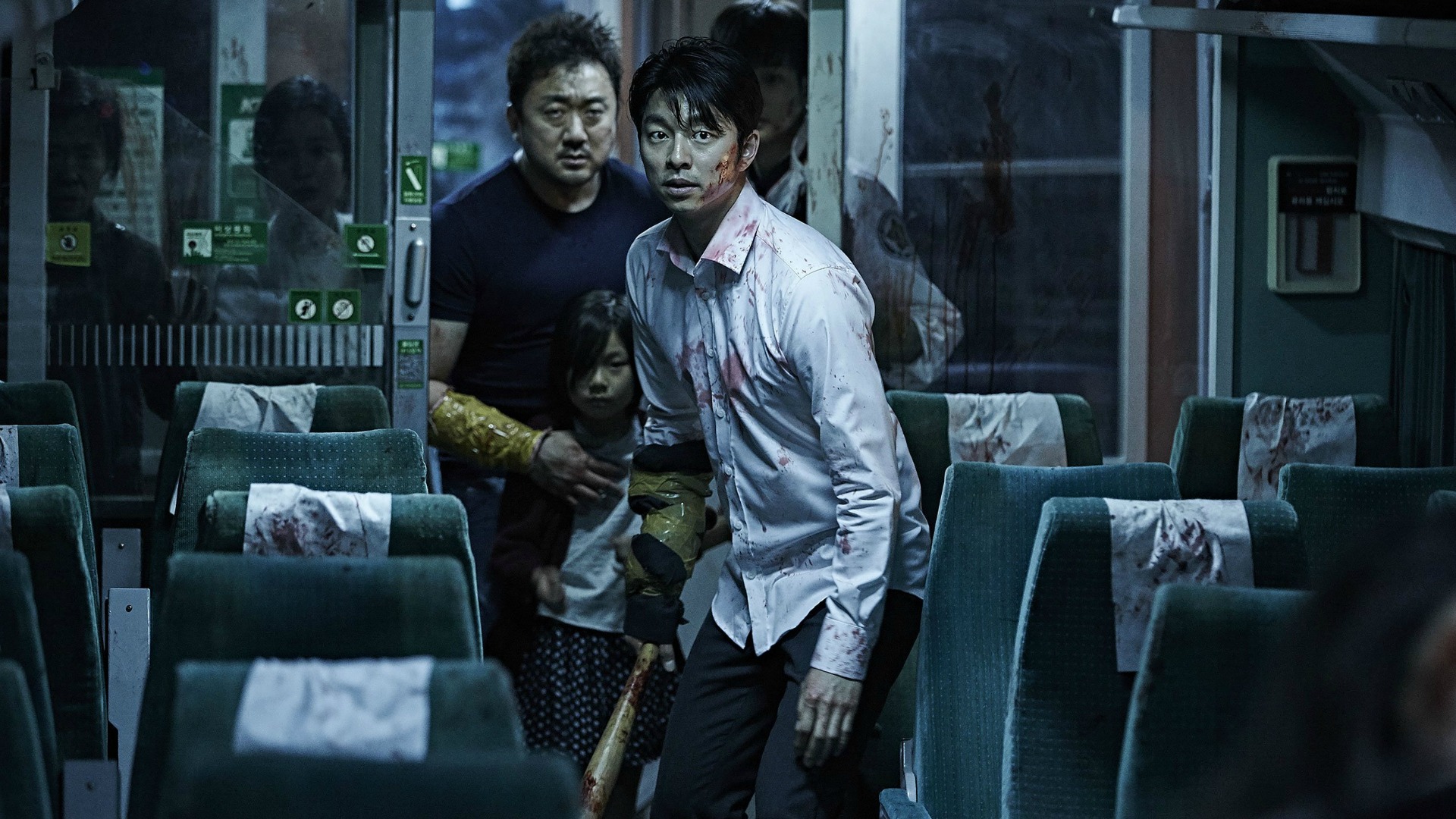
The characters generally make surprisingly sensible decisions. Don’t make unnecessary noise. Watch your surroundings. Protect yourself. Understand how the infected behave. Use whatever you can to create distance between yourself and the horde.
Granted, there are moments where certain decisions conveniently bend those rules because the story needs to move forward. But for the most part, Train to Busan understands that good horror isn’t necessarily about making everyone stupid just so the audience can yell at the screen.
It makes the survivors feel like people who are actually trying to survive.
And that makes the tension even better because when someone eventually makes a desperate decision, you understand why they are doing it.
The 4K Remaster Makes The Ride Even Better
The 4K remaster looks great, but what really stood out to me was how good the film sounded in the cinema.
The screams, the frantic movement and especially the sounds of the zombies gave the film an extra layer of intensity. Watching the infected pile into a carriage on a big screen is one thing. Hearing them come at you is another.
The GSC cinema experience helped too, even if the hall wasn’t exactly packed.
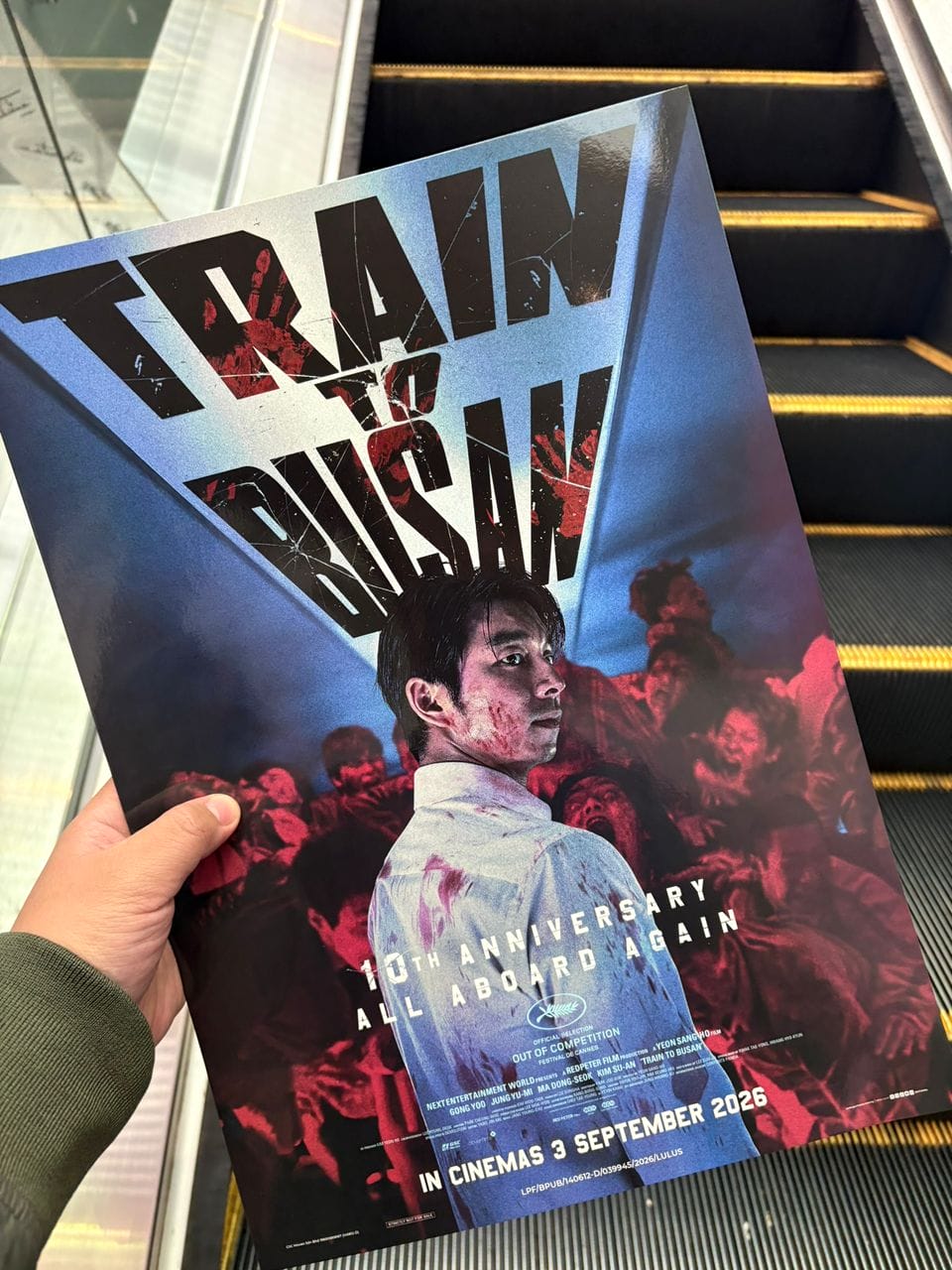
But hey, I got the anniversary poster and that thing is beaaaaautttt.
One Problem: The Subtitles
My one gripe with the screening was actually the subtitles.
I found myself relying more on the English subtitles than the Malay ones because there were several instances where the Malay translation didn’t quite capture the context of what was being said.
At times, it felt like the meaning had shifted rather than simply being translated. So instead of having the English and Malay subtitles complement each other, I ended up reading the English subtitles most of the time to make sure I was getting the intended context.
It’s a small issue in the grand scheme of things, but noticeable enough to mention.
The Zombies Aren’t Really The Scariest Part
Beyond that, what makes Train to Busan continue to stand out is how well it balances everything.
It is a zombie film, yes, but it is also an action film, a survival thriller and, ultimately, a story about people.
The zombies are the threat, but the film’s real tension often comes from the humans.
You have Sang-hwa putting himself on the line for his pregnant wife. Yong-guk and Jin-hee trying to survive as young people thrown into something completely beyond their understanding. Yon-suk, meanwhile, represents the ugly side of survival, where fear and self-preservation can turn people against one another.
These characters aren’t just there to be zombie food. Their personalities directly affect how they respond to the crisis, which makes every sacrifice carry considerably more weight.

Nothing That Came After Quite Matched It
Ten years later, I still think that is where Train to Busan separates itself from many of the zombie films that followed.
Peninsula couldn’t quite recreate it. Seoul Station, despite coming from the same creative universe, didn’t reach the same heights. Even Yeon Sang-ho’s latest zombie film Colony doesn’t come close to matching the particular magic of the original.
That isn’t necessarily because those films are incapable of being entertaining. It is because Train to Busan got an almost impossible combination right: the action works, the zombies are terrifying, the characters are memorable and, most importantly, I actually cared whether these people lived or died.
The Film That Helped Put Korean Zombies On The Map
And its influence shouldn’t be understated either.
Train to Busan became one of the films that pushed Korean genre cinema further into the international spotlight. It showed audiences outside Korea that a zombie film didn’t need to come from Hollywood to deliver spectacle, suspense and genuine emotional weight.
Ten years later, that still feels like one of its biggest achievements.
So, Does It Still Hold Up?
Absolutely.
The jumpscares still work. The zombies still sound horrifying. The action still gets the heart racing. The 4K remaster gives the film a beautiful new lease of life on the big screen.
But more importantly, the story still works because its characters still feel human.
At 17, I watched Train to Busan and thought it was a great zombie movie.
At 27, I watched it and understood why it is such a great story about being human.
Rating: 9/10
95% on Rotten Tomatoes, 4 out of 5 on Letterboxd and 7.6 on IMDB.
Ten years on, Train to Busan remains one of the best zombie films Asia has ever produced. Hell, it belongs up there among the best zombie films, period.


