


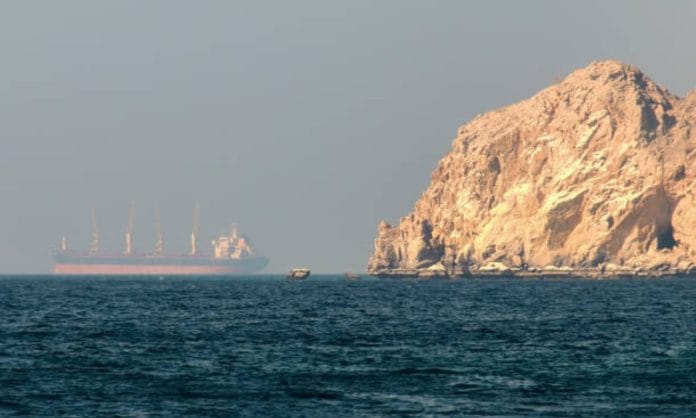
Iran is preparing to announce a new restricted zone in the Gulf and a new shipping corridor through the Strait of Hormuz, as military tensions continue to disrupt one of the world’s most important energy routes.
Mohsen Rezaei, secretary of Iran’s Supreme National Security Council, said the restricted zone would begin from where the US blockade of Iran starts and extend into parts of the Gulf. Ships entering the area would be added to a sanctions list, although Iran has not provided further details on how the zone would be enforced.
Tehran also plans to approve maps for a new international corridor through Iranian and Omani waters, with Iran taking a management role.
“The maps of a new international corridor which lies in Iranian and Omani waters and in which Iran will have management have been agreed and should be signed in the coming days,” Rezaei said in an interview with state television.
Iran has linked the reopening of the Strait of Hormuz to an end to US military action against it.
“We will only commit to the Strait of Hormuz being open when they (the Americans) stop the sabotage, threats and attacks on Iran,” Rezaei added.
The latest move comes as shipping through the waterway remains sharply reduced. An average of 10 commodity ships crossed the Strait each day over the past 10 days, the lowest level since May, according to shipping data.
The disruption has helped push oil prices higher, with Brent crude rising 0.8% on Monday to above US$97 a barrel.
The conflict has also intensified after a period of relative calm in August. US forces struck three Iranian oil tankers on Saturday, according to US Central Command, following attacks by Iran’s Islamic Revolutionary Guard Corps on US warships in the region.
The Strait of Hormuz remains critical to global energy supplies, with around a fifth of global oil supply flowing through the waterway before the conflict.
Iranian officials have also warned that pressure on the country’s economy is mounting under US sanctions and the blockade of its oil exports.
Iranian Parliament Speaker Mohammad Baqer Qalibaf said the US should understand that the rules of the game have changed.
“From now on, any attack against Iran’s interests and security will receive a faster, heavier and more painful response,” he said.
Meanwhile, Iran’s Oil Minister Mohsen Paknejad said the country’s key Kharg Island export hub had been hit around 550 times in previous months but continued to operate.
US Central Command said it had redirected 92 commercial vessels, disabled three and boarded two as part of efforts to enforce the blockade.
Despite the disruption, US Energy Secretary Chris Wright said oil was still moving through the waterway.
“Our transits through the Strait are averaging over 9 million barrels a day now, and with the access pipelines that go around the strait, we’re probably two-thirds or more of pre-conflict flows. So Iranians are still causing trouble, but the United States Navy is winning that battle,” he told CNN.
Reuters


