


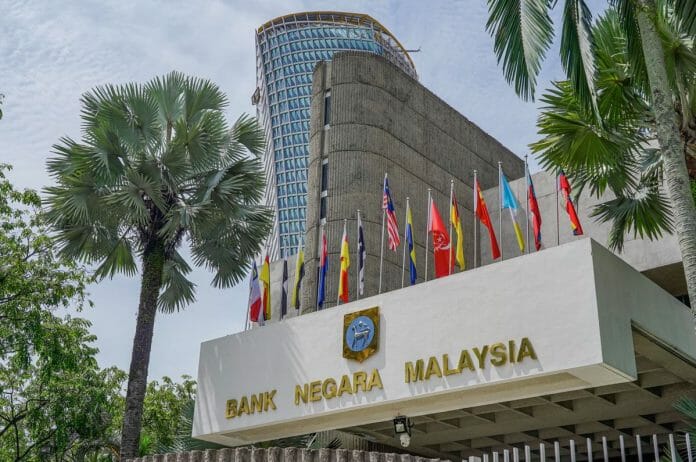
Bank Negara Malaysia’s (BNM) international reserves slipped US$100 million to US$132.0 billion as at Aug 28, 2026, marking a second consecutive monthly decline, according to Kenanga Research.
The research house said reserves declined 0.1% month-on-month, largely due to a marginal reduction in foreign currency reserves, which fell US$200 million to US$116.6 billion, despite sizeable foreign purchases of Malaysian bonds.
The decline was partly offset by other reserve assets, which increased US$100 million, or 2.4%, to US$2.3 billion. Holdings of gold, Special Drawing Rights and Malaysia’s reserve position with the International Monetary Fund were broadly unchanged.
In ringgit terms, total reserves declined RM500 million, or 0.1%, to RM534.7 billion in August.
Net of predetermined short-term drains on foreign currency assets, total reserves increased to US$96.9 billion in July from US$96.7 billion in June, while net foreign currency reserves rose to US$81.6 billion from US$81.3 billion. The net reserve measures lag headline reserves by one month.
Kenanga said the ringgit appreciated 0.4% during August, averaging RM4.07 against the US dollar compared with RM4.08 in July.
Trading remained exceptionally tight during the first half of the month, with the currency largely confined to the RM4.09-RM4.10 range.
The research house said US interest-rate expectations remained a more significant driver of the ringgit than movements in energy prices.
The currency subsequently strengthened as concerns surrounding US fiscal conditions and rising long-term Treasury yields weighed on the dollar.
The US Dollar Index weakened to 99.5 in August from 100.9 in July, helping all ASEAN-5 currencies appreciate against the greenback.
The Thai baht led regional gains with a 1.5% appreciation, followed by the Singapore dollar and Indonesian rupiah at 1.2% each, the ringgit at 0.4% and the Philippine peso at 0.2%.
On monetary policy, Kenanga expects BNM to maintain the Overnight Policy Rate (OPR) at 2.75% throughout 2026.
It viewed BNM’s removal of the word “appropriate” from its assessment of the monetary policy stance as an attempt to preserve policy flexibility rather than a signal that an interest-rate increase is imminent.
Kenanga pointed to contained downstream inflationary pressures and softer wage growth in the technology sector as evidence that there is little immediate need for BNM to adjust rates.
With Malaysia’s economic growth expected at around 5.0% in 2026 and inflation at 1.8% in July, the research house said conditions currently do not point towards a near-term monetary policy move.
However, it cautioned that BNM’s patience remains conditional, particularly as subsidies continue to cushion consumer prices and the output gap could turn positive next year.
Kenanga also viewed the recent steepening of the Malaysian Government Securities yield curve as reflecting imported global term-premium pressures rather than expectations of an OPR increase.
Kenanga maintained its constructive medium-term outlook for the ringgit, forecasting the currency to strengthen to RM3.95 against the US dollar by end-2026, compared with RM4.06 at end-2025.
The research house expects the US Federal Reserve to keep interest rates unchanged in September, with its first rate cut projected only in the second quarter of 2027.
Kenanga said the stronger-than-expected August US payrolls report had raised the hurdle for monetary easing but was not sufficient on its own to change the outlook, given benign wage growth and the concentration of employment gains in a relatively narrow range of sectors.
Attention will now turn to the US consumer price index data on Sept 11, which Kenanga expects will be an important signal for whether the Fed maintains rates or moves towards further tightening.
Malaysia’s domestic fundamentals, meanwhile, remain supportive of the ringgit. Kenanga highlighted foreign currency deposits of RM336.8 billion, which it said represent a sizeable pool that could potentially be converted into ringgit-denominated assets over time.


