


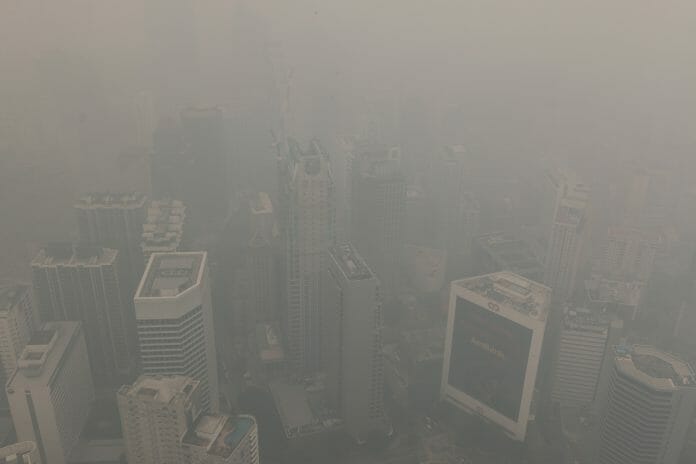
Malaysia’s number of air quality monitoring stations recording unhealthy Air Pollutant Index (API) readings fell to 37 as of 3pm on Sept 16, down from 38 stations an hour earlier, although Johan Setia in Selangor remained the worst-affected area.
Data from the Air Pollutant Index Management System (APIMS) showed Johan Setia recording an API reading of 184, followed by Cheras in Kuala Lumpur at 175 and Shah Alam in Selangor at 171.
The improvement was partly driven by conditions in Kedah, where Alor Setar returned to the moderate category with a reading of 100.
Selangor continued to record six stations in the unhealthy category, namely Johan Setia at 184, Shah Alam at 171, Petaling Jaya at 164, Klang at 161, Kuala Selangor at 160 and Banting at 160.
In the Federal Territories, Putrajaya recorded an API reading of 171 while Batu Muda stood at 170.
Negeri Sembilan recorded three unhealthy stations, with Nilai at 172, Seremban at 167 and Port Dickson at 152.
Penang had four stations in the unhealthy category, comprising Minden at 166, Balik Pulau at 165, Seberang Jaya at 160 and Seberang Perai at 159.
Perak recorded five unhealthy stations, led by Seri Manjung at 166 and Tasek Ipoh at 164, followed by Tanjung Malim at 161, Taiping at 158 and Pegoh, Ipoh at 152.
Melaka recorded unhealthy readings at Bukit Rambai at 155, Alor Gajah at 153 and Bandaraya Melaka at 146.
Pahang had four unhealthy stations, with Temerloh recording 156, Jerantut 154, Indera Mahkota in Kuantan 152 and Balok Baru in Kuantan 151.
In Terengganu, Kuala Terengganu recorded 161, followed by Kemaman at 149, Paka at 144 and Besut at 138.
Johor recorded unhealthy readings at Tangkak with 150 and Kluang with 124, while Sungai Petani and Kulim Hi-Tech in Kedah recorded 158 and 156 respectively. Tanah Merah in Kelantan recorded 155.
Overall, 25 stations were in the moderate category while six stations recorded good air quality, all in Sabah and Sarawak.
Kota Kinabalu recorded the country’s lowest API reading at 38, followed by Sandakan and Limbang at 49 each.
Under APIMS, readings between 0 and 50 are classified as good, 51 to 100 as moderate, 101 to 200 as unhealthy, 201 to 300 as very unhealthy and readings above 300 as hazardous.


