


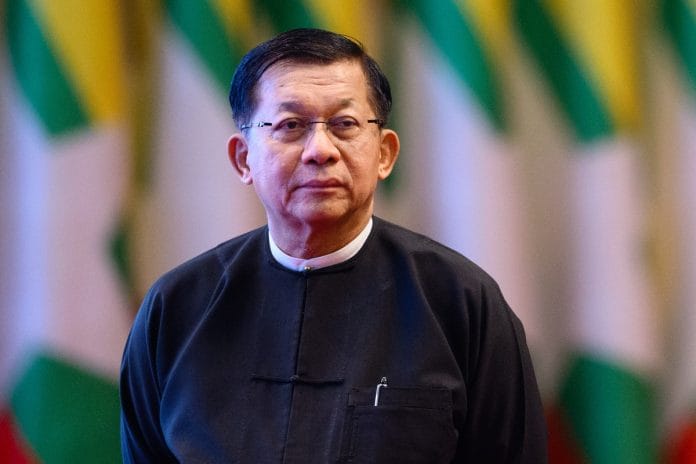
Prime Minister Datuk Seri Anwar Ibrahim will invite Myanmar President Min Aung Hlaing to make an official visit to Malaysia as part of efforts to negotiate the gradual repatriation of Myanmar refugees in the country.
Anwar said the proposal had been conveyed to the Home Ministry and Cabinet about two weeks ago, with Malaysia seeking Myanmar’s agreement to gradually accept the return of its citizens.
“I am inviting him to say that we can be friends and trade…, but Myanmar must accept (the Myanmar refugees in Malaysia). If 200,000 cannot be taken back at once, take them back gradually, and we will help resolve the matter,” he said in the SembangOhhYeahh podcast titled Eps Khas: Siapa Sebenarnya Anwar Ibrahim, Di Sebalik Gelaran PMX?, which aired on YouTube today.
He said direct negotiations with Myanmar’s leadership were necessary as the repatriation process could not be resolved if Myanmar refused to accept the refugees.
Anwar said meetings with Myanmar leaders had previously been held in Bangkok and Beijing to discuss humanitarian and security issues as well as ways to address the refugee situation in Malaysia.
At the Bangkok meeting, he said Malaysia conveyed its position that violence against refugees must stop, as the situation also had implications for Malaysia.
He said repatriation should not simply involve sending refugees back to Myanmar, but must include guarantees for their safety and access to essential facilities such as medical care.
“The condition is, you (the Myanmar government) must stop killing (returning refugees) and stop bombing Rakhine, Myanmar. Secondly, give them access to the medical facilities provided. Both conditions were accepted (during the negotiations),” he said.
Anwar said the issue was subsequently raised during the Beijing meeting, where he told Myanmar that Malaysia was prepared to maintain good relations but expected the country to find a way to accept its citizens back.
“But I said, you must find a way to take them back. Otherwise, it will be difficult later. These are people in need. They are refugees and have no jobs. Local people do not like them because they have many problems. So, we also have our limits,” he said.
He said negotiations had resulted in Myanmar agreeing to accept 5,000 refugees, with about 1,500 more expected to be repatriated within the next one to two weeks.
The government was also prepared to cover certain costs, including travel, clothing and food, to facilitate the process, which Anwar said was more practical than supporting refugees in Malaysia over a prolonged period.
Anwar acknowledged concerns among some members of the local community over the presence of Myanmar refugees, particularly when incidents involving violations of the law, including unauthorised gatherings, occur.
He said the government would not compromise on violations of the law and authorities must take immediate action when such incidents occur.
At the same time, he said enforcement must be balanced with humanitarian considerations, taking into account the hardships faced by those who had fled their country.
“I understand the people’s criticism. They are struggling, and it is difficult for them to find work. The Rohingya (Myanmar refugees) can sometimes be unruly in public…, but Malaysia must uphold our image as a country that has humanity,” he said.
Anwar said the government’s aim was to ensure Myanmar refugees did not remain in Malaysia indefinitely, with their repatriation pursued through negotiations to ensure the process was orderly and safe.


