


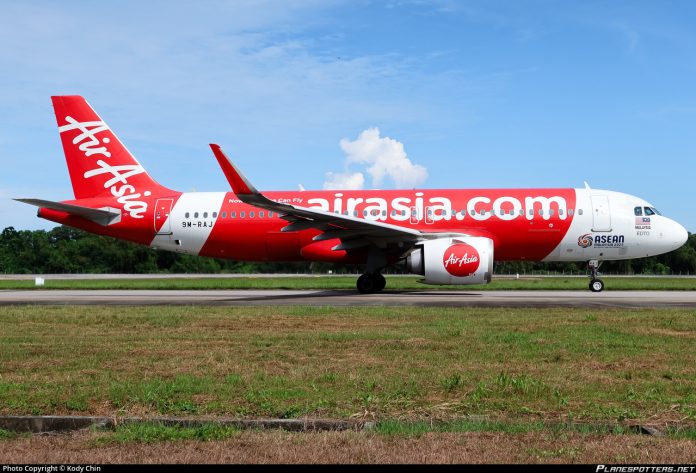
AirAsia Group Bhd is using the current aviation cost crunch to reshape its balance sheet and fleet ahead of a planned fourth-quarter (4Q) capacity rebound, with co-founder Tan Sri Dr Tony Fernandes rejecting suggestions that the airline’s fundraising reflects financial distress.
During a media briefing, Fernandes said the group’s planned fundraising exercises are primarily aimed at refinancing existing debt, lowering interest costs and securing better financing terms rather than raising fresh capital to cover operating shortfalls.
He said AirAsia remains firmly committed to its existing markets and expects stronger travel demand to support a capacity ramp-up from 4Q26.
Unlike the Covid-19 crisis, when AirAsia lost about RM10 billion in revenue and was forced to drastically reduce operations, Fernandes said the airline is now facing a cost-driven challenge stemming mainly from elevated fuel prices and geopolitical tensions.
“The difference this time is that demand remains strong,” he said, adding that the group intends to use the disruption to optimise its operations and strengthen the business.
The planned fundraising exercises, he stressed, are largely focused on debt restructuring, refinancing and balance-sheet consolidation.
He highlighted that AirAsia is seeking to reduce financing costs and improve borrowing terms as it strengthens its capital structure following the consolidation of its aviation businesses in January 2026.
“Material financing developments will be disclosed through official exchange filings once definitive terms are finalised,” he said.
Fernandes also rejected suggestions that aircraft had been grounded because of payment issues, saying there had been no such grounding arising from non-payment.
“AirAsia is using current market conditions to reshape its aircraft portfolio.
“In fact, we are looking at acquiring Airbus A220 orderbook positions at attractive prices as part of a broader fleet optimisation strategy,” he said, while emphasising that the consolidation of AirAsia’s short- and long-haul businesses under a single group has also given the airline greater flexibility to deploy aircraft across its network based on demand and route profitability.
Fernandes revealed that the group expects geopolitical tensions eventually to ease and fuel prices to moderate, positioning the airline to benefit once operating conditions normalise.
His message was that AirAsia intends to endure the current cost pressures much as it has previous crises and emerge with a leaner cost base and more efficient fleet.
Moving forward, Fernandes said the group is now preparing to restore capacity towards pre-war levels from the fourth quarter, coinciding with Southeast Asia’s peak year-end travel season.
“Malaysia remains a key focus, with AirAsia strengthening domestic services and major ASEAN trunk routes where demand remains resilient while optimising the deployment of narrow- and wide-body aircraft.
“In Thailand, AirAsia is working with the government and tourism authorities to support passenger growth, with capacity expected to recover from 4Q26,” he added.
Overall, Fernandes urged investors to focus on the airline’s 3Q26 and 4Q26 financial performance as the benefits of capacity optimisation, stronger seasonal demand and cost-management measures begin to come through.
“With the aviation consolidation completed, aircraft being redeployed more efficiently and refinancing efforts under way, we are now positioning the 4Q26 as the next major test of AirAsia’s turnaround,” he stressed.


