


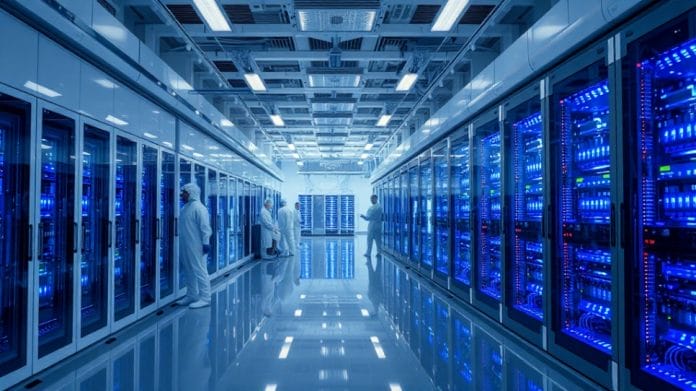
Data centres now account for more than 9.3% of total electricity consumption in Peninsular Malaysia, putting greater focus on energy efficiency and cooling as the country expands its digital infrastructure.
The Energy Commission’s latest statistics show that data centre electricity consumption has reached a record level, with cooling systems emerging as a major contributor as operators manage server heat in Malaysia’s hot and humid climate.
The challenge is becoming more pronounced with the growth of artificial intelligence and high-performance computing, which have pushed power demand per data centre rack from a few kilowatts to tens of kilowatts or more.
Traditional air-cooling and mechanical and electrical systems are increasingly being supplemented by technologies such as computational fluid dynamics simulations, immersion cooling and AI-powered fan wall systems to manage higher heat loads while reducing energy consumption.
Immersion cooling, which submerges servers in insulating liquid, is gaining attention as an alternative to conventional air cooling and could reduce the electricity required for thermal management.
The pressure on energy use comes as Malaysia continues expanding its power grid and gas generation capacity towards the 2030s, while data centre developers and engineering firms work on ways to reduce Power Usage Effectiveness and water consumption.
Park Junho, director of Shinsung E&G Malaysia, said Malaysia’s shift towards a technology-driven economy would require engineering solutions suited to the country’s tropical environment.
“Malaysia is rapidly evolving from a traditional manufacturing hub into Asia’s technological heartbeat for the next-generation digital economy. By combining our decades-long heritage in cleanroom technology with intelligent turnkey MEP solutions, Shinsung E&G is fully overcoming the physical challenges of a tropical climate. We are dedicated to establishing the gold standard for a ‘flawless smart data center ecosystem’ right here in Malaysia—where energy loss converges to zero while precision control is maximized.”
The growing demand for specialised cooling and environmental control is also increasing the role of engineering firms capable of handling mission-critical facilities, including hyperscale data centres and advanced cleanrooms.
The development highlights a growing challenge for Malaysia’s digital infrastructure expansion: ensuring that rising computing demand can be supported without placing excessive pressure on electricity and water resources.


