


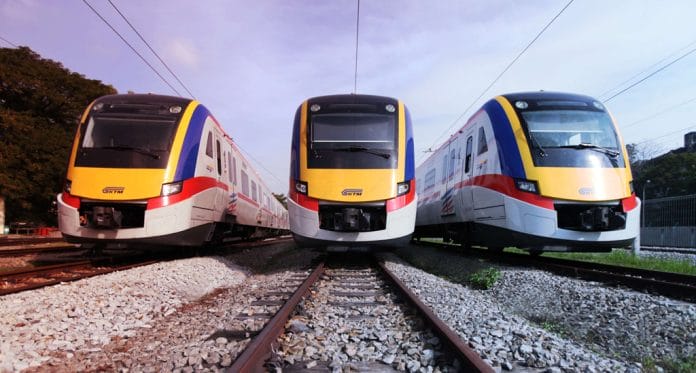
Malaysia will need about 25,000 workers in rail technology and operations by 2030 as the country expands its rail infrastructure and develops new systems, said Deputy Human Resources Minister Datuk Khairul Firdaus Akbar Khan.
He said the Human Resources Ministry, through the Manpower Department, was developing Technical and Vocational Education and Training (TVET) courses aligned with industry requirements to meet the projected demand.
“Based on the views and advice from industry players, every plan will be tailored to industry needs, ensuring trainees can be placed in fields that match industry demand,” he said after officiating the 2026 TVET Forum for the Indonesia-Malaysia-Thailand Growth Triangle (IMT-GT) in Kuantan today.
The forum, themed Empowering TVET for Next Generation Rail Systems and Future Rail Technologies, brought together policymakers, TVET institutions, rail industry players, researchers and international partners to address talent development for the region’s rail sector.
Meanwhile, Malaysia Rail Link Sdn Bhd (MRL) chief executive officer Datuk Seri Darwis Abdul Razak said about 3,000 jobs would be created specifically for the operation of the East Coast Rail Link (ECRL).
The positions will cover train operations, infrastructure maintenance and rolling stock maintenance.
“Our need is indeed urgent and efforts towards this must be carried out continuously. The agencies involved, particularly TVET institutions, are among the sources from which we can obtain skilled workers to help make the ECRL project a success,” he said.
Darwis said demand for skilled workers would extend beyond the ECRL, with opportunities also available across the wider rail industry including at Keretapi Tanah Melayu Bhd.
He said ECRL construction had reached 95.41% as of August, while Phase One from Kota Bharu to Gombak was 97.65% complete and targeted for completion by mid-December, subject to testing, commissioning and safety requirements.
“Originally, we were scheduled to complete the ECRL in January 2027. However, the government requested that the railway service be opened to the public in December to coincide with the school holidays. We are working towards achieving that target.
“So far, the testing and commissioning results have been positive. We hope the entire Phase One alignment, from Kota Bharu to Gombak, can be opened to the public by December 2026,” he said.
Darwis said he travelled from Gombak to Kota Bharu on Sept 25, marking the first time the full 520-kilometre mainline had been traversed by train.
The journey took about three hours and 19 minutes at speeds of up to 160 kilometres per hour, demonstrating that travel between Kota Bharu and Gombak in less than four hours was achievable, he said.
He added that the successful test run involved teams overseeing track certification, signalling and power supply, train movement monitoring and the resolution of technical issues.


