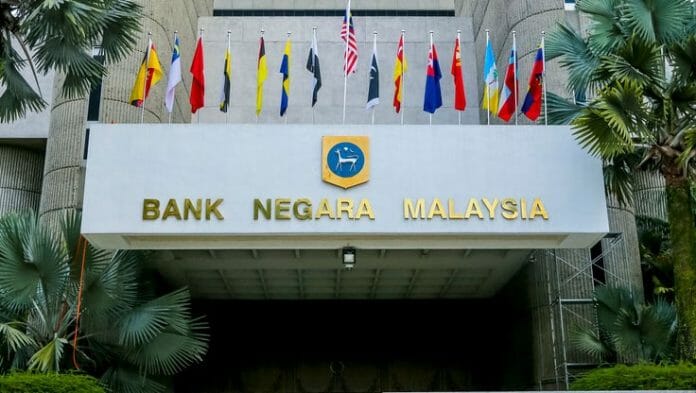
Malaysia’s financial system remains resilient despite heightened risks from the Middle East conflict, with banks, insurers and takaful operators maintaining strong capital and liquidity buffers while credit quality remains broadly sound, Bank Negara Malaysia (BNM) said in a statement issued today.
The central bank said the conflict has emerged as an important downside risk to the global economic and financial outlook, mainly through higher energy, logistics and input costs, supply disruptions and increased volatility in financial markets.
For Malaysia, however, the transmission is largely indirect as the financial system has limited direct exposure to the Middle East. Risks are instead flowing through the real economy and global financial markets, potentially affecting business margins, household purchasing power, asset valuations, exchange rates and funding conditions.
BNM said business conditions remain broadly stable, supported by domestic demand, electrical and electronics exports and ongoing investment activity. Nevertheless, some companies — particularly small and medium-sized enterprises — are facing higher input and logistics costs, delayed payments and longer cash-conversion cycles.
The pressures are more visible in wholesale and retail trade, construction and selected manufacturing segments.
As at June 2026, the business loan impairment ratio stood at 2.8%, although repayment pressures have emerged among some SMEs in transportation, wholesale and retail trade and primary manufacturing.
Despite this, credit conditions continue to support viable businesses. Outstanding business loans expanded 7.3% year-on-year in June, well above the average 4.1% growth recorded between 2022 and 2025, helped by working-capital financing.
Household Balance Sheets Remain Sound
BNM said household financial conditions also remained generally resilient, supported by stable labour market conditions and government measures that have limited the pass-through of higher global costs.
There has been no broad-based increase in new household repayment difficulties, although deeper repayment stress was slightly more pronounced among lower-income borrowers.
The median household debt-service ratio stood at 32.1% in June, while the median debt-to-income ratio remained stable at 1.28 times gross income.
Domestic financial markets have meanwhile continued to function in an orderly manner despite global volatility.
Malaysia’s Financial Market Stress Index averaged 9%, above its 2021–2025 average of 7.4%, while average daily onshore foreign-exchange turnover stood at US$21.9 billion. The ringgit was down just 0.43% against the US dollar on a year-to-date basis.
Banks Maintain Strong Buffers
BNM said banks remain well placed to absorb further shocks.
The banking system’s total capital ratio stood at 17.9%, while return on equity was 11.5%. The aggregate impairment ratio remained at 1.4%, with loan-loss coverage at 124.6%.
Liquidity positions were similarly strong, with the Liquidity Coverage Ratio at 149.6% and Net Stable Funding Ratio at 114.7%, both comfortably above regulatory minimums. Although competition for deposits has pushed up some funding costs, BNM said this has not translated into broader funding stress.
Insurers and takaful operators also remained well capitalised, with an aggregate capital adequacy ratio of 225% as at June. Direct exposure to conflict-affected regions accounted for only 0.4% of total gross premiums.
BNM cautioned that a prolonged or more severe Middle East conflict could still generate larger commodity shocks, persistent supply disruptions and weaker global growth.
Nevertheless, it said current evidence indicates that risks to domestic financial stability remain manageable, while financing continues to flow and financial institutions retain sufficient capital, liquidity and provisioning buffers.