Home Blog Page 3554

Discover The Rivers of the Margaret River Region

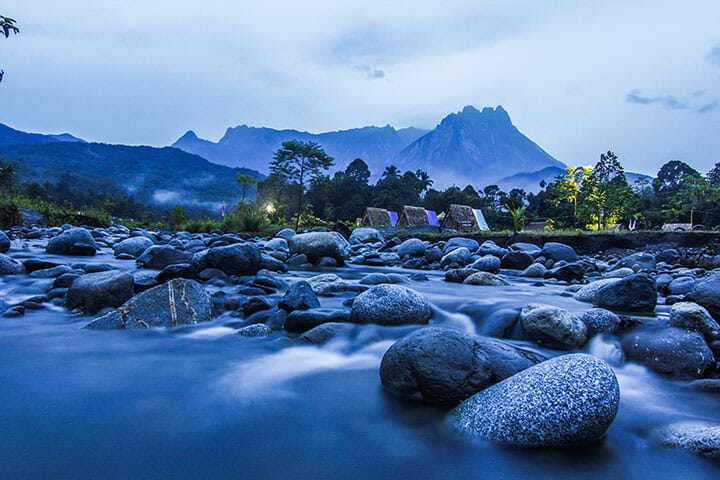
The rivers of the Margaret River Region are as integral to the magic of the South West’s landscape as the sea, trees and beaches.

From the magnificent Blackwood to the secluded Margaret River and the world-class Vasse Wonnerup Wetlands – the rivers of the Margaret River Region each have their own flora, fauna and adventure to offer.

The fact the Blackwood is the longest flowing river in the south west makes it really special, and because it is always changing there is so much to see. From the Rivermouth to the Hardy Inlet, the scope of wildlife is incredible.

Blackwood River begins at the junction of Arthur River and Balgarup River and travels in a south westerly direction through Bridgetown and Nannup until it discharges into the ocean at Hardy Inlet near Augusta. It has 41 tributaries and at 300km, it is the longest river in the South West.

It is unusual not to encounter the resident pod of dolphins along the route (particularly in summer) and the abundant birdlife is always a feature. There’s a strong local pelican population, avocets, spoonbills, pied oystercatchers and a flock of musk ducks who scurry along the surface of the river flapping their little wings and disappearing when they dive.

Whereas the much smaller Margaret River offers seclusion. Margaret River arises from a catchment of 40sqkm in the Whicher Range and extends for 60km. The middle passes through land cleared for agriculture and viticulture and the mouth of the river is a small estuary, closed to the Indian Ocean by a sandbar.

Bird watching (photo credit: Margaret River.com)

If birdlife is your particular passion, the Vasse Wonnerup Wetlands, fed by the Vasse river on the outskirts of Busselton, is said to have the highest concentration of birdlife in Australia and is listed under the Ramsar Convention as a wetland of international importance.

The wetlands cycle through dramatic seasonal changes from abundant flooding to shallow mudflats, and play host to changing populations of over 90 species of birdlife, many of them rare.

The headwaters of the river are in the Whicher Range and flow in a northerly direction through Busselton and thereafter the Vasse Estuary to the Indian Ocean via Wonnerup Inlet and Geographe Bay. The basin area is over 230km and the length is 32km. The Vasse Wonnerup Wetlands receive flow from the Vasse, Sabina, Abba and Ludlow rivers.

Where To Travel In December

0

December is the ideal time to sidestep the hectic holiday season by taking a holiday of your own. Escape your regularly scheduled life in the first half of the month and take advantage of lower prices and crowds, or postpone your travel joy (for just a couple of weeks) to join in sparkling seasonal celebrations around the world.

Scroll down to find a globe’s worth of exciting spots to keep those winter blues far, far away this December.

As always, check for travel restrictions and closures before planning your trip.

Basel, Switzerland

Embrace Basel’s holiday spirit with a scarf and a smile. Until Christmas Eve, the Old Town in this fairy-tale city on the Rhine twinkles with 180 Christmas market stalls and rustic-wood mini-chalets with roofs as white as winter snow.

Climb to the top of adjacent Basel Cathedral to see the shimmering sea of lights below — including a huge Christmas tree trimmed with famed Johann Wanner ornaments — and add your holiday hopes and dreams to the Basel Wish Book. Temperatures hover in the low 40s, but you can rely on Swiss hot chocolate and fondue to keep you warm and cozy.

Palm Springs, California

palm trees and mountains in palm springs
Stay warm in Palm Springs. (Photo: Getty Images)

When it’s freezing almost everywhere else in America, take heart: December in the Coachella Valley is sunny and breezy, with high temperatures generally in the low 70s. Hike the two-mile Palm Canyon Trail to see the world’s largest fan palm oasis, survey snow-topped mountains from the Aerial Tramway, and feel the glow of the Palm Springs Festival of Lights Parade.

At night, cozy up by a fire pit — available to both hotel guests and bar patrons at either the Renaissance Palm Springs Hotel or The Westin Mission Hills Golf Resort & Spa — then lean back and be dazzled by a desert sky full of stars.

Whistler, British Columbia

skiers in whistler
Hit the slopes in Whistler. (Photo: Getty Images)

The December slopes at Whistler Blackcomb are generally packed with dry powder and lighter crowds than in January, so you can ski, snowboard and snowmobile to your heart’s content. Or explore more level terrain while cross-country skiing, snowshoeing or dog-sledding — and take a deep breath of the cool, crisp Canadian air.

Trinidad & Tobago

In this dual-island nation in the southernmost Caribbean, December’s soft afternoon rains bring lush greenery and lower room prices. With spicy and flavorful cuisine, slinky calypso music and pristine beaches set the spicy scene on both islands, but Trinidad is also known for its jungles, waterfalls and tar-bottomed lake. Smaller, less populated Tobago is famed for its forest reserve full of hummingbirds.

Guayaquil and the Galapagos Islands, Ecuador

On Ecuador’s desert coast, December brings warmer temps (averaging 85 degrees), with a mix of sun, drizzle and calm breezes. Giant Galapagos tortoises begin to hatch on seven of the Galapagos’ legendary islands, and visibility is excellent for snorkeling.

Come New Year’s Eve, locals in the port city of Guayaquil take to the streets for a giant party with music and a fireworks show, as well as the effigy-burning of famous figures. Men dress in drag to symbolize the “widow of the old year,” and you’re likely to see someone running down the street with an empty suitcase, inviting future travels.

Hong Kong

fireworks over victoria harbour hong kong
Celebrate the holidays in Hong Kong. (Photo: Getty Images)

The dry season in Hong Kong begins in mid-December, with clear skies and temps in the 60s, so you can ditch that winter coat for a light sweater. For the holidays, the city drapes itself in a solar system’s worth of Christmas lights, and shopping avenues are stocked with, well, everything.

Eat your way around the world at the massive Hong Kong Food Festival. Then ring in the New Year with glittering fireworks over Victoria Harbour.

Bhutan’s Paro Valley

The lovely Paro Valley offers fresh, clean air and sunny skies in December, while average temps of 40 degrees ensure lighter crowds. You’ll feel transported upon seeing Himalayan peaks tower above emerald-green rice paddies, brushy bamboo forests and ornate riverside fortresses.

If you visit only one magnificent cliffside monastery here, make it Gangtey, where black-necked cranes gather along their winter migration from Tibet.

Adelaide and the Barossa Valley, South Australia

December is the start of summer Down Under, but the state capital of Adelaide celebrates the Christmas season with fabulous light displays all over town, such as Illuminate Adelaide and the Lights of Lobethal.

And while December is cold and rainy in the Northern Hemisphere’s wine regions, in Australia’s Barossa Valley — home to more than 180 wineries — you’ll find rolling vineyards of leafy, old-growth grapevines bathed in warm sunshine.

Accra, Ghana

market in accra ghana
Visit the colorful markets in Accra, Ghana. (Photo: Lola Akinmade)

For one late-December day, Afrochella takes over the Ghanian capital’s 7,000-seat El Wak Stadium with a Millennial-focused celebration of African culture, music, art, fashion and foods (such as fermented-corn banku and spicy-tomato jollof rice).

Temps in this dry season can hit the mid-90s, so suit up in a light, custom-tailored outfit of colorful kente cloth and hit the city’s huge Makola Market, a slew of fascinating historic museums and lively waterfront cafés along Labadi Beach.

By Melanie Wynne For Marriot Bonvoy

Countries Agree On ‘Loss And Damage’ Fund, Final COP27 Deal Elusive

Countries agreed early Sunday at the COP27 climate summit to set up a fund to help poor countries being battered by climate disasters, but paused before backing a wider deal outlining global resolve to fight climate change.

After tense negotiations that ran through the night, the Egyptian COP27 presidency released a text of the draft agreement – and simultaneously called a plenary session to gavel it through as a final, overarching agreement.

The session approved the text’s provision to set up a “loss and damage” fund to help developing countries bear the immediate costs of climate-fuelled events such as storms and floods, Reuters cited.

But immediately after, Switzerland called for a 30-minute suspension to allow time to study the new text. Negotiators earlier had expressed worry about changes being negotiated and written so late in the process.

For the latest Business News and happenings, follow BusinessToday on Twitter

What Does A Hung Parliament Mean To The Economy?

0

The just-concluded 15th General Election (GE15) has brought Malaysia to unchartered waters with a hung parliament, wherein neither coalition crossed the indispensable line of 112 simple majority to form the next government independently.

The conundrum is not surprising, Universiti Tun Abdul Razak economist Prof Dr Barjoyai Bardai said, adding that it is how democracy works today.

“The new government can be formed without a majority of winning seats, a mixed government of several political parties, and a new coalition emerges,” he told Bernama in an interview.

A total of 220 of the 222 parliamentary seats were contested as polling in the Padang Serai parliamentary constituency in Kedah has been postponed to Dec 7 following the death of the Pakatan Harapan (PH-PKR) candidate for Padang Serai, incumbent M.Karupaiya on Wednesday.

The new date for nomination of candidates is Nov 24.

At the same time, voting was suspended at 11 polling stations in Sarawak’s Baram parliamentary constituency due to flooding, with voters seen standing knee-deep in floodwaters.

Citing recent developments in the United Kingdom whereby the then prime minister, Liz Truss, was changed in 45 days after appointment. It proves that rotating prime ministers, swap method that allows the government to exist without the need of one majority party is possible, said Barjoyai.

Liz Truss resigned after a series of U-turns in its mini-budget, which included cutting taxes as well as sackings, and resignations. The pound sterling tumbled as markets were spooked.

Fundamentally, Malaysia’s economy is strong, but the current scenario would somewhat still affect investors sentiment albeit in the short term, said Professor Datuk Dr Shazali Abu Mansor, deputy vice-chancellor of research and graduate studies at i-CATS University College.

Investors would probably adopt a wait-and-see attitude until a new government is formed, he said.

Which alliance? Politics is an art of possibilities

Professor Dr Mohd Nazari Ismail from Universiti Malaya’s Business and Economics Faculty said there are many scenarios, and it really boils down to the outcome of negotiations between the parties.

GE15 saw three major coalitions, namely Barisan Nasional (BN), Pakatan Harapan (PH) and Perikatan Nasional (PN) versus the previous election which had only BN and PH.

“If one party won, the political situation will be more stable; if the results are even, two parties will work together to form a government, but we don’t know who will cooperate with whom at this point of time,“ he said.

The initial expectation was and which the market had priced in is an UMNO-led BN plus Gabungan Parti Sarawak (GPS) government.

However, the outcome of GE15 was an upset with BN, having set out with confidence to retake the government in Putrajaya, suffered the worst defeat in its political history when it won only 30 seats out of the 178 it contested.

PH bagged 82 parliament seats and PN 73 parliament seats. It was followed by GPS with 22 seats, Gabungan Rakyat Sabah (GRS) six seats, Warisan three seats, and others four seats.

The Election Commission chairman Tan Sri Abdul Ghani Salleh announced that no political party has been able to obtain a simple majority after they failed to win 50 per cent out of 219 parliamentary seats in the GE15.

Meanwhile, PN chairman Tan Sri Muhyiddin Yassin is willing to collaborate with any party, except PH, that can accept its cause and principles in forming a clean and stable government.

He also said that PN had received a letter from the Yang di-Pertuan Agong Al-Sultan Abdullah Ri’ayatuddin Al-Mustafa Billah Shah and was instructed to finalise certain matters by tomorrow afternoon.

“There’s no need for me to reveal the content of the letter. The Yang Dipertuan Agong has given a list of matters that need to be finalised accordingly.

“We need to discuss certain matters and we hope to finalise it by tomorrow afternoon, InsyaAllah,” he said.

On the other hand, PH chairman Datuk Seri Anwar Ibrahim has claimed to have obtained the support of enough Member of Parliaments (MPs) to form the new government with a simple majority.

If the GE15 has resulted in a hung parliament, the market may correct on fears over ongoing political uncertainty post-GE15, CGS-CIMB have had predicted ahead of the election.

“As the saying goes and cliché as they sound, ‘politics is the art of the possible’ and ‘there are no permanent friends and enemies in politics’.

“We should not rule out the potential scenario of ‘unthinkable’ alliance,” Maybank Investment Bank’s analyst, Suhaimi Ilias, had also said prior to GE15 itself.

He said another possibility is a “minority” Government due to a “hung” Parliament outcome or a stalemate among parties in forming a coalition Government with a simple majority.

No guessing on policy changes and impact of such a scenario. It will be a period of uncertainty but discovery for everyone including the economy and the market, he noted.

Common grounds in policies, people and economy

Regardless of the outcome, fiscal consolidation will remain a priority, although the path could be different depending on which party or alliance that leads the government, said Suhaimi.

In terms of government’s expenditure, “people-oriented” measures will continue especially the cash handouts programme that has been in existence since the time of pre-GE14 Barisan Nasional (BN) Government and went through name changes to reflect the Government of the day.

“What we expect – as per the cash handouts – is for other assistances to become more targeted such as subsidy restructuring to a targeted mechanism from a blanket system and rationalisation of various social safety net and welfare programmes.

“We also expect the post-GE15 government to proceed with the tabling of the Fiscal Responsibility Act that was mentioned in the Budget 2023 speech.”

He said major infrastructure projects would continue – for projects now under construction – East Coast Rail Link, Gemas-Johor Bahru (JB) Electrified Double Track, JB-Singapore Rail Transit Link, Pan-Borneo Highway and Sabah-Sarawak Link Road – and for projects in which tenders have started – Klang Valley Mass Rapid Transit Line 3.

The expectation is also for a higher share of the Federal Government development spending allocation to the less-developed states for basic infrastructure.

“The new Federal Government is expected to focus on improving the quality and delivery of essential public services, especially education, training and healthcare, as well as realising higher and quality investment flows to the less-developed states for a more inclusive, equitable and balanced socio-economic developments.”

With sustainability being the buzzwords, any Government to be formed after GE15 will no doubt make sustainability as key policy agenda especially in realising the United Nations Sustainable Development Goals and delivering Malaysia’s commitments to address climate change.

Key areas will include renewable energy, electric vehicles, natural disasters impact mitigation, management of natural resources, guiding and assisting society, and micro, small and medium enterprises for a just transition towards sustainability. – Bernama

For the latest Business News and happenings, follow BusinessToday on Twitter

APEC 2022 Concludes With Leaders Calling For ESG Inclusive Economic Growth

0

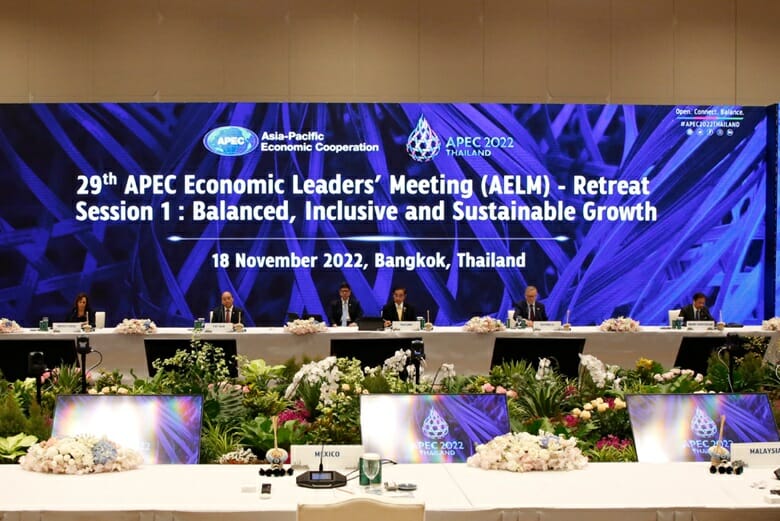
The APEC Economic Leaders’ Meeting (AELM) concluded on a high note in Bangkok, Thailand, culminating in a much-awaited consensus on the 2022 Leaders’ Declaration that pledges to intensify efforts towards inclusive economic recovery, post-pandemic. The Declaration also reaffirms APEC’s commitment to collectively work towards improving the health and well-being of the people in the Asia Pacific region, while elevating their standard of living.

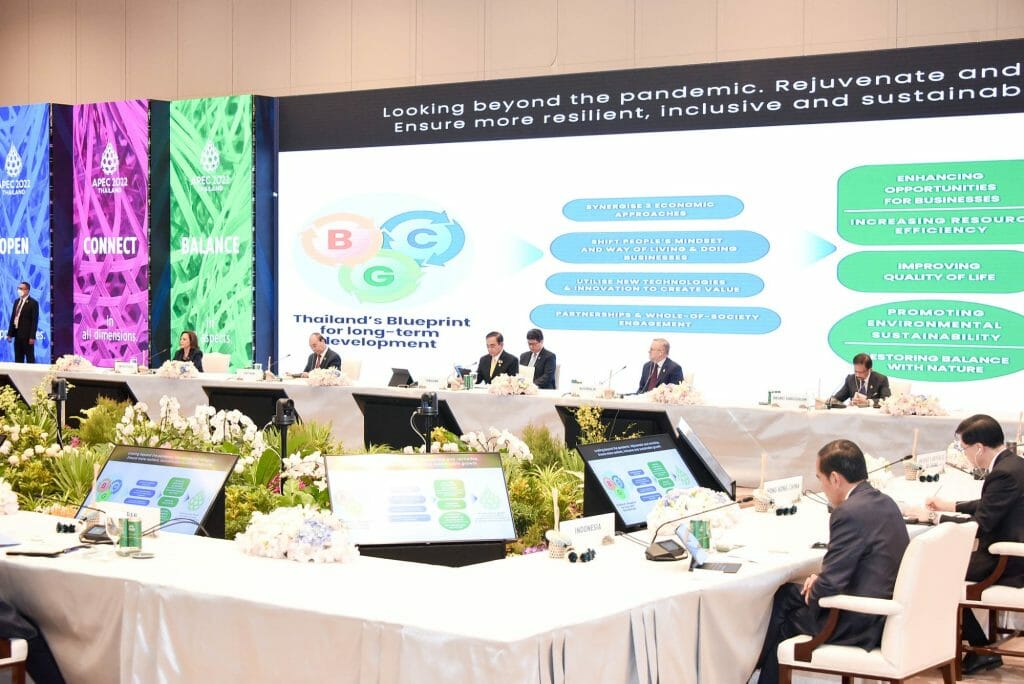
Building upon the Putrajaya Vision 2040 and the Aotearoa Plan of Action, Leaders also underscored the importance of advancing APEC’s sustainability objectives in a bold, responsive and comprehensive manner. Chaired by His Excellency General Prayut Chan-o-cha, the Prime Minister of Thailand, the AELM 2022 began with the Leaders’ Retreat, which focused on balanced, inclusive and sustainable growth, anchoring on the overarching concept of Bio-Circular-Green (BCG) Economy.

The Malaysian delegation to the AELM was led by YBhg. Tan Sri Dato’ Seri Mohd Zuki Ali, Chief Secretary to the Government of Malaysia. In his interventions, Tan Sri Mohd Zuki Ali reiterated Malaysia’s commitment to mitigating climate change, noting that it is one of the key priorities under the Twelfth Malaysia Plan. He also expressed confidence that the BCG Economy Model will complement ongoing efforts to further integrate Environmental, Social, and Governance (ESG) elements into economic activities, hence fostering ethical business practices and attracting sustainable investments into the region.

In relation to the deliberations by Leaders on the topic of sustainable trade and investment, Malaysia highlighted the need to further cement the position of APEC as an incubator of ideas that will serve to facilitate global economic recovery. This is particularly true as APEC is strategically positioned to not only complement the ongoing work undertaken at the WTO, but also explore and develop pointed initiatives that extend specific support for Micro, Small, and Medium Enterprises (MSMEs), said Tan Sri Mohd Zuki Ali.

The Chief Secretary also participated in the APEC Leaders’ Informal Dialogue, which offered a platform for APEC Economies to exchange views regarding the promotion of sustainable and inclusive growth, as well as the mitigation of current economic challenges. At the Dialogue – which also saw the participation of His Royal Highness Crown Prince Mohammed bin Salman, Prime Minister of the Kingdom of Saudi Arabia, and His Excellency Emmanuel Macron, President of the French Republic – Tan Sri Mohd Zuki Ali highlighted that structural reform and digitalisation are key drivers that propel inclusive economic growth and improve the livelihoods of the people in the region.

The Leaders also convened the annual dialogue with the APEC Business Advisory Council (ABAC), wherein Malaysia took the opportunity to reiterate the importance of advancing digital literacy and capabilities of MSMEs, as well as the need for greater collaboration between the public and private sectors in this space. Taking over the chairmanship from Thailand, the United States of America will be the chair and host for APEC 2023.

GE15: Final Tally PH Wins 82, PN 73 – Coalitions Claim Pole Position To Form Govt In Turbulent Race, Simple Majority In Question

0

No political party or coalition presently has been able to obtain a simple majority after they failed to win 50 per cent out of 220 parliamentary seats in the 15th general election (GE15), said Election Commission (EC) chairman Tan Sri Abdul Ghani Salleh in the wee hours of Nov 20.

Pakatan Harapan (PH) chairman Datuk Seri Anwar Ibrahim has claimed that the coalition has gathered enough seats to form the new federal government.

According to Anwar, PH had reached an understanding with several parties to give the coalition more than 112 seats, but he did not reveal its potential partners for forming the government.

“PH has formed the biggest block in the parliamentary position (with Muda), and we have recognised that no party had obtained a simple majority.

“This is the first coalition from the biggest block which has obtained enough seats to form the government on majority voice,” he told a news conference here early this morning.

Anwar also disputed a statement by Perikatan Nasional (PN) chairman Tan Sri Muhyiddin Yassin that PN was in a position to form the new government by working with other parties.

“That is not possible because we have the numbers and will notify Istana Negara,” he said.

Asked when documents backing the formation of a PH government would be sent to Istana Negara, Anwar said they would be sent once completed.

Perikatan Nasional (PN) chairman Tan Sri Muhyiddin Yassin said his coalition would hold discussions with parties from Sabah and Sarawak to form the federal government but discounted the idea of working with arch-rival Pakatan Harapan (PH), led by Anwar, to achieve this.

He also claimed that PN has received a letter from the Yang di-Pertuan Agong from Istana Negara setting the conditions for it to form the next government, while refusing to divulge its contents.

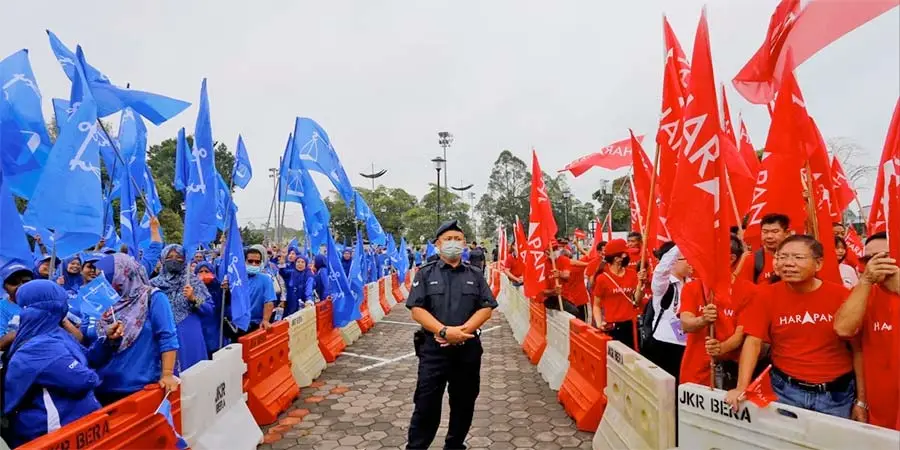
When he was pressed to identify PN’s possible partners, hundreds of supporters shouted ‘Tolak (Reject) BN (Barisan Nasional)’ and ‘Tolak (Ahmad) Zahid (Hamidi)’, the BN chairman.

“I have made a statement earlier that we are ready, we did not mention that we leave it to the wisdom of the highest leadership of the PN to decide,” he said, addressing the loud crowd.

Asked to clarify if there was a possibility of working with PH, Muhyiddin said no.

Earlier, Gabungan Rakyat Sabah (GRS) said it will work with Gabungan Parti Sarawak (GPS) to establish a Borneo bloc and form the federal government with a national coalition that can bring the most benefit to the two states.

Perikatan Nasional (PN) and PAS won 51 and 22 seats respectively, for a combined total of 73 seats. a hung Parliament ensued even after GE15  saw encouraging voter turnout, with both Pakatan Harapan (PH) and Perikatan Nasional (PN) claiming to possess the numbers to take over the federal administration.

Malay Mail

Perikatan Nasional (PN) was initially in the driving seat after winning 73 seats, and was set to form the government with the same coalition that we have seen before: An alliance with Gabungan Parti Sarawak (GPS), Gabungan Rakyat Sabah (GRS) — and its former ally Barisan Nasional (BN) that turned into a bitter rival during campaigning.

According to the Election Commision website, PH won 82 seats, PN (73), Barisan Nasional (30), Gabungan Parti Sarawak (22),  Gabungan Rakyat Sabah (6), Warisan (3), Independents (2) and Parti Bangsa Malaysia (1) in the 15th General Election.

Voting in Kota Marudu in Sabah and the Baram Parliamentary seat in Sarawak were postponed on Saturday (Nov 19) due to bad weather, while voters in Padang Serai will cast their ballots on Dec 7, to elect their new representative for the parliamentary seat following the death of Pakatan Harapan (PH) candidate M. Karupaiya on Wednesday, due to heart complications while being treated at Kulim Hospital.

This means that the results of only 219 out of the 222 federal seats contested were announced.

Other parties that won seats are Barisan Nasional (BN) with 30 seats, Gabungan Parti Sarawak (GPS) (22), Gabungan Rakyat Sabah (GRS) (six), Warisan (three), Parti Bangsa Malaysia (PBM) (one) along with two independents.

Voter turnout for parliamentary seats is 73.89 per cent, without taking into consideration the unannounced three seats, Abdul Ghani added.

Malaysians on Saturday (Nov 19) started casting their ballots for the GE15 to give lawmakers a fresh mandate against the backdrop of political turbulence in recent years.

The 15th General Election campaign has officially started on 6 November 2022 after the nomination process took place on 5 November 2022. GE15 made history when it recorded a total of 945 eligible candidates to compete for all 222 parliamentary seats, the highest number in the history of GE in Malaysia . According to the Election Commission (SPR), a total of 441 candidates will compete in 117 seats in the State Legislative Assembly (DUN) of Perak, Pahang, Perlis and Bugaya, Sabah (N66).

For the Parliamentary seats, Pakatan Harapan (PH) put up the most candidates with 206 candidates, followed by Barisan Nasional (BN) (178), Perikatan Nasional (PN) (149) and PEJUANG (116). Parti Warisan Sabah (WARISAN) fielded 52 candidates, Gabungan Parti Sarawak (31), PAS (22), Parti Rakyat Malaysia (16), Gabungan Rakyat Sabah (13), Parti Sarawak Bersatu (10), Putra (nine), DAP ( eight), Community Democratic Welfare Party (seven), MUDA (six), Malaysian National Party (five) and Sarawak Dayak National Party (three).

Others, Sabah United People’s Party, Sarawak People’s Conscious Party, Malaysian Socialist Party, Sabah People’s Unity Party, Bumi Kenyalang Party and People’s Main Party each have a candidate for a parliamentary seat. A total of 108 Independent candidates contested, making the number of Independent candidates the highest in the country’s GE history. In GE13, 79 contested and GE14 (24) Independent candidates in Parliament seats.

The Supplementary Voter Register for August 2022 which was updated to October 9 will be used for GE15.

The previous election in 2018 saw the end of Barisan Nasional’s (BN) reign after six decades, amid allegations of graft against key members of the ruling coalition. The opposition Pakatan Harapan (PH) coalition emerged victorious.

Back then, PH’s component parties included Parti Pribumi Bersatu Malaysia (Bersatu), led by former prime minister Tun Dr Mahathir Mohamad, and Parti Keadilan Rakyat (PKR), led by Anwar.

But less than two years into a five-year mandate, the PH government collapsed amid infighting and a political manoeuvre dubbed the “Sheraton Move”, which saw Bersatu’s withdrawal from PH and the defection of several MPs from PKR.

A new Perikatan Nasional (PN) coalition – led by Bersatu – was formed, and its leader Muhyiddin Yassin was sworn in as prime minister on Mar 1, 2020. This change in administration was criticised as a betrayal to the people’s mandate in the 2018 election.

However, the PN government was soon plagued by political bickering. A growing loss of confidence in Muhyiddin’s leadership led to his resignation in August 2021. Muhyiddin’s departure saw the return of BN to power with the appointment of Datuk Seri Ismail Sabri Yaakob as the third prime minister in the last two years.

Subsequently, pressure from the United Malays National Organisation (UMNO) top leadership, with a constant narrative that the government was still shaky and in need of a new mandate, finally prompted Ismail Sabri to dissolve parliament.

GE15 saw 945 candidates contesting for the 222 parliament seats in Dewan Rakyat. Over 21.1 million were eligible t cast their votes.

Four main coalitions – BN, PH, PN and the Dr Mahathir-led Gerakan Tanah Air (GTA) – contested this year’s election.

For the latest Business News and happenings, follow BusinessToday on Twitter

GE15: Pakatan Harapan, Perikatan Nasional Ahead, Winner In The Horizon

0

The Election Commission (EC), as of 12.15am (Nov 20) announced that Pakatan Harapan has won 28 of the 112 seats

Election Commission chairman Abdul Ghani Salleh, at a press conference held at 1am said that Gabungan Parti Sarawak has won 20 seats while PAS and Perikatan Nasional won 18 and 17 seats respectively for a total of 35.

As of 12.15am, the results of 110 parliamentary seats have been announced. Coalitions need to have at least 112 seats to form the next government.

As at 2.20am, with the results of over half of the seats confirmed, Pakatan Harapan (PH) and Perikatan Nasional (PN) appear to be ahead in the race, winning 64 seats respectively, while BN has capturing 26 seats.

In the Borneo states, Gabungan Parti Sarawak (GPS) has won 22 seats while Gabungan Rakyat Sabah (GRS) has won four seats.

Pakatan Harapan (PH) chairman Datuk Seri Anwar Ibrahim has officially won the Tambun parliamentary seat with a 5,328-vote majority.

Up to midnight, the PKR president secured 32,026 votes, defeating Datuk Seri Ahmad Faizal Azumu of Perikatan Nasional (PN), who polled 26,698 votes. Barisan Nasional candidate Datuk Aminuddin Md Hanafiah garnered 16,275 votes and Parti Pejuang Tanah Air’s Abdul Rahim Tahir got 656 votes.

The Tambun constituency comprised 71.2 per cent Bumiputera, 18.1 per cent Chinese and 10.3 per cent Indian, with other races making up the balance.

A total of 160,558 Tambun voters or 155,802 normal voters, 4,734 early voters, as well as 22 absentee voters (overseas) were eligible to cast their ballots in the 15th General Election.

Anwar is joined by Pakatan Harapan’s (PH) Lim Guan Eng has won the Bagan seat in Penang, with a majority of 49,648 votes.

Lim, who was finance minister under Mahathir Mohamad’s PH administration, won the four-corner fight against Perikatan Nasional’s (PN) Alan Oh (6,149), Barisan Nasional’s (BN) Tan Chuan Hong (5,385) and Gerakan Tanah Air’s (GTA) Mohammed Hafiz (1,323).

Aside from Lim, Deputy president of Parti Keadilan Rakyat (PKR) Rafizi Ramli has won the parliamentary seat in Pandan, Selangor, with 74,002 votes, according to Malaysia’s Election Commission.

The number two man to Pakatan Harapan (PH) president Anwar Ibrahim defeated his rival Farique Zubir of Perikatan Nasional (PN), who garnered 25,706 votes, and Leong Kok Wee of Barisan Nasional (BN), who won 11,664 votes.

Huge Moment In Malaysian Politics

Political analyst James Chin reacts to Tun Dr Mahathir Mohamad’s loss of his seat in Langkawi, saying: “This is a huge, huge moment in Malaysian politics.”

“The people who would be really glad to see him go will probably be the Chinese community, because there are many people in the Chinese community who equate Mahathir with a period where they think they suffered (the) most discrimination. A lot of the discrimination policies against the non-Malays were instituted during his time,” he told reporters.

“I think Malaysians in general knew that his time was coming, but I don’t think anybody expected him to lose his deposit,” he added.

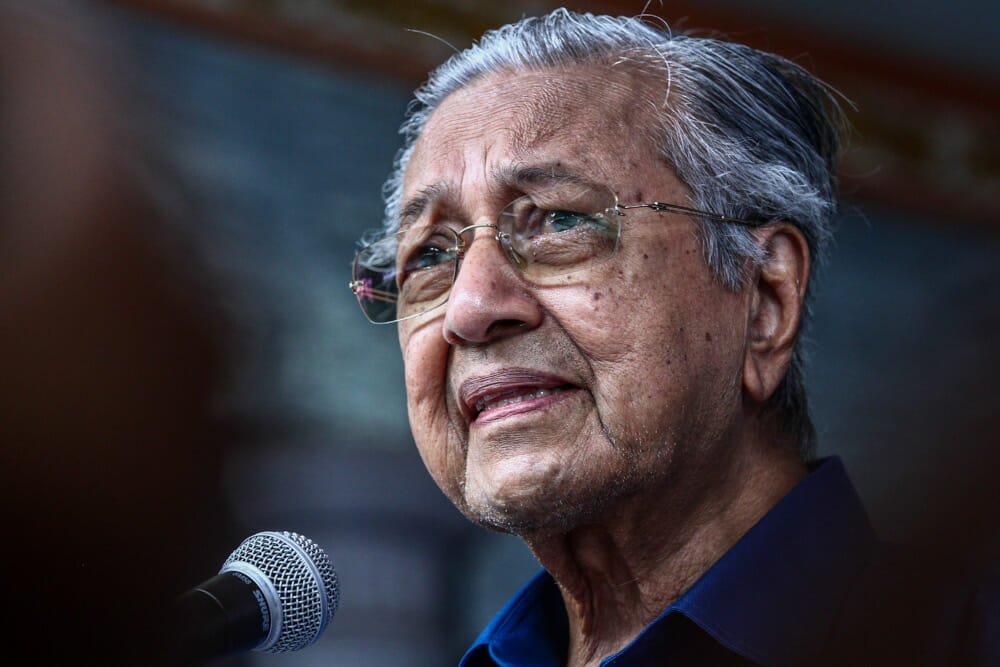
Former prime minister and Gerakan Tanah Air (GTA) coalition candidate Dr Mahathir Mohamed has failed to defend his Langkawi seat.

He was defeated by Perikatan Nasional’s (PN) Mohd Suhaimi Abdullah, who clinched 13,518 out of 25,463 votes.

Election Commission data showed that the 97-year-old Mahathir only secured 4,566 votes and has lost his deposit. He finished fourth in a five-cornered fight.

This election has been one of the fiercest in the country’s history, with a record number of candidates standing and more major coalitions set up in an attempt to take control of the Lower House.

Among the casualties also include Perikatan Nasional’s (PN) Datuk Seri Azmin Ali. The former senior minister of international trade and industry in Ismail Sabri’s government, has lost the fight for Gombak.

The seat was won by incumbent Selangor chief minister and Pakatan Harapan (PH) candidate Amirudin Shari, who took 72,267 votes against Azmin’s 59,538.

There were three other contenders – Barisan Nasional’s (BN) Megat Zulkarnain (30,723), Gerakan Tanah Air’s (GTA) Aziz Jamaludin (2,223) and independent candidate Hj Zulkifli (675).

Azmin was a prime figure in the infamous “Sheraton Move” that triggered the collapse of Malaysia’s short-lived PH government in 2020.

Counterpart caretaker Plantation Industries and Commodities Minister Datuk Zuraida Kamaruddin has failed to defend the Ampang parliamentary seat in the 15th general election (GE15).

The president-designate of Parti Bangsa Malaysia (PBM) and caretaker Plantation Industry and Commodities Minister who has been Ampang MP since 2008, also lost her deposit when she garnered only 4,589 votes from 225 voting stations for the seat.

Selangor state exco Rodziah Ismail of Pakatan Harapan (PH), who is also the Batu Tiga State Assembly member, was elected as the new MP for Ampang after obtaining 29,681 votes.

Her closest challenger was Sasha Lyna Abdul Latif of Perikatan Nasional (PN) who pooled 27,073 votes, followed by Barisan Nasional (BN) candidate Ivone Low Yi Wen (11,509 votes), Pejuang candidate Dr Nurul Ashikin Mabahwi (2,653 votes) and Warisan candidate Bryan Lai Wai Chong (1,423 votes).

In addition, three independent candidates — Muhammad Shafiq Izwan Mohd Yunos (188 votes), M. Raveen (148 votes) and Tan Hua Meng (93 votes) — also lost their deposits.

Caretaker finance minister Tengku Zafrul from Barisan Nasional (BN) has also lost his seat in Kuala Selangor. He was edged out by Pakatan Harapan’s (PH) Dzulkefly Ahmad by a margin of 1,002 votes.

Dzulkefly, who served as health minister in the PH administration under former prime minister Mahathir Mohamad, is the incumbent in Kuala Selangor.

Perikatan Nasional chairman Muhyiddin Yassin has won the federal seat of Pagoh for the seventh consecutive time. He has held the seat since 1995.

Official results at the Pagoh counting centre show that he won with a more than 10,000-vote majority. Mr Muhyiddin garnered 24,986 votes.

In second place was Pakatan Harapan’s Iskandar Shah with 14,979 votes while Barisan Nasional veteran politician Razali Ibrahim came in third with 14,426 votes.

Nurul Izzah Anwar has lost her family seat of Permatang Pauh, according to Penang Pakatan Harapan leader Chow Kon Yeow, who conceded defeat in the seat.

He mourned the loss, saying Nurul Izzah was a bright, next-generation leader and a senior PKR leader. Nurul Izzah, a vice-president of PKR, lost to Fawwaz Md Jan of Perikatan Nasional, who was ahead by over 5,000 votes, based on unofficial numbers.

Rumour mills are churning stating that  the results will not show a clear winning coalition and alliances are being discussed but it’s still too early to speculate on which parties are involved.


APEC Leaders Pledge To Boost Trade To Achieve Post Covid Recovery

0

The leaders of 21 Asia-Pacific Economic Cooperation (APEC) member economies pledged to further boost trade to achieve a post COVID-19 recovery, during the 29th APEC Economic Leaders’ Meeting chaired by the Prime Minister of Thailand, Prayut Chan-o-cha.

Nations welcomed the advancement of the agenda this year through a refreshed conversation on the Free Trade Area of the Asia-Pacific (FTAAP) during the COVID-19 pandemic and beyond. “We will continue to build on this momentum towards high-quality and comprehensive regional undertakings through the FTAAP Agenda Work Plan. We task officials to report progress in carrying out the Work Plan to the APEC Ministerial Meeting (AMM) in the following years,” they said.

Under the APEC theme “Open Connect Balance”, the meeting advances work through three priorities: to be open to all opportunities, connected in all dimensions, and balanced in all aspects, to advance long-term robust, innovative and inclusive economic growth as well as sustainability objectives in the Asia-Pacific region.

The declaration affirmed APEC Leaders’ long-standing commitment to promoting strong, balanced, secure, sustainable, and inclusive growth as well as their commitment to realise the APEC Putrajaya Vision 2040. In their declaration, the leaders said they are determined to uphold and further strengthen the rules-based multilateral trading system.

Besides that, they agreed to continue to advance digital tools to facilitate economic activities and the provision of public services, including the delivery of assistance and stimulus packages to the people, and to drive financial inclusion.

“We reaffirm the importance of sustainable financing, capacity building, and technical assistance for innovation and growth as well as for addressing all environmental challenges, including climate change,” they said.

The leaders said macroeconomic and structural policies are vital to tackling rising inflation, ushering in sustained economic recovery, and raising living standards in the region. Meanwhile, the APEC leaders also endorsed the Bangkok Goals on the Bio-Circular-Green (BCG) Economy— a comprehensive framework to further APEC’s sustainability objectives.

Under the declaration, they would continue to mobilise resources to combat the COVID-19 pandemic and reinforce systems to prevent and prepare for future health threats.

APEC leaders will meet again in the United States next year.

4 Common Insurance Mistakes To Avoid In Malaysia

0

I purchased my first life insurance policy when I was in college. Subsequently, as my income was low and irregular, I canceled it and bought a medical card which was affordable. Gradually, as my income increased, I upgraded my existing card, added critical illness coverages, and raised my sum assured. Today, at this point, I have 7-figures in sum assured. 

Over my span of 10+ years as an insurance buyer, I was shared many interesting stories of everyday people, making unnecessary costly mistakes in this area. For most, they involve being penny wise, pound foolish. Here in this article, I will be listing down 4 of these common mistakes so that you can be smarter as a buyer or consumer of insurance products in Malaysia. 


#1: The ‘I Have Insurance’ Syndrome 

For a start, who doesn’t have at least 1 or 2 insurance policies today? 

As I write, you could have purchased your life policies some 5-10 years ago. The question is, ‘What and how much does it cover?’. Is it adequate? For instance, if you have a policy that covers RM 50,000 in sum assured, could this be sufficient enough to pay off your debts and offer financial support to your loved ones? So here, the issue is on the coverage amount, not merely on having insurance. 

This syndrome also applies to medical cards. Locally, they have already evolved. Some 10 years ago, medical cards offered annual limits in the range of 6-figures (RM 100,000-RM 500,000). Today, the new cards offer 7-figures (RM 1+ million) in annual limit. This is critical because medical inflation is now in double-digits. 

So, instead of stopping at 1-2 policies, it would be helpful for us to have a policy review at least 1-2 times a year. This is so that we can keep abreast of the latest in the industry and make adjustments accordingly to suit our financial needs. 


#2: Wrong Purpose, Wrong Plan 

The purpose of having insurance policies is to obtain financial protection. That’s it. Period. 

Today, there are articles written on how Malaysians are still underinsured. So, is it because most Malaysians do not buy insurance? Nope. Here, I think it may be possible for some to have bought the wrong policies for the wrong purposes. At this point, it is still common for people to expect some ‘financial ROI’ from their insurance policies. This is how people overpay for their life insurance policies or perceive insurance to be expensive today. 

Consider this. 

How helpful is your RM 500 a month savings plan if you need to be hospitalized due to an accident or a critical illness today? Yep, I think you get the picture. So, let’s move onto: 


#3: Choose Agents solely on ‘Relationship’.

Today, it is common for us to ‘give business’ to our friends, family members and people that we like or trust. This is okay for we like to see them succeed in their career as an insurance agent or as a ‘life planner’. By doing so, we may not offer our business to insurance agents, who are more professional and deserving. So, the question is, ‘Is our loyalty always rewarded with better financial services?’.

Not exactly. Here is an example. 

Two life insurance agents from the same insurance company had presented you with the same insurance policy that covers RM 500,000 in sum assured. But the premiums quoted by the two agents are hugely different. They are as follows: 

The first agent, a veteran in the industry, has quoted you RM 300 per month. As for the second agent, he is your ‘buddy’ who quoted you RM 800 per month for the same exact policy. Which of the two agents would you buy your policy from today? Is it the first agent or the second agent? 

The answer could possibly still be the second agent, your ‘buddy’. This is even if he had overquoted you significantly on the same exact insurance policy. Here, it is possible that either you are unaware of such mispricing or you like to be kind, nice, and supportive to your ‘buddy’. So in order to avoid such a mistake, I think you may compare similar quotes from at least 2-3 agents, before committing to purchase your next insurance policy. 

Here is the idea. By all means, support our friends, but not at the expense of us as insurance consumers. 


#4: Wrongful Nomination

There are a whole lot to expound on this. But here, I would just expound on the most common few. They are as follows: 

First, it is an insurance nomination, made by a married person to his or her own parents. This is a mistake because the parents are not its legal beneficiaries, but are trustees to the sum assured of the policy. 

So, if the life assured (buyer) passed on, the parents will receive the money and they are tasked to use the money to pay off his or her creditors, settle any taxes that are outstanding and distribute the balance to the rightful beneficiaries, like his or her spouse and children. The parents could be sued for misuse of funds if they failed to perform their tasks as trustees to these monies. 

Second, it is an insurance nomination, made by a parent to a minor child. Whoa this is a big topic because a minor child could not receive money by himself due to him not attaining legal age to make banking transactions. So, in this case, the life assured should consider this and do proper estate planning, in order to care for his or her minor child or children. 

As insurance nomination is a huge topic, I won’t expound it here. But here, I say that an insurance agent that is highly professional, is one that has well-rounded knowledge on estate planning matters. Such an agent is preferred, as compared to one who is not knowledgeable. If an agent is not well-versed with it, I think it is still okay, if he or she acknowledges this shortcoming and gets educated on it.

Otherwise, we can dismiss him or her as our insurance agent. 


Conclusion: Beyond the 4 Mistakes

The above is a list of stories that I had gathered as an insurance consumer. Over here, I believe there are more mistakes that I did not cover in this article. Those would be left for another time. Here, the purpose for this article is to enable us, insurance consumers, to be smarter with our purchases so that we would make and build ourselves true financial safety nets to cover ourselves and loved ones.  

By Ian Tai Financial content machine who blogs and hosts webinars with KC Lau.

Voter Out In Numbers; 12 Million By 2pm Surpassing GE14

0

As of 2 pm on election day, the total voter turnout had exceeded for the whole of GE14 12.3 million which closed at 5 pm, however for GE15, the Election Commission had extended the voting period from 8 am to 6 pm.

This is a rather significant number as queues continue to snake the corridors of halls and schools where most of the polling centers are situated. This is also the first time the national voting age was reduced to 18 after the enactment was passed in Parliament recently, this immediately added another 1.4 million with now the total eligible voters to be approximately 21.1 million.

With 58% turnout thus far, Malaysia could witness the highest number of voters and turnout in history.

China Eases Bond Market Regulations For Foreign Investors

0

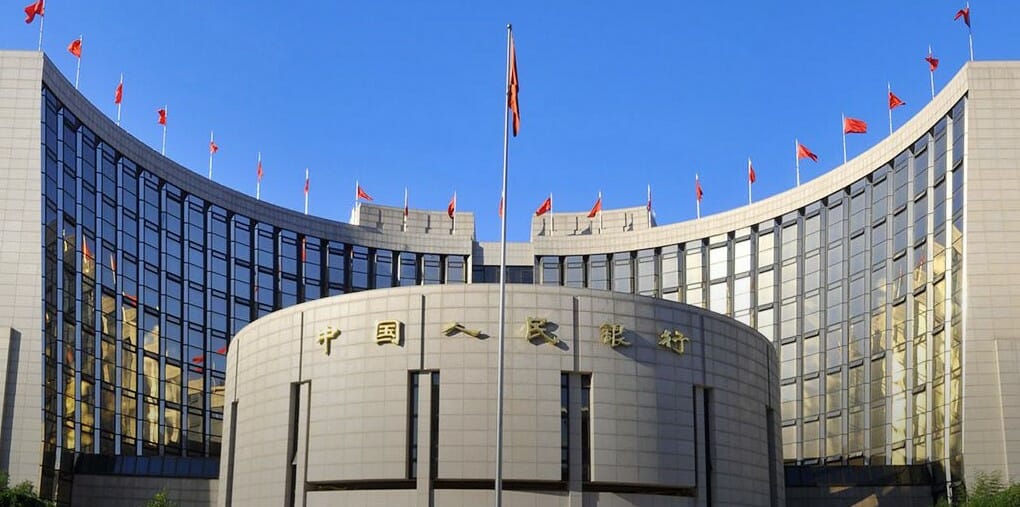
China’s financial authorities have released regulations to optimise fund management requirements for foreign institutional investors in the country’s bond market.

The regulations, effective from Jan. 1, 2023, were jointly released by the People’s Bank of China and the State Administration of Foreign Exchange to facilitate the opening-up of the domestic bond market.

The regulations set out unified requirements for the management of foreign institutional investor fund accounts, statistical monitoring, and the receipt, payment and exchange of funds.

They have also optimised the management of spot foreign exchange settlements and sales, as well as refined foreign exchange risk management policies.

Under the regulations, foreign institutional investors will have more channels for foreign exchange hedging, and the limit on the number of counterparties in over-the-counter transactions will be removed.

The rules also make it easier for foreign institutional investors to remit investment funds, and aim to encourage long-term investment in China’s bond market.

Sources at the central bank said the regulations will provide more convenience for foreign institutional investors and increase the appeal of China’s bond market.

US To Help Thailand Develop Nuclear Power

0

The United States said it will help Thailand develop nuclear power through a new class of small reactors, part of a programme aimed at fighting climate change, Vice President Kamala Harris announced in her visit.

The White House said the assistance was part of its Net Zero World Initiative, a project launched at last year’s Glasgow climate summit in which the US partners with the private sector and philanthropists to promote clean energy.

Thailand does not have nuclear power, with the public mood on the issue souring after the 2011 Fukushima disaster in Japan.

The White House said it would offer technical assistance to the Southeast Asian country to deploy the developing technology of small modular reactors, which are factory-built and portable. Such reactors are generally considered safer as they do not need human intervention to shut down in emergencies.

“We really look forward to working with Thailand to take advantage of the benefits of small modular reactors and reliable clean energy sources,” said a senior US official travelling with Harris, speaking on condition of anonymity.

A White House statement said that US experts would work with Thailand on deploying the reactors, which will have the “highest standards of safety, security and nonproliferation” and boast a smaller land footprint than alternatives.

US rivals China and Russia, as well as Argentina, are also developing small modular reactors, the prototypes of which are in the design phase.

The White House did not give a timeline but said it would support Thailand, which is highly vulnerable to climate change, in its goal of going carbon neutral by 2065.

Harris, who is visiting the US ally for an Asia-Pacific Economic Cooperation summit, will discuss the nuclear power initiative in a meeting later Saturday with Thai Prime Minister Prayut Chan-o-cha.

The White House also announced an initiative with Thailand to boost the safety of fifth-generation internet and a project to build a “world-class” cancer treatment centre in eastern Chonburi province.

source; AFP

From Zero to Hero – Safeguarding your Vulnerable Networks

0

Flexible work arrangements have come to be the norm in many workplaces in the post-pandemic era. Some job seekers in Singapore even turn down opportunities that do not allow for remote work. At the same time, some companies have adopted remote work arrangements permanently.

While employees may be celebrating the liberty to login to work from anywhere, having workers accessing corporate networks from outside of the office poses a new set of challenges for company IT teams. 

Most importantly, remote work has increased the vulnerability of corporate networks, making them more prone to cyberattacks. Through increased attack surfaces, heavy reliance on cloud computing, and a lack of cyber hygiene – IT teams are in a race against time to find a solution to protect themselves before bad actors infiltrate their networks. 

Data in Distress

Security used to follow the corporate network’s on-premises boundaries. However, with today’s hybrid work situation, companies must extend their security defences that far beyond their office spaces.

Accessing the corporate database from an unsecured home network does more harm than one thinks. What more when doing so using non-enterprise grade home devices, such as home personal computers with little to no cybersecurity protection? For companies, the more attack surfaces are exposed – the higher the chances for a cyberattack.

Data is the core of a company’s operations. The implications of a cyber-attack on the corporate database are hard-hitting – downtime in operations, reputational damage, and heavy financial costs. Despite these consequences, there is still a lack of cyber hygiene among many workers.

In Singapore, a recent report by the Cyber Security Agency (CSA) revealed that phishing scams and ransomware attacks topped the list of the most commonly reported cybercrimes against organisations and individuals. In the first half of 2022 alone, Singaporeans had fallen prey to almost 2,300 reported phishing scams – almost a 50 percent jump from the same period in 2021. Small-medium enterprises make up most of the targeted organisations for ransomware attacks, signalling a need for these organisations to improve their network security. 

Zero is the Hero

Many company IT teams are adopting a zero-trust architecture when designing their data flow and network. A zero-trust framework posits that no data traffic can be trusted. Under this framework, all data is subjected to restriction, reauthentication, and validation at every point. Nothing gets past unnoticed, and all activity is verified and screened. With zero-trust, companies can safeguard every software or device that gets connected to the network.

Zero-trust maximises the level of security at every checkpoint, enabling companies to monitor every movement across their networks. Through changing the trust model, companies can enhance their network security and make it easier to build and maintain, while limiting the implications of an attack through mitigation and early detection. In the process of doing so, they lower the chances of financing losses and rebuilding their network systems because of scams or a malware attack.

Zero Trust is a Must

The pandemic had spurred organisations to adopt the zero-trust framework, but current geopolitical tensions are accelerating this, as existing systems can no longer protect the network from these complex attacks. Singapore’s Minister of Communications and Information Josephine Teo recently reiterated the urgent need to adopt the zero-trust framework, highlighting how it not only defends systems but also builds resiliency against potential attacks. However, transitioning from traditional architecture will take time.

When it comes to zero-trust, modern DDI systems play a foundational role by granting security teams the highest form of visibility. DDI is unique in that it can correlate network activities to the responsible device, which enables organisations to pinpoint where threats are originating. In addition, more than 90 percent of threats touch DNS, the first D in DDI, entering or leaving the network, which makes DNS security an excellent tool for accelerating the security’s threat hunting capabilities. 

Today, companies need to focus on improving their team’s threat hunting capabilities. Through this, companies can facilitate remote working without adding additional strain to their cybersecurity systems as threats can be detected much earlier.

For instance, when DNS security detects and blocks a user request to access a malicious site, it can automatically trigger the network access control system to quarantine that user into a sandbox. This allows the incident to be analysed or investigated safely, dramatically reducing the effort and time needed to track down and isolate infected devices.

Zero-trust is the hero for today’s security systems, offering preventive measures for cyber-attacks. It helps organisations tighten their defences and improve visibility across all checkpoints – making it possible for companies to have far-reaching set ups but still connected to a safeguarded network.

By Alvin Rodrigues, Field Chief Security Officer, Infoblox

Sabah Tourism Eyes Returns of South Korean Tourists

Sabah Tourism team led by the Deputy Chief Executive Officer (Marketing and Business Events), Ms. Tay Shu Lan, is heading to South Korea for a Sabah Roadshow to South Korea from 14 – 18 November 2022 to establish more business opportunities and rejuvenate network with Korean counterparts.

Nine hoteliers and two local travel agencies will be participating in this Roadshow across five cities in South Korea: Seoul, Cheongju, Jeonju, Ulsan, and Busan. The participating hotels are Shangri-La’s Rasa Ria, Shangri-La’s Tanjung Aru, Sutera Harbour Resort, Hilton Kota Kinabalu, Promenade Hotel, Ming Garden Hotel, Grandis Hotel, Hyatt Centric Kota Kinabalu and Monocolo Boutique Hotel. I-World Travel and Sepilok Tropical Wildlife Adventure from Sandakan will also be part of the Sabah delegation.

“The number of arrivals from South Korea has gradually increased since the resumption of flights to Kota Kinabalu from Incheon starting May 2022,” commented Noredah Othman, CEO of Sabah Tourism Board.

“Our key objective for this Roadshow is to increase our market share for the Korean market and support the airlines in sustaining their flights into Sabah. We are targeting the upcoming winter season traffic as the Korean airlines are planning to increase their route to Kota Kinabalu.”

“We are also targeting incentive groups. Sabah has previously hosted many cosmetic and insurance incentive groups from South Korea such as Unicity Korea and Sarangmoa Financial Service Co. Ltd.” she adds.

Up to August 2022, Sabah received nearly 22,000 Korean visitors, an increase of 24,401% compared to the same period last year.

Malaysian Pursues Bamboo Flute Career in China

When Malaysian Gill Toh first came to China to pursue his flute dream, he had never expected that his dream could take root in China.

On the stage, Toh is a Chinese bamboo flute performer.

Meanwhile, he is a teacher of Chinese bamboo flute at Guangxi Arts University, offstage.

His love for the Chinese bamboo flute began in elementary school when his elder brother joined the Chinese orchestra in secondary school to learn to play the musical instrument. “The clear sound of the bamboo flute guided me onto the road of flute learning,” he said.

As he got older, Toh went to Singapore for further study. “Back then, I thought it would be a path with few travelers, like a concert without fellow musicians,” he said.

According to Toh, there were few professional Chinese bamboo flute teachers in Malaysia, and the environment for cultivating bamboo flute players was limited.

In 2005, Toh made a bold decision. He applied for retention of his admission qualifications to the university he was already enrolled in, and set off for Beijing.

“I decided to apply for the Central Conservatory of Music,” he said. A new chapter of his life thus began.

“The masters that I once saw from videos stood right in front of me,” Toh said, adding that studying in China has broadened his horizon, enlightened him with a new level of performance, and encouraged him to keep going on.

After getting his bachelor’s degree, Toh started to teach Chinese bamboo flute in Malaysia and Singapore.

“It felt that I could see the end of the life at a glance,” he recalled. His desire to improve his performance skills and his yearning for knowledge drove him back to the Central Conservatory of Music for postgraduate studies.

Toh had planned to return to Malaysia after graduation, but upon graduation, Guangxi Arts University offered him a job.

“At that time, it was rare for Chinese universities to hire foreigners as folk music teachers. The job offer gave me a chance to stay in China,” he remarked.

“Guangxi and ASEAN countries are geographically close and culturally connected. The university also has many students from ASEAN,” he said.

During his stay in China, he has also joined teams and performed in countries such as Vietnam, the Philippines, and Cambodia.

“We tried to combine Chinese bamboo flute and local musical instruments in an ensemble,” Toh said. “Communication and innovation promoted the development of diverse art culture and enriched the cultural connotation and layers of art.”

In recent years, Toh would return to Malaysia during holidays to promote the art of Chinese bamboo flute.

“When I was young, I was a flute performer on the stage. Years later, I have the opportunity to pass on my experience to children who share the same love for bamboo flute,” he said.

China Reports 2,055 Covid-19 Cases

0

The Chinese mainland on Friday reported 2,055 locally transmitted confirmed COVID-19 cases, the National Health Commission said on Saturday.

Altogether 22,208 local asymptomatic carriers were newly identified.

A total of 905 COVID-19 patients were discharged from hospitals after recovery on the mainland on Friday, said the commission in its daily report.

The total number of COVID-19 patients discharged from hospitals after recovery has reached 258,995 on the mainland.

Friday saw no new deaths from COVID-19, with the total death toll at 5,226. 

China has somewhat eased its strict lockdown measures as its new pivot away from the draconian Zero Policy that stifled economic growth.

Green Financing Can Play Its Part In Climate Change: ACCA

0

Mobilising finance expertise is vital to the goal of bending the curve of global greenhouse gas emissions downward.

Vikas Aggarwal, regional head of public affairs at ACCA, said: ‘COP26 in Glasgow laid the foundations for a renewed focus on climate action. And we were pleased to see so many meaningful discussions that sought to identify opportunities for action. It is a critical decade for climate action, and mobilising finance experts, stakeholders and leaders is vital in bending the curve of global greenhouse gas emissions downward.’

Aggarwal spoke at the British Egyptian Business Association’s panel on Green finance – Enabling conditions including behavioural change to achieve climate targets, and sustainability reporting.

He said: ‘Ring-fencing and mobilising green finance is essential to achieving climate targets. But in order to access that financing, we need governments and businesses to improve how they communicate to the global investment community. The implementation of internationally recognised sustainability reporting standards will support businesses, large and small, in accessing funds to deliver against sustainability targets. Finance professionals are essential in creating and communicating integrated business value to investors and regulators.’

He said: ‘It is ACCA’s long-held belief that the accounting profession sits at the heart of sustainable business. Finance professionals ensure economies are resilient, ethical and inclusive. ACCA also recognises that like any profession, we must adapt and evolve to meet new expectations from society, and to deliver public value. ACCA, through our work on integrated reporting, has contributed to the development of a global set of sustainability standards which will support a fair and just transition to a sustainable ecosystem.’

The time for urgent climate change action to create a better world has never been more pressing – that much was clear as Egypt took its turn to host the global climate conference COP27. Delegates and experts joined a series of events to assess progress towards achieving the Paris Agreement’s goal of limiting global warming to 1.5 degrees Celsius, and finance professionals and experts including representatives of ACCA lent their voice to the conversation.

Underpinning the profession’s mandate to enable meaningful change are several reports published by the UNFCCC’s Standing Committee on Finance that present the landscape of climate finance and assess progress towards the goals set out by the Paris Agreement. COP27 also marks one year since the formation of the ISSB (International Sustainability Standards Board) to develop a global baseline of sustainability disclosures to meet the information needs of investors.

On that anniversary the association welcomed the ISSB’s new partnership framework announced at COP27 which is designed to achieve global implementation of climate-related disclosures.

As a founding partner ACCA sees the framework as a way to support the global accountancy profession in contributing to a better world.

Emmeline Skelton, head of sustainability, said: ‘Recent ACCA research found that global organisations are attaching more importance to environmental factors and expect significant changes in business practices to meet net-zero targets. The research also showed organisations lack skills and expertise. Significant upskilling is required.

‘ACCA’s research on what makes a sustainable business informs the ACCA qualification and professional offering ensuring the  accounting profession is fit to discharge its purpose in creating, protecting and communicating sustainable value.’

MySPR Website Experiencing Heavy Traffic, Intermittent Access

0

The Election Commission website which had been overwhelmed by traffic for the past couple of days is back online on election day. Voters complained about the inaccessibility to verify their polling centres and registration information.

Until early election day, complaints were still being posted on social media that the site was down, but has since been accessible.

Users are advised to keep trying if they encounter the 502 bad gateway screen, give it a couple of minutes and try again. Also once you gain access, take a picture of your registration details including the centre number and your row number.

Happy voting.

GE15: Malaysians Go To The Polls

0

The 15th General Election takes place today, over a month after caretaker Prime Minister Datuk Seri Ismail Sabri Yaakob dissolved Parliament to pave the way for the general elections.

Barisan Nasional, the country’s longest-serving coalition, is hoping for a second surprise victory after losing in 2018. Pakatan Harapan chairman Datuk Seri Anwar Ibrahim, however, is confident of winning a simple majority to form the government, while Perikatan Nasional chairman Tan Sri Muhyiddin Yassin is aiming for a surprise win.

Malaysians will have an unprecedented choice of three major contenders and an even more extraordinary scenario in which none will likely get to form the next government on its own.

Barisan Nasional’s dominance is all but history. Unlike past general elections, it now has two realistic challengers in the form of Pakatan Harapan and Perikatan Nasional, all vying for the crucial 112 parliamentary seats needed for a simple majority.

There are also concerns that voter turnout would be lower than the 14th general election, even if the constitutional amendment that lowered the voting age from 21 to 18 added roughly seven million new ballots.

Doubts have also been raised about the political literacy of these young voters, yet by sheer size alone meant these wildcards could easily sway the polls’ outcome.

Still, a survey held by consultancy Vase.ai indicated that 80 per cent of them are eager to go to the polls, a surprise finding amid talks that widespread political fatigue could deter people from turning up at the voting centres.

If true, this would be good news for PH whose leaders argue that a higher turnout often translates to more support for the PKR-DAP-Amanah-Upko bloc. Several polls, including by the independent Merdeka Center, have tipped PH to win the most seats, although the majority will likely be those from PH strongholds.

The real surprise from these surveys would be voters’ response to PN’s campaign so far. Some of the findings suggest a swing in conservative Malay votes towards the pact comprising Parti Pribumi Bersatu Malaysia, PAS, and Gerakan is likely.

This has fuelled speculation that PN could end up going neck-to-neck with archrivals BN despite the many predictions that voters would punish the Bersatu-led bloc for masterminding the “Sheraton Move” in 2020 that plunged the country into political crisis.

Instead, conservative Malay voters, who were BN’s traditional powerbase, now view PN as a viable Malay-Muslim alternative to the corruption-tainted Umno, BN’s lynchpin.

In Sabah and Sarawak things are just as hazy. There are talks that the numerous parties there are mulling the formation of a Borneo bloc, but pundits are sceptical it could work considering the messy dynamics that have come to characterise the state of affairs there.

But as the possibility of a hung parliament looks increasingly likely, the outcome in Borneo will be closely watched. Holding a third of seats in Parliament, political coalitions of the peninsula will have to look for the support of winning parties in Sabah and Sarawak.

That could be tough, however, considering the anti-peninsula sentiment is strong there. All this will mean Malaysians must brace for more volatility, ironic considering this general election was rushed into on the back of pledges for political “stability.”

Close to 30 per cent of these new voters are under 30. Those aged 18 to 21 account for about 1.4 million votes. But the group has left pundits struggling to predict if and how these first-timers would cast their votes.

At 8am on Nov 19, polling stations officially opened across peninsular Malaysia. Voters may cast their ballot between 8am and 6pm in peninsular Malaysia and from 7.30am to 5.30pm in Sabah and Sarawak.

Wall St Week Ahead With Black Friday Ahead, Investors Look To U.S. Consumer Stocks

As the most important shopping period of the year approaches, some investors are betting shares of beaten-down consumer stocks will benefit if inflation keeps falling and retail sales stay strong.

Consumer discretionary stocks, a group whose members run the gamut from Amazon.com Inc (AMZN.O) and automaker Tesla Inc (TSLA.O) to retailer Target Corp (TGT.N), have been walloped by surging prices, with the S&P 500’s consumer discretionary sector falling nearly 33% for the year to date compared with a nearly 17% fall for the broader index.

Yet recent data has shown signs that inflation may be ebbing in the face of stronger-than-expected retail spending, raising cautious optimism that the economy could avoid a recession or experience only a mild downturn. Investors poured a net $1.05 billion into consumer discretionary stocks in the past week, the sixth-largest weekly inflows since 2008, data from BofA Global Research showed.

The upcoming Black Friday, the day after the U.S. Thanksgiving holiday and traditionally one of the year’s biggest shopping days, may give investors greater insight into the extent that consumers are opening their wallets.

“There’s some questions as to how strong the consumer really is, so this will be a tricky holiday season,” said Edward Yruma, an analyst at Piper Sandler. “Everybody is watching the strength of the consumer and so far the consumer has held.”

Yruma is bullish on retailers Nordstrom Inc (JWN.N) and Target. He believes, however, it may be too early to bet on the sector as a whole since inflation remains high by historical standards while many on Wall Street fear the Federal Reserve’s monetary policy tightening may bring on a U.S. recession.

To be sure, consumer stocks have had more than their fair share of woes this year.

Target shares plunged on Tuesday after the company warned of “dramatic changes” in consumer behavior that were hurting demand. Amazon.com, the world’s biggest online retailer, said on Oct. 27 it was preparing for slower growth because “people’s budgets are tight” due to inflation, Reuters cited.

The companies’ shares are down 29.6% and 43.5% year-to-date, respectively.

While retail sales in October were strong, data suggests that subprime auto loan delinquencies are increasing and higher-income shoppers are starting to trade down, Morgan Stanley economists said in a note on Friday.

“The consumer has been a pillar of strength this year, but as rates keep rising and the labor market slows, consumers will have no choice but to pull back on spending,” the firm’s economists wrote. The bank’s analysts are underweight the consumer discretionary sector.

Others, however, see reasons to remain bullish – even in the face of a potential economic downturn.

“Recession fears are so priced in to this group,” said Jim Paulsen, chief investment strategist at the Leuthold Group. “If we have a mild recession … they will do very well from here on out.” He is betting shares of retailers, hotels and restaurants will outperform the rest of the sector in the coming year.

Some companies’ lower valuations may also give investors wiggle room if the economy slows, said Bobby Griffin, an analyst at Raymond James. His firm has a strong “buy” on shares of Home Depot Inc (HD.N), which are trading at a 15% discount to their historic forward price-to-earnings multiple.

“We’ve had this fear of inflation all year and the consumer has held up pretty well so far,” he said.

At the same time, signs of consumer strength could also be a red flag to the inflation-fighting Fed, bolstering the case for the central bank to push forward with the monetary policy tightening that has pressured markets and drained risk appetite this year.

Chris Zaccarelli, chief investment officer for Independent Advisor Alliance, believes signs that consumers are not being affected by rising rates could lead to a higher-than-expected peak in the Fed’s rate hiking cycle.

For the latest Business News and happenings, follow BusinessToday on Twitter