


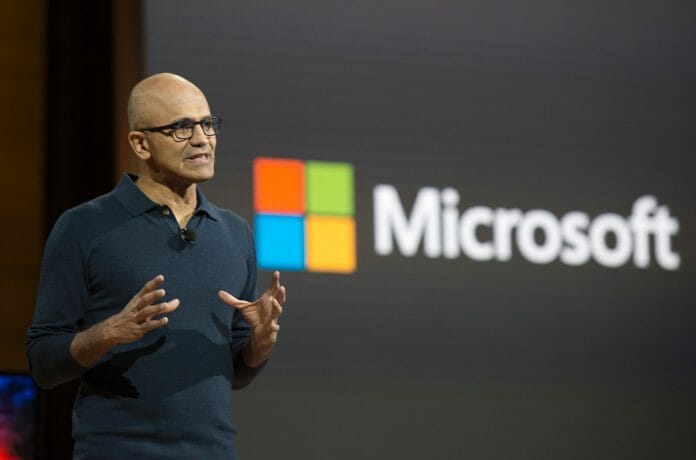
Microsoft Corp reported stronger-than-expected first-quarter results, with both revenue and profit surpassing Wall Street estimates, even as record spending on artificial intelligence (AI) infrastructure spooked investors.
The tech giant posted an 18% increase in revenue to US$77.7 billion for the July–September quarter, beating analysts’ forecasts of US$75.33 billion, according to LSEG data. Earnings also came in higher than expected at US$3.72 per share, compared with consensus estimates of US$3.67.
Microsoft’s Azure cloud business jumped 40%, outperforming Visible Alpha’s projection of 38.4%. The company forecast Azure growth of 37% for the current quarter, slightly above expectations of 36.4%. Chief Financial Officer Amy Hood said growth could have been higher without ongoing capacity constraints, which are expected to persist until at least June 2026.
Total revenue for the current quarter is projected between US$79.5 billion and US$80.6 billion, aligning closely with market estimates.
However, investor concerns over rising capital expenditure weighed on sentiment. Microsoft reported a record US$35 billion in capex for the quarter, largely driven by AI-related infrastructure, and signalled that spending will continue to climb through the fiscal year. Its shares slipped nearly 4% in after-hours trading following the announcement.
“The capex number was a little bit worrisome,” said Bob Lang, chief options analyst at Explosive Options, reflecting investor anxiety over mounting costs to sustain AI growth.
The company’s intensified investment stems from surging demand for AI-driven cloud services. Its deep partnership with OpenAI, creator of ChatGPT, has played a crucial role in Azure’s expansion and Microsoft’s broader AI ecosystem. A revised deal earlier this week gave Microsoft a 27% stake in OpenAI worth about US$135 billion, along with access to intellectual property and revenue-sharing rights.
Chief Executive Officer Satya Nadella emphasised Microsoft’s strategy of prioritising sustainable, high-value AI deployments. “We have to balance third-party demand with our own first-party needs, fund our own R&D, and build model capability,” he told analysts. “Each time we say no to something that doesn’t serve our long-term interest, I feel better.”
Microsoft now stands as the world’s second most valuable company with a market capitalisation of around US$4 trillion, trailing only Nvidia, which recently hit US$5 trillion. Its shares have climbed nearly 30% this year, fuelled by optimism surrounding AI.
Despite the after-hours dip, analysts say Microsoft remains well-positioned to capitalise on AI-driven growth, with its Azure platform continuing to narrow the gap against rival Amazon Web Services.
Reuters


