



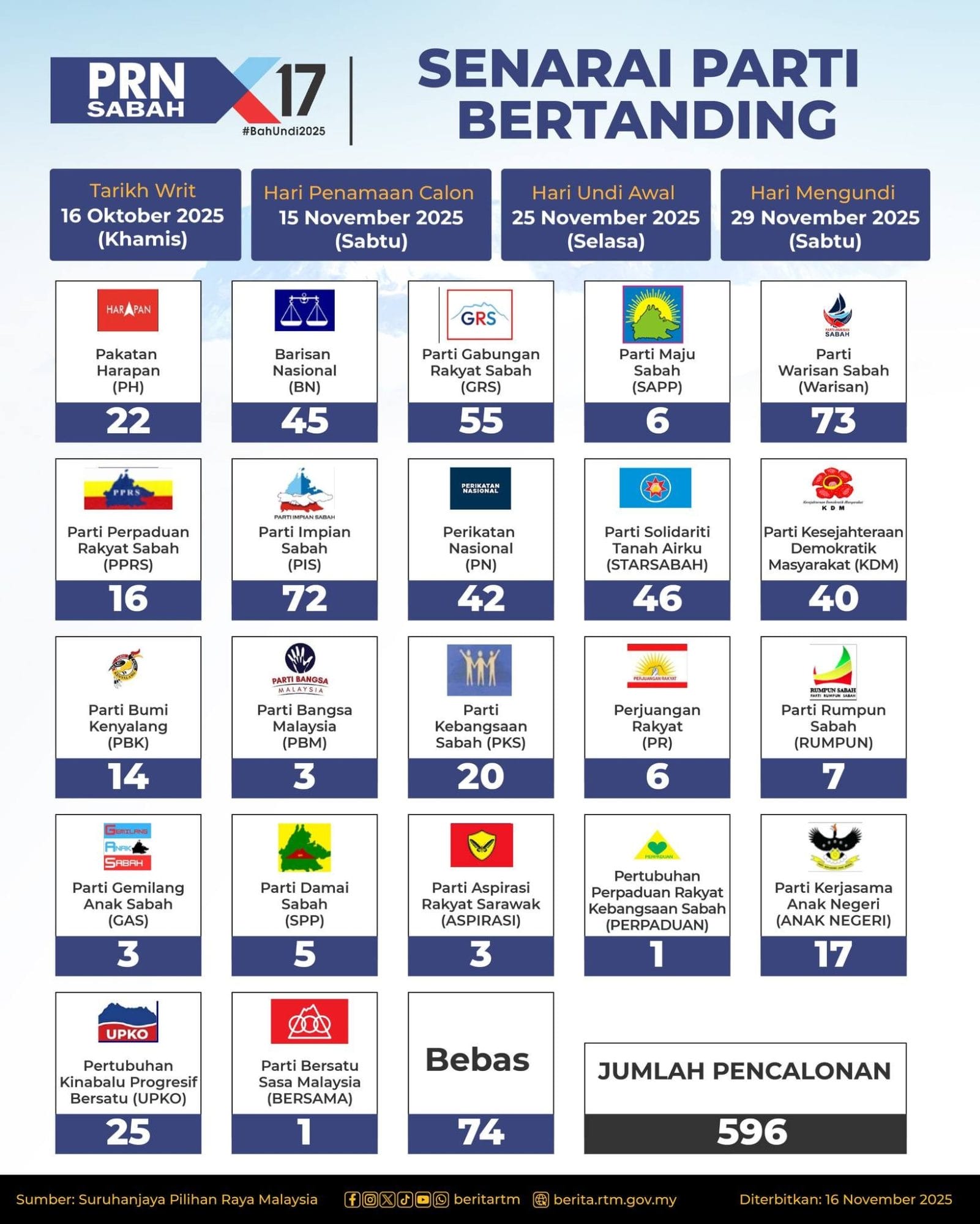
As Sabah heads to the polls on November 29, the state is entering what many political observers see as its most consequential election in recent memory. The sheer scale of participation tells its own story. More than 3,400 nomination forms have been sold, suggesting many constituencies could see crowded, multi‑cornered contests.
Beneath the clutter of logos and campaign banners lies something deeper, a structural shift in voter sentiment and federal state dynamics that could reshape the national political landscape ahead of Malaysia’s general election in 2027.

To understand the stakes, BusinessToday spoke with Associate Professor Dr Arnold Puyok, Visiting Senior Fellow at the Saw Swee Hock Southeast Asia Centre, London School of Economics and Political Science.
He is also Associate Senior Fellow at the ISEAS Yusof Ishak Institute in Singapore, and serves at the Faculty of Social Sciences and Humanities, Universiti Malaysia Sarawak where his work centres on Malaysian politics, political sciences and public policy.
Dr Puyok, who holds a Bachelor in Communication from Universiti Putra Malaysia and a Doctor of Philosophy in Political Science from Universiti Malaysia Sarawak, is a seasoned analyst of Borneo politics. He describes Sabah has transformed into a battleground of competing identities, competing priorities and competing visions of Malaysia’s federation.
What emerges from his reading of the political terrain is a Sabah that has quietly become a swing state. Its results will not only determine the state’s next government, but will also signal how national-based parties might fare in the East Malaysian theatre that will heavily shape GE2027.
Fragmentation or realignment
The proliferation of candidates has been widely interpreted as a sign of political fragmentation. Yet according to Dr Puyok, the picture is more layered than it appears. Fragmentation may exist, but the real competition crystallises around key actors in specific demographic zones.
In Muslim Bumiputera areas, the contest is centred between Gagasan, Warisan, UMNO and to a lesser extent Bersatu. In Kadazandusun-majority constituencies, the contest features UPKO, PBS, STAR, PKDM and PKR. Chinese-majority and mixed areas will see all major parties enter the fray, although Warisan is expected to have a relative advantage in Chinese-majority seats on the East Coast.
These patterns point to a deeper transformation. Sabahans are no longer voting strictly along traditional party loyalties. Instead, the ballot is becoming a referendum on two competing political frames. On one end is an increasingly pronounced Sabah First sentiment, amplified by the broader Sabah for Sabahans movement. On the other is a call for stability, performance and cooperation with Putrajaya.
“It is a combination of both,” Dr Puyok says when asked if multi cornered fights reflect voter dissatisfaction with traditional parties. “What is emerging more clearly now is the resurgence of regional identity expressed through the Sabah for Sabahans sentiment. Voters are being presented with two ends of a spectrum. A Sabah First approach on one side, and a message of stability, performance and cooperation with the federal government on the other.”
This realignment is defining how parties compete, how manifestoes are designed and how political brands are built. The contest is not between left and right, but between regional assertion and federal partnership, giving this state election a distinctly different flavour from Peninsular politics.
The federal stakes beneath the surface
Beyond local dynamics, Sabah’s election is deeply intertwined with federal state relations. The 40 percent revenue entitlement issue resurfaced as a powerful political talking point, particularly in Kadazandusun areas. The subsequent resignation of a Sabah federal minister further stoked state level frustration towards the centre.
Yet Dr Puyok cautions against overstating its overall effect. “It helped amplify state sentiment against the federal government in certain areas, particularly in Kadazandusun seats, but its impact has not been widespread.”
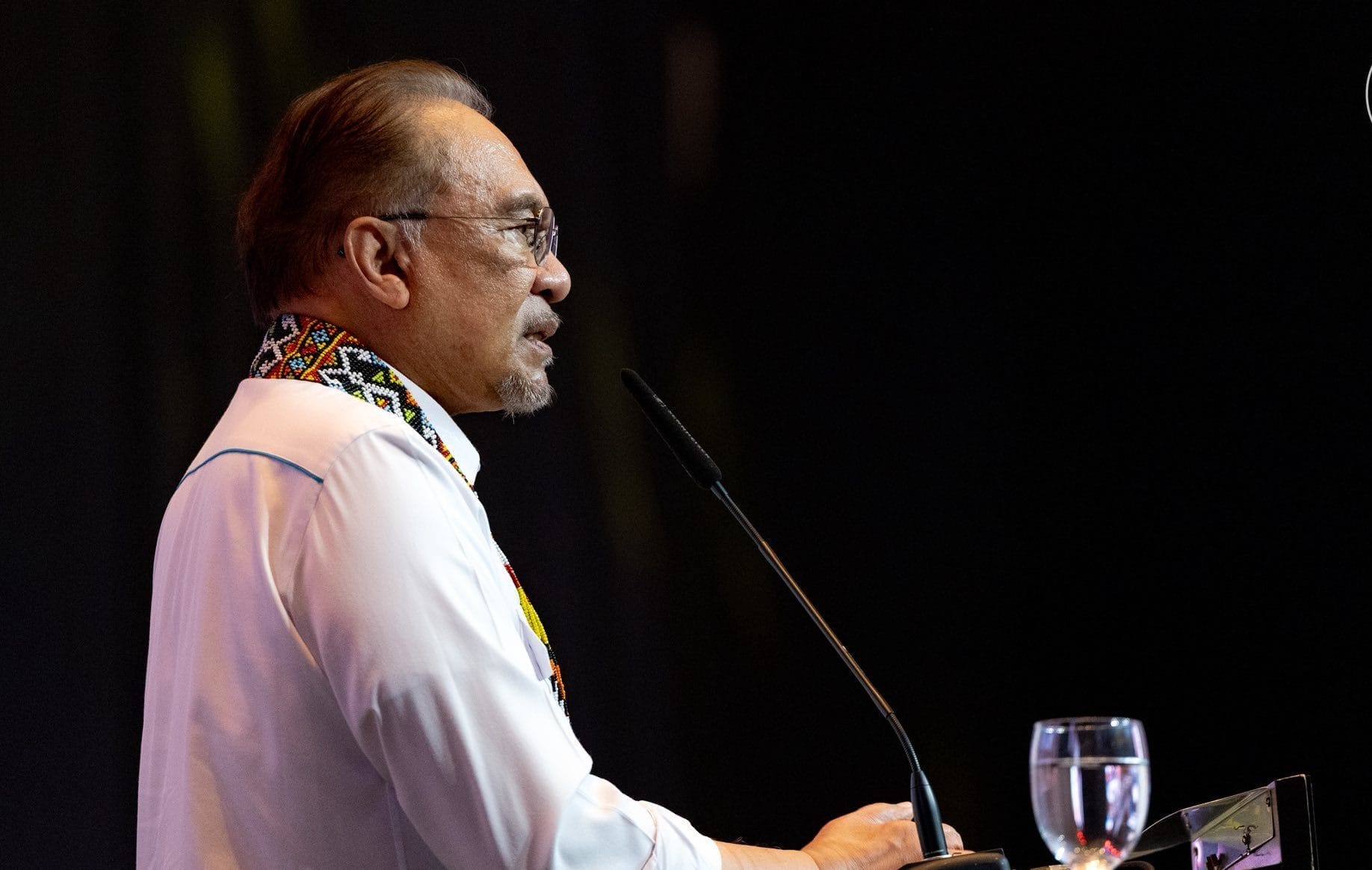
Similarly, Prime Minister Datuk Seri Anwar Ibrahim’s reaffirmation of Sabah’s rights under the Malaysia Agreement 1963 and plans to increase parliamentary seats resonates symbolically, but symbolism alone will not shape votes.
“At the end of the day, what matters are concrete results, not symbolic or rhetorical gestures,” Dr Puyok notes.
This underscores a structural reality. East Malaysian voters are increasingly fluent in the language of federal resource allocation. They want specifics, timelines and deliverables, not principles or promises. As expectations rise, so does the electoral cost of unmet commitments.
Strongmen and the incumbency puzzle
Despite the surge of candidates, incumbent vulnerabilities must be understood within Sabah’s unique political culture. Chief Minister Datuk Seri Hajiji Noor and Sabah UMNO Chief Datuk Seri Bung Moktar Radin face several challengers, yet Dr Puyok argues that personalistic politics continues to dominate local political behaviour.
“Both are strongmen in their own right,” he says. “Despite the challenge, their voters are unlikely to abandon them outright, as politics in their areas is highly personalistic, with support rooted in personal ties, family networks and cultural connections.”
This means national narratives and party machinery matter, but local relationships matter more. It also means incumbency is less about ideological performance and more about cultural positioning, patronage networks and grassroots credibility.
Young voters and the digital battleground
The rise of social media has changed campaigning across Malaysia, but in Sabah, the digital battleground is now shaping voter behaviour in ways that are still evolving.
“Yes, we are already seeing it used extensively,” Dr Puyok says, “whether to circulate accurate information or to spread outright lies. It has become an effective weapon.”
Younger voters, however, remain a wild card. Their online presence does not automatically translate to voter turnout. “It depends on whether they actually turn out to vote,” he says. “They may be active on social media, but coming out to vote on election day is an entirely different matter.”
This introduces uncertainty. High youth turnout could amplify anti establishment sentiment. Low turnout could reinforce existing structures of incumbency and regional power.
The national implications for GE2027
The biggest question is whether Sabah’s vote will offer a preview of GE2027. The answer, according to Dr Puyok, depends on how national-based parties perform.
“It depends on whether national-based parties in Sabah can exert influence over the seats they contest. This is especially critical for Anwar and PKR, as the election will determine PKR’s ability to remain relevant and the extent of Anwar’s support.”

A strong showing by regional parties may indicate a deeper waning of confidence in federal leadership. Poor performance by national-based parties may force Putrajaya to recalibrate its Sabah strategy and rethink its federal policy priorities.
“If national-based parties perform poorly and Anwar’s popularity declines, it indicates that federal policies in Sabah need to be re-strategised and re-prioritised,” he says.
This makes Sabah’s election more than a state contest. It is a national barometer. It will influence federal state negotiations, shape future development priorities and determine how parties contest East Malaysia in the lead up to GE2027.
A pivotal moment for Sabah and Malaysia
The November 29 polls represent a defining moment where local identity politics, federal economic promises and national political futures intersect. It is a test of whether regional aspirations can coexist with federal expectations, and whether national-based parties can adapt to Sabah’s changing realities.
As Dr Puyok’s analysis makes clear, the outcome of this election will echo far beyond Sabah’s borders. It will shape the political arithmetic of GE2027, the direction of federal reform and the trajectory of Malaysia’s evolving federation.
Sabah is no longer just another battleground. It is the swing state that could tip Malaysia’s political future.


