


By Eur Ing Hong Wai Onn
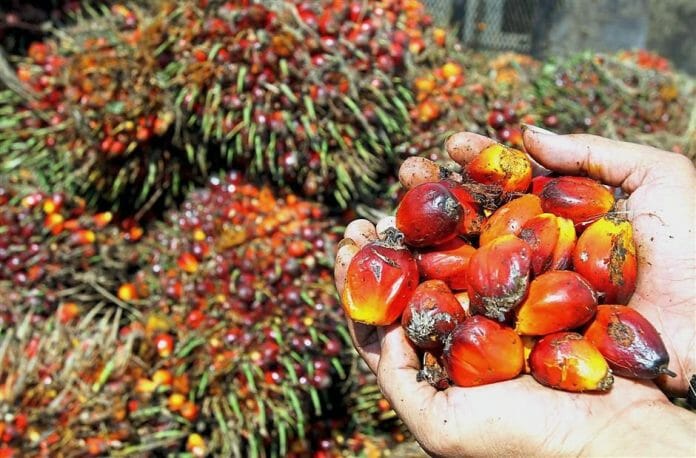
Malaysia is responsible for producing nearly a quarter of the world’s palm oil, making it central to both its economy and global markets. For decades, however, the industry has been dogged by controversy, with persistent criticism over deforestation, destruction of biodiversity, labour exploitation, and a substantial carbon footprint.
Yet, that narrative is shifting. In recent years, Malaysia’s palm oil industry has undergone transformative changes, driven by increasingly rigorous regulations at home and abroad, alongside heightened commitments from industry players themselves. These external and internal pressures are fundamentally reshaping the way Malaysian palm oil is cultivated, traded, and consumed, marking a significant departure from past practices.
Progress in Labour Rights
Perhaps the clearest indicator of this shift emerged recently when U.S. Customs and Border Protection lifted its import ban on products from FGV Holdings Berhad, Malaysia’s second-largest palm oil producer, effective 15 January 2026. This decision was not a courtesy but rather recognition of the extensive reforms undertaken by FGV following the original ban imposed in 2020, which stemmed from concerns over forced labour.
Whether or not all allegations were ultimately substantiated, FGV’s response was both broad and robust. The company implemented sweeping changes designed to not only meet, but exceed, international labour standards—a process entailing significant financial investment and operational effort.
Importantly, FGV’s experience is not an isolated case. It reflects a broader evolution across Malaysia’s labour landscape. Since 2019, enforcement actions spanning several industries, including palm oil, have resulted in more than US$85 million being repaid to workers. These repayments, coupled with comprehensive structural reforms, have led to tangible improvements in labour practices, setting new industry-wide benchmarks for workers’ rights and compliance throughout Malaysia’s supply chains.
Technology Meets Transparency
Technology is enabling accountability that was previously impossible. Companies are deploying digital platforms and blockchain systems to monitor supply chains from plantation to final product, ensuring no illegal land conversion is connected to their inputs.
FGV’s launch of the FGVTOP platform exemplifies this trend, offering authorised users across the globe real-time access to sustainability verification data. Similarly, SD Guthrie’s Crosscheck platform, which has been continually improved since its inception, enables anyone to trace palm oil sources down to individual plantations. Although some critics may argue that such initiatives are mere marketing tools, they in fact create the essential infrastructure required to trace palm oil to specific plots and verify that sourcing is deforestation-free, as stipulated by evolving regulations.
Transparency Driving Environmental Progress
Recent changes to reporting requirements have dramatically advanced transparency across Malaysia’s palm oil industry. Bursa Malaysia’s guidelines now require companies to align their disclosures more closely with international sustainability standards. Leading palm oil producers are publishing annual sustainability and climate-related reports in accordance with these requirements, offering structured and detailed assessments of greenhouse gas emissions, biodiversity management, and supply-chain traceability.
This transparency is not merely symbolic; it is translating into real, measurable environmental outcomes. To date, 170 palm oil mills, representing 38% of Malaysia’s 446 operating mills, had installed biogas capture facilities, surpassing the National Agricommodity Policy 2025 target of 155 mills. The capture of methane from palm oil mill effluent alone has reduced greenhouse gas emissions by 4.9 million tonnes of carbon dioxide. Beyond this, further environmental gains are achievable by fully converting the captured methane into renewable energy, thereby reducing reliance on fossil fuels. This progress demonstrates that regulatory reporting and transparency are driving real operational and environmental improvements.
Enhancing Food Safety Standards
In response to increasingly stringent standards from the European Food Safety Authority, Malaysia has also taken decisive steps to address food safety concerns related to palm oil. Specifically, the country, spearheaded by the Malaysian Palm Oil Board, has invested in advanced refining techniques to reduce levels of 3-MCPD and glycidyl esters, contaminants in refined palm oil that had raised significant health concerns in Europe.
Although the full, industry-wide implementation of these technologies has faced delays—originally scheduled for 2021, now set for enforcement in 2026—the government has made it clear that there will be no further blanket extensions. This commitment to enforcement is a testament to Malaysia’s resolve in meeting global expectations for product safety and quality.
Raising the Bar for Environmental Responsibility
Malaysia’s leadership in sustainability is perhaps best exemplified by the Malaysian Sustainable Palm Oil (MSPO) certification scheme, which made history as the world’s first mandatory national standard for palm oil. Introduced on a voluntary basis in 2015 and made compulsory in 2020, the MSPO has set rigorous criteria for environmental and social responsibility.
The launch of MSPO 2.0 in January 2025 further elevated expectations, introducing even stricter requirements, including a deforestation cut-off date that surpasses the requirements set by the European Union’s Deforestation Regulation. This proactive stance has paid dividends: in 2025, the European Union formally recognised the MSPO as a credible certification scheme, praising its robust digital traceability features.
Shaping the Future
2026 could mark the start of a new chapter for Malaysia’s palm oil industry, as it continues to move beyond previous criticisms towards even greater accountability and sustainability. The recent advances in transparency, environmental responsibility, and food safety standards have set a positive tone for the future, with tangible progress already being made in several key areas.
Malaysia’s ongoing reforms not only serve as a benchmark for other palm oil producers. While the industry has made notable strides, there remains significant potential for further progress. The next few years will be crucial in testing the durability and depth of these reforms, demonstrating that sustained commitment and continuous improvement can yield meaningful and lasting transformation. The outlook is encouraging, yet there is still more work to be done to ensure the industry reaches its full potential.
The author is a chartered engineer and chartered environmentalist, is a Fellow of the Institution of Chemical Engineers, the Royal Society of Chemistry, and the Malaysian Institute of Management. He is also the founder of the Research Institute for Sustainable Excellence and Leadership (RISEL).


