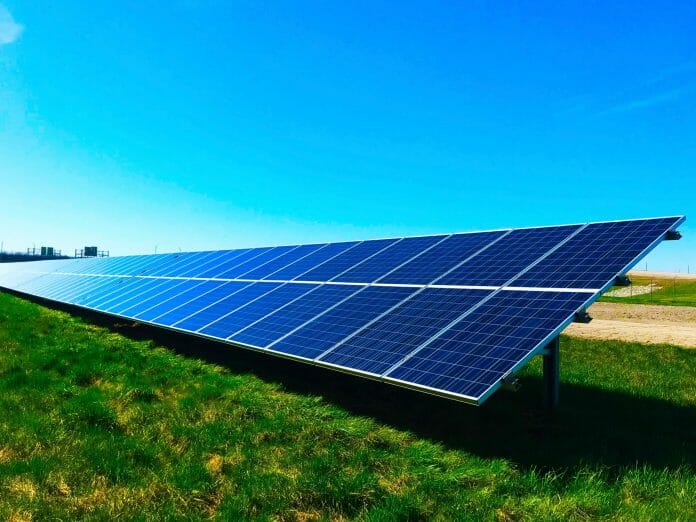
Malaysia is on track to achieve 32% installed renewable energy (RE) capacity this year, with the government continuing to push ahead with its long-term energy transition agenda, Deputy Prime Minister Datuk Seri Fadillah Yusof said.
He said the country had already reached 31% installed RE capacity as of December 2025, reflecting steady progress under ongoing policies and programmes.
“The government aims to increase installed renewable energy capacity by one per cent a year until we reach 35% by 2030 or earlier,” he said, adding that the RE mix includes solar, biogas and biofuels supported by initiatives such as battery storage systems.
Fadillah, who is also Energy Transition and Water Transformation Minister, said this after appearing on Bernama Radio’s exclusive interview titled “Geopolitical Crisis Drives Malaysia’s Energy Transition” at Wisma Bernama.
Under the National Energy Transition Roadmap (NETR), Malaysia is targeting 70% RE capacity by 2050. He said the country is gradually reducing reliance on coal, which is expected to be phased out by 2044.
“We have gas, coal and renewables in the system but we are committed to ending coal use by 2044,” he said.
Fadillah said Malaysia is expanding large-scale and rooftop solar programmes, with another tender for the sixth large-scale solar project (LSS 6) expected to be opened this year. He added that biodiesel and biogas are also being expanded, including a 12% palm oil blend in diesel.
On future energy security, he said nuclear power is being studied as part of Malaysia’s long-term options, alongside international benchmarking and regulatory assessments.
“In Peninsular Malaysia in particular, there is insufficient baseload supply. Solar is intermittent and unpredictable; our current baseload is gas. We know we rely on imported gas, with volatile prices. We have coal, but that will no longer be usable by 2044. Our biogas and biomass are limited,” he said.
He added that countries such as the Philippines and Vietnam are already moving towards nuclear energy in their power mix.
Fadillah also highlighted regional differences, noting Sabah’s reliance on diesel has pushed up generation costs while Sarawak already generates about 70% of its power from renewable energy and is further expanding gas and solar capacity.