Banyan Group has released its 2025 Sustainability Report, From One Vision to 100 Possibilities, marking two milestones: 20 years of sustainability reporting and the opening of its 100th property.
The Singapore-based hospitality group now operates 13 brands across 24 countries, with a portfolio that includes 100 hotels and resorts, more than 140 spas and galleries, and nearly 30 branded residences. In 2025 alone, it hosted 4.7 million guests from 212 countries.
The report frames this growth as more than expansion. Founder Ho Kwon Ping points to a consistent principle running through the business: environmental responsibility and community wellbeing are a part of long-term performance, not separate from it.
A key shift in this year’s report is the introduction of the Group’s first double materiality assessment.
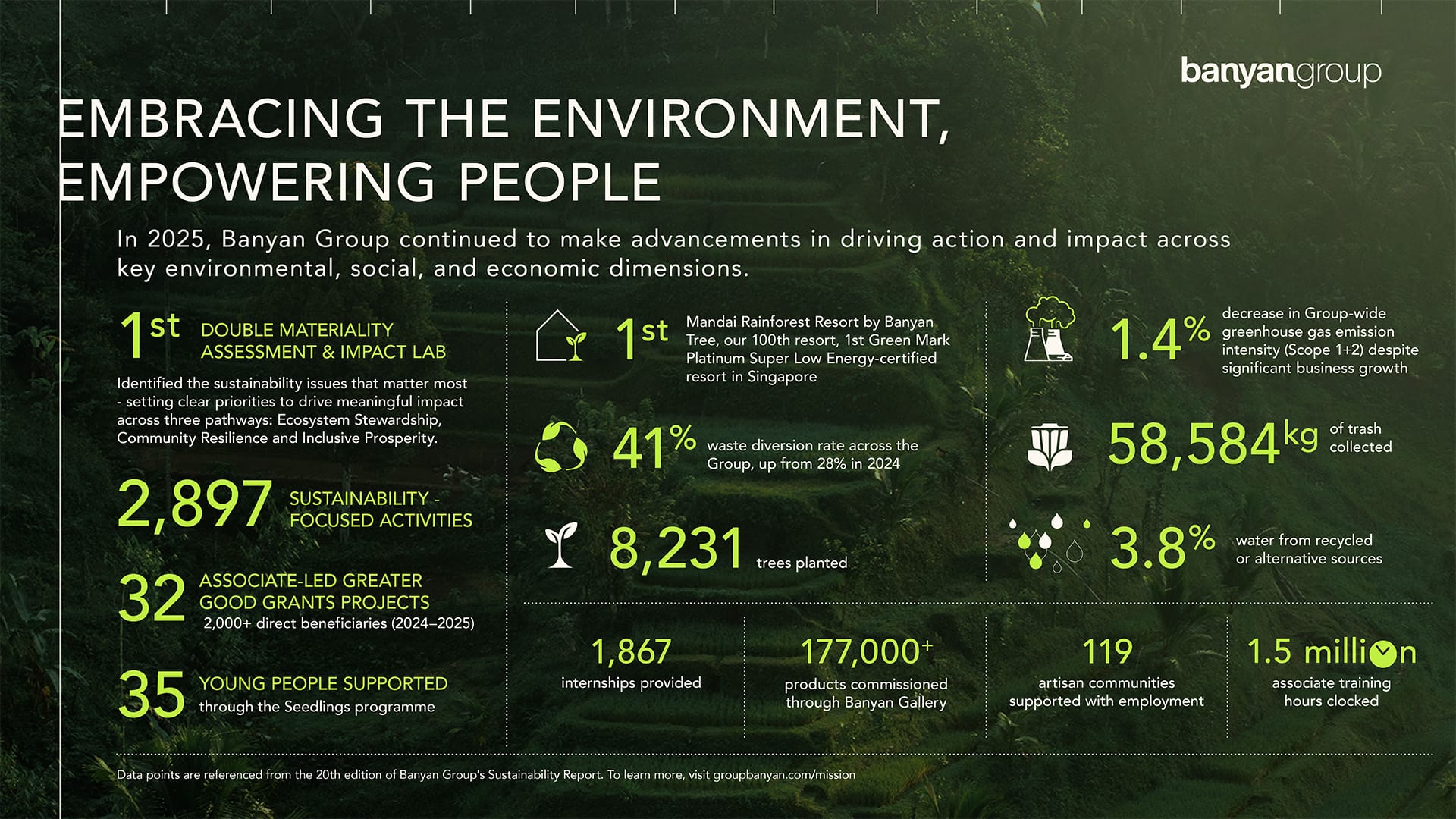
In practical terms, it looks at two sides of the same equation: how the business impacts the environment and society, and how environmental and social issues affect the business financially. The result is a more structured approach where sustainability is built into decision-making rather than handled as standalone initiatives.
Community investment continues to be delivered through the Brand for Good framework and the Banyan Global Foundation.
In 2025, 32 community grants supported approximately 2,000 people across areas near the Group’s properties. Projects focused on education, skills training, and support for groups including farmers, students, low-income families, and individuals in rehabilitation programmes.
Co-founder Claire Chiang has emphasised that proximity matters—projects are designed to stay local so benefits remain within the communities where the hotels operate.
On the environmental side, the Group reported measurable progress even as it expanded. Greenhouse gas emissions intensity fell, waste generation dropped by 13%, and waste diversion rose to 41%, up from 28% the year before.
New properties launched in 2025 reflect this direction in different ways, from architecture that uses locally sourced bamboo and traditional design techniques to hotels built with energy efficiency as a central requirement.
The Mandai Rainforest Resort in Singapore, the Group’s 100th property, also became the first hotel in the country to achieve the BCA Green Mark Super Low Energy (Platinum) rating.
The focus on people is equally central. With around 15,000 employees from 95 nationalities, the Group delivered 1.5 million training hours in 2025 and ran more than 1,300 wellbeing activities across its properties.
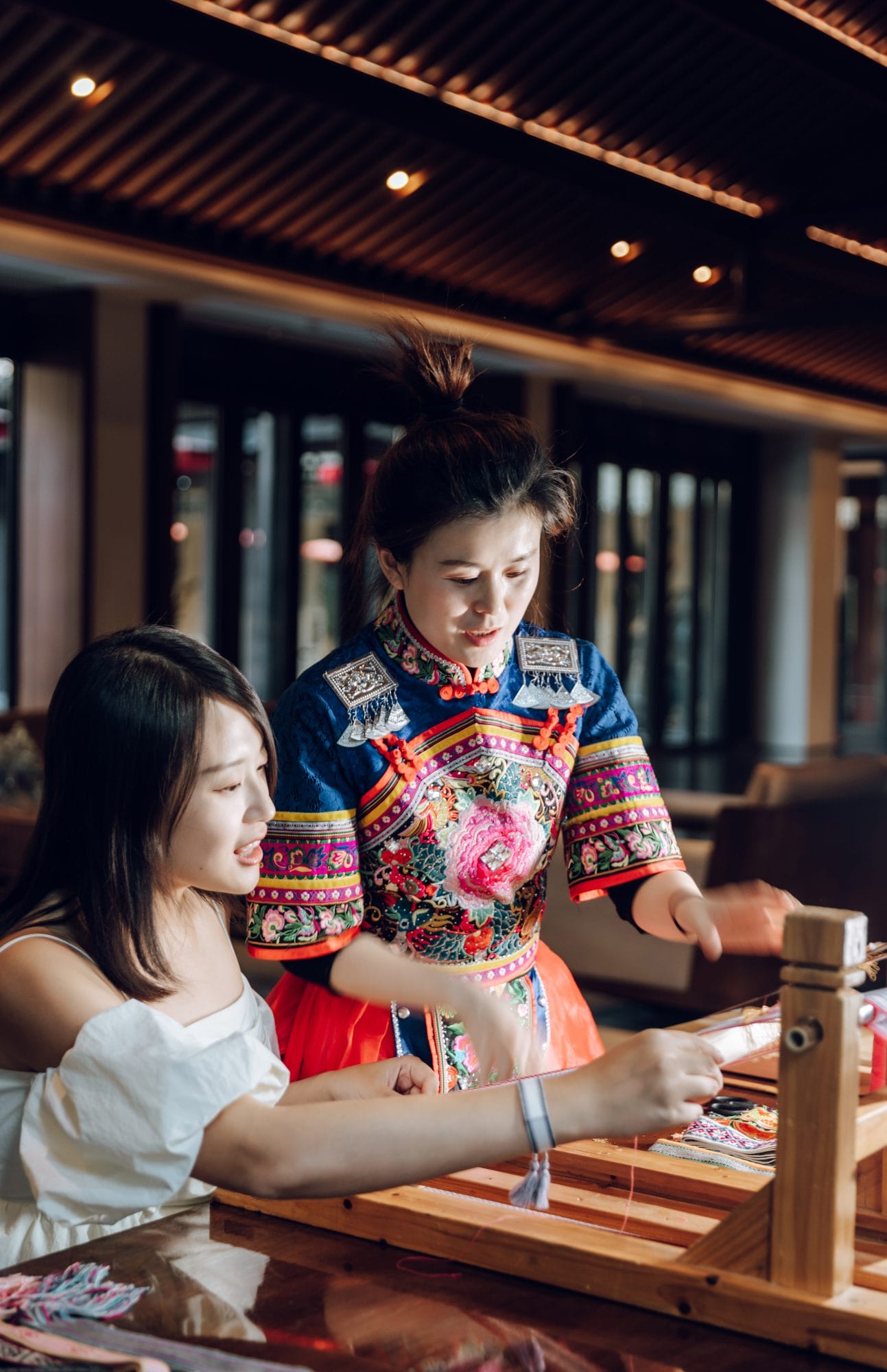
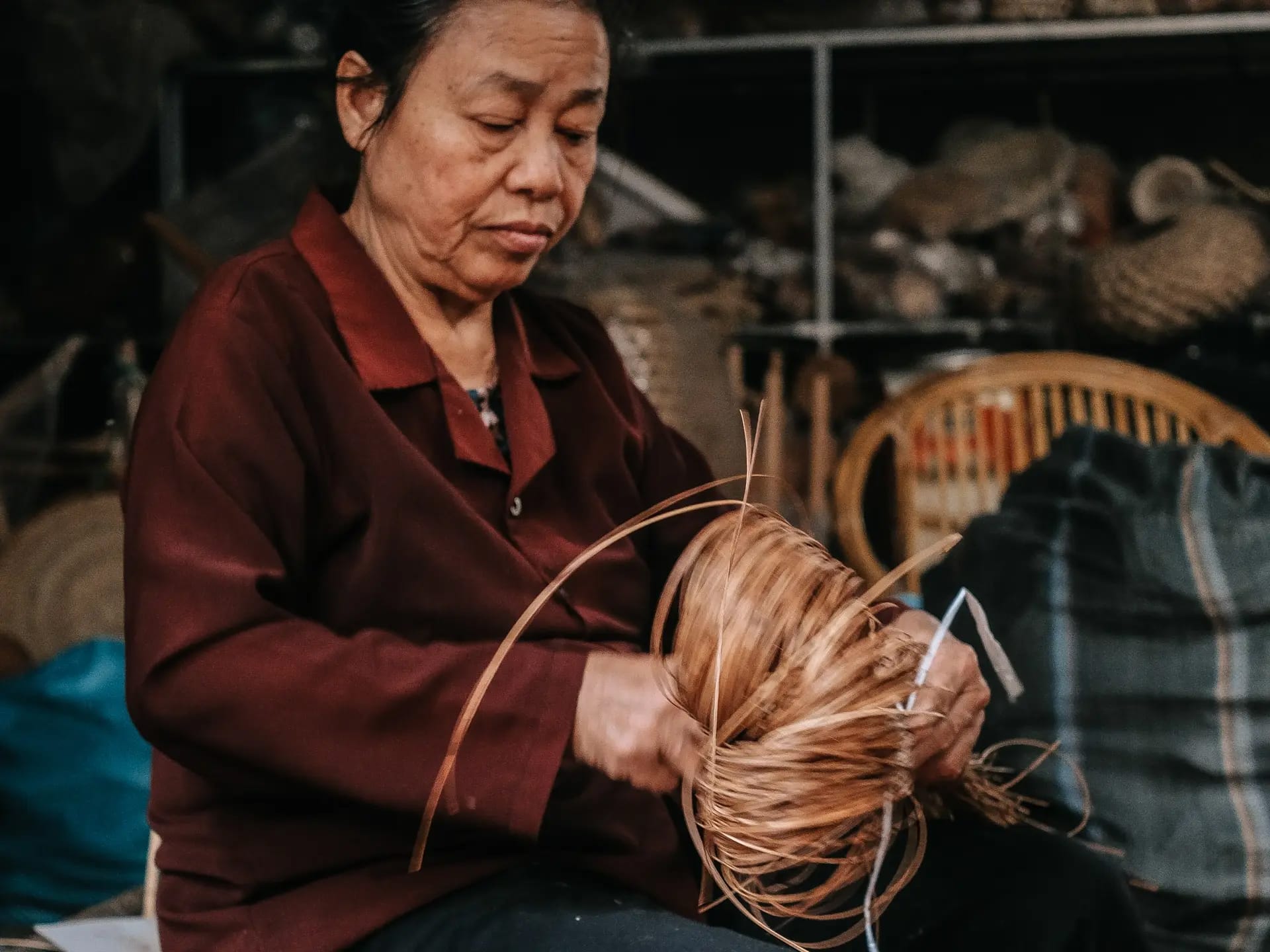
It also continued to scale Banyan Gallery, which works with artisan communities across Asia. In 2025 alone, it commissioned over 170,000 handcrafted items, supporting crafts such as weaving, ceramics, and traditional textiles while providing income for rural and indigenous makers.
Looking ahead, the Group has set out three priorities from its latest Sustainability Impact Lab: Ecosystem Stewardship, Community Resilience, and Inclusive Prosperity. These will guide how future projects are designed and operated, from supply chains to training programmes.
As Mark Watson notes, the aim is to make sustainability part of how the business runs day to day, not an external layer on top of it.