



A century-old power-sharing arrangement in Negeri Sembilan is facing its most serious modern-day challenge, as a constitutional standoff in the state exposes deep tensions between customary authority and procedural governance.
Far from being a routine leadership dispute, the ongoing crisis has become a rare stress test of Negeri Sembilan’s unique co-rulers system: One in which adat, or customary law, operates alongside constitutional structures in a model unlike any other in Malaysia.
Legal scholars and historians say the impasse is forcing difficult questions about who holds ultimate authority when both tradition and modern legal institutions claim legitimacy.
“This is first time where this system collided with each other in modern Negeri Sembilan,” Universiti Teknologi MARA’s Faculty of Law senior lecturer Dr Ikmal Hisham Md Tah told BusinessToday.
According to Dr Ikmal, the current standoff stems from actions taken by four Undangs to remove the Yang di-Pertuan Besar under Articles 10(2) and 11 of the Negeri Sembilan Constitution.
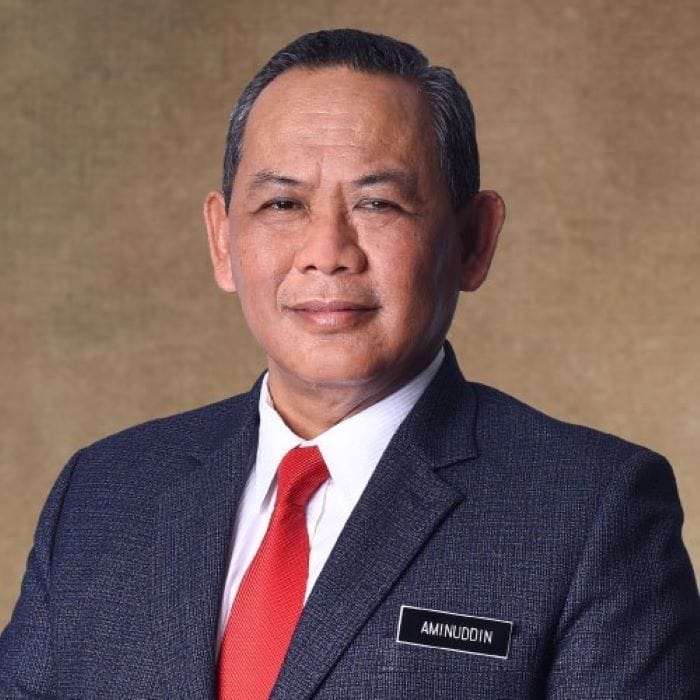
“Through literal interpretation of the state constitution, it provided valid actions by the Undangs. However, things get complicated when Menteri Besar Datuk Seri Aminuddin Harun refuse to sign the proclamation due to procedural irregularities,” he said.
That refusal, he noted, triggered a further declaration by the four Undangs that Aminuddin was unfit to lead, escalating the dispute into a broader constitutional conflict.
Unfolding Of Constitutional Conflict

At the centre of the crisis is a fundamental legal and political question: Can traditional legitimacy override procedural legality?
Unlike other Malaysian states, Negeri Sembilan’s monarchy is not based on hereditary succession alone. Its structure is rooted in a series of historical agreements that established a power-sharing framework between the ruler and the Undangs.
Tuanku Ja’afar Royal Gallery curator Mohd Khairil Hisham said the origins of the state’s constitutionalism can be traced back to the 1895 peace agreement between Yamtuan Antah Radin and the four Undangs.
This was followed by the 1898 treaty between Tuanku Muhammad Shah and the four Undangs to form Federated Negeri Sembilan, and later the 1934 agreement between Tuanku Abdul Rahman and the Undangs.
“In these agreements, both parties agreed that the next in line to be Yang di-Pertuan Besar Negeri Sembilan must be from Tuanku Radin’s lineage,” he told BusinessToday.
These agreements, he explained, became the foundation of the Federated of Negeri Sembilan Agreement 1948 and were later consolidated into the Undang-undang Tubuh Kerajaan Negeri Sembilan 1959, particularly Chapter One.
However, what makes the present crisis especially significant is that it places those historical frameworks under direct scrutiny in a contemporary constitutional setting.
For over a century, Negeri Sembilan’s hybrid governance model has endured without major rupture. But experts say the current impasse reveals how fragile the balance can be when customary authority and procedural requirements diverge.
Dr Ikmal said the dispute raises urgent questions about the limits of each institutional actor within the state’s co-rulers system.
“To what extent are the four Undangs, the Yamtuan and the state government positions applicable in this unique system?” he asked.
He added that the crisis could set an important precedent for future disputes involving royal authority, executive roles and constitutional interpretation in the state.
“This would lead to what extent the role of every state actor in Negeri Sembilan understanding the complexity between the modern constitution and customary law,” he said.
Broader Implications
The broader implications extend beyond the palace and government offices.
Both experts warned that prolonged uncertainty could affect public confidence and administrative stability.
“Like it or not, this impasse would affect a longer period of state administration and position of adat in modern times,” Dr Ikmal said.
Khairil, likewise, noted that the issue directly impacts governance because the Tuanku, the Undangs and the Tunku Besar Tampin collectively form part of the state monarchy under the 1959 constitutional framework.
In his view, the path to resolution lies not in political manoeuvring, but in returning to the principles embedded in the state’s founding agreements.
“This problem can be resolved if we follow and look into the 1898 and 1934 agreements,” he said.

For Dr Ikmal, any solution must strike a careful balance between legal certainty and cultural legitimacy.
“Any action taken to resolve conflict needs to follow the rule of law and respect adat by all actors involved.
“This is not about personal interest or glory, but the future of Negeri Sembilan where modern law and adat co-exist,” he said.
The current crisis escalated in April 2026 after disputes involving the Undang of Sungai Ujong Datuk Mubarak Dohak led to his contested removal. In response, he and three other Undangs declared the removal of Tuanku Muhriz and named a replacement ruler, a move rejected by the state government led by Aminuddin, which argued the declaration lacked legal standing.
Overall, as the crisis unfolds, Negeri Sembilan is confronting more than a leadership dispute.
It is testing whether a 19th-century power-sharing pact can remain workable in the demands of 21st-century governance and whether Malaysia’s oldest traditions can continue to coexist with modern constitutional expectations.


