



It often starts quietly — a small lump in the neck, a voice that sounds slightly different, or nothing at all. That’s the challenge with thyroid cancer: it rarely announces itself early, yet it is one of the more treatable cancers when caught in time. In Malaysia, it is also more common than many realise, particularly among women.
Dr Tan Teik Hin, Consultant Nuclear Medicine Physician and Dr Wong Mei Wan, Consultant Breast and Endocrine Surgeon at Sunway Medical Centre, Sunway City, share a clear message: don’t ignore changes in the neck, even if you feel otherwise well.
The thyroid is a small gland at the base of the neck that helps regulate metabolism, energy and temperature. When cancer develops in this gland, it usually does not disrupt hormone levels. That’s part of what makes it easy to miss — most people still feel normal.
The Local Picture
In Malaysia, thyroid cancer is the eighth most common cancer among women, according to the Malaysia National Cancer Registry Report 2017–2021. Women are affected more often than men, though doctors say the reasons are still not fully understood. There are studies on hormonal factors, but there is no confirmation at this time.
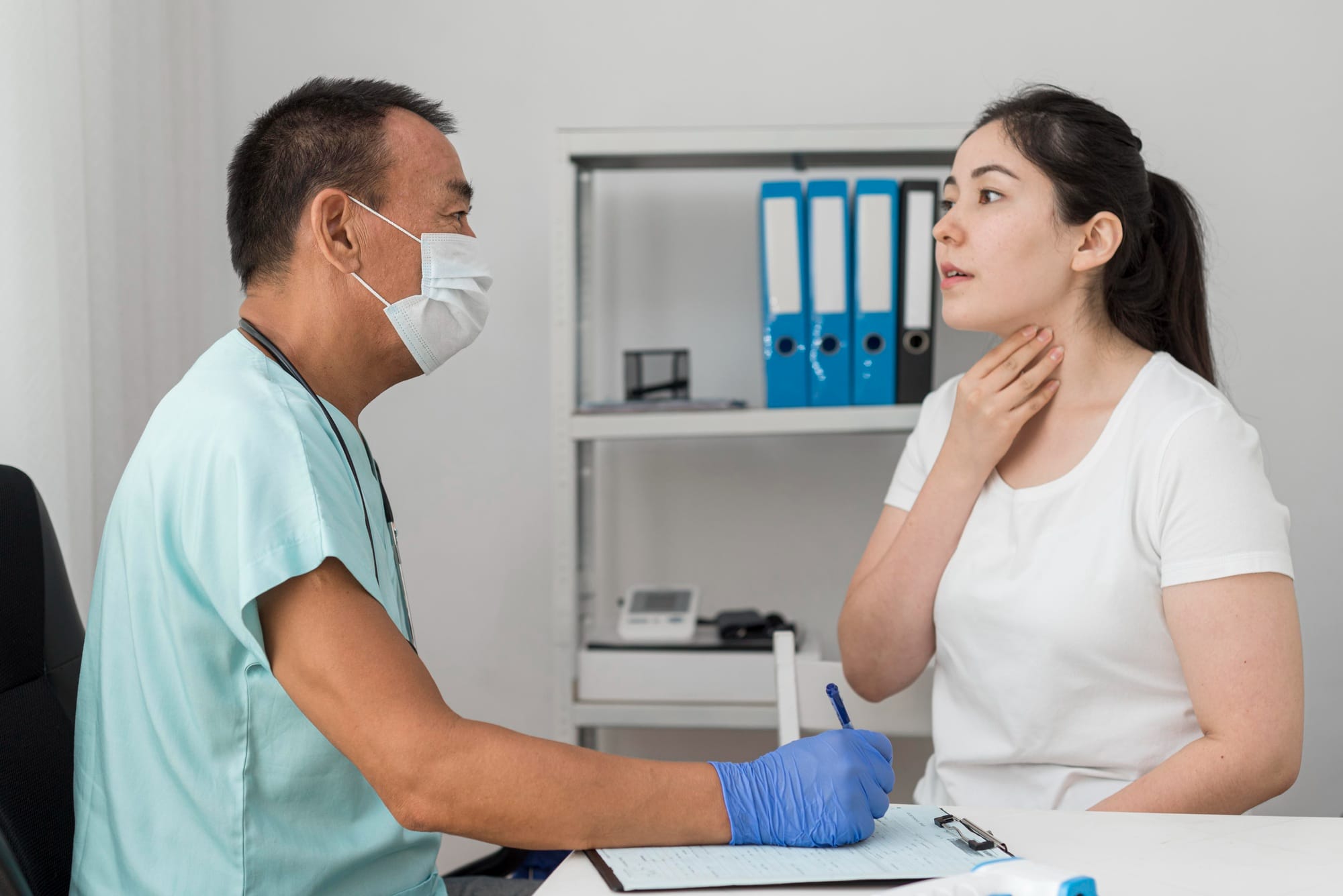
Most cases occur typically when someone notices a lump in the neck. Other possible warning signs include difficulty swallowing, a change in voice, or swelling in the neck area.
Even then, not every lump is cancer. Many are benign conditions, such as goitre. That’s why doctors rely on ultrasound scans and biopsies to confirm what they’re dealing with.
Dr Tan explains that thyroid cancer is usually not linked to lifestyle habits such as smoking. Some cases run in families, but most occur without a clear inherited pattern. About two-thirds of his patients are women, which reflects global trends rather than local lifestyle differences.
Why Timing Matters More Than Before
One of the more positive developments in recent years is earlier detection. Many patients in Malaysia are currently diagnosed at Stage 1, often during routine health checks or incidental scans. A decade ago, more cases were picked up later, when treatment was more complex.
Around 85 per cent of thyroid cancers are slow-growing types, most commonly papillary or follicular cancers.
These generally respond well to treatment when detected early. Outcomes become more serious when the disease spreads beyond the neck to organs such as the lungs or bones.
What Treatment Usually Looks Like
Treatment usually starts with surgery to remove part or all of the thyroid. Depending on risk level, some patients will then receive radioactive iodine (RAI) therapy.
This treatment targets leftover thyroid cells and helps doctors detect any hidden disease. Dr Tan stresses that RAI is not the same as external radiotherapy and is generally well-tolerated.
For small, low-risk tumours, surgery alone may be enough. For more advanced or resistant cases, targeted therapies such as tyrosine kinase inhibitors can help slow disease progression, although they require close monitoring for side effects such as fatigue, skin changes and blood pressure issues.

Managing Recovery and Recurrence Risk
Follow-up care is long-term. Recurrence can happen, sometimes years later, most often in nearby lymph nodes. After thyroid removal, patients also need lifelong hormone replacement tablets to maintain normal body function. Most adapt well, but consistent follow-up remains important.
Monitoring typically starts with checks every six months for the first two years, then annually for several years following, depending on risk. Doctors adjust this schedule based on individual progress rather than a fixed timeline.
Despite advances in treatment, both specialists say awareness remains the missing piece. Thyroid screening is not routinely done in Malaysia, so diagnosis often depends on individuals coming forward early.
The advice is straightforward: if a neck lump persists, or if there are unexplained voice changes or difficulty swallowing, get it checked. An ultrasound and basic blood tests can quickly clarify what is going on.
As Dr Tan puts it, thyroid cancer often grows slowly — but that does not mean you should ignore it. Early attention remains the factor that most strongly influences outcomes.


