


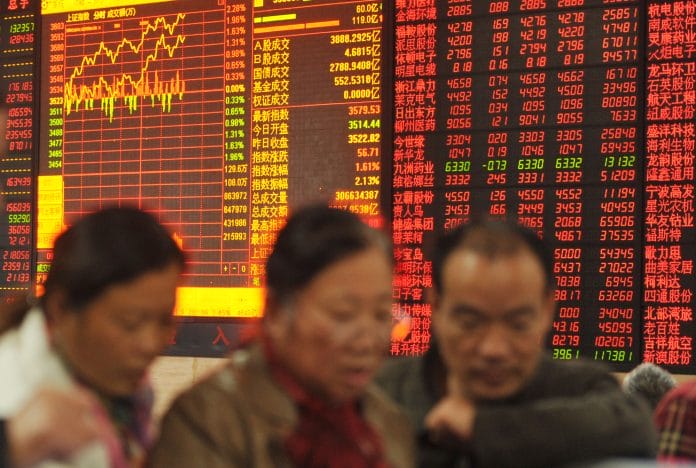
Asian stock markets opened lower on Thursday as renewed hostilities between the US and Iran dampened investor sentiment, overshadowing tentative signs of de-escalation elsewhere in the Middle East.
MSCI’s broadest index of Asia-Pacific shares outside Japan fell 0.8%, while Japan’s Nikkei 225 dropped 1.3%. South Korean stocks, returning from a public holiday, declined 2% in early trade. S&P 500 futures also slipped 0.4% after Wall Street’s overnight sell-off.
The cautious mood followed a weak session in the US, where the S&P 500 fell 0.74%, the Dow Jones Industrial Average lost 1.21% and the Nasdaq Composite declined 0.89% as investors reacted to fresh military exchanges between Washington and Tehran and concerns over the inflationary impact of higher energy prices.
Analysts at Westpac said markets had shifted back into risk-off mode following the latest escalation, while ING noted that conflicting geopolitical signals continued to fuel volatility and reduce hopes of a swift resolution to the conflict.
Oil prices eased slightly after Lebanon and Israel agreed to implement a ceasefire, reviving hopes of broader diplomatic progress in the region. Brent crude fell 0.7% to US$97.12 a barrel after gaining around 2% in the previous session.
Investors also weighed developments in the US, where the House of Representatives approved a war powers resolution aimed at limiting further military action against Iran. However, the proposal faces significant obstacles before becoming law.
Meanwhile, attention remained on monetary policy after Bank of Japan Governor Kazuo Ueda signalled that policymakers could consider raising interest rates if inflation risks intensify. The yen traded near 160 against the US dollar, while the US dollar index held steady after a three-day rally.
Gold rose 0.5% to US$4,455.71 an ounce as investors sought safe-haven assets amid the heightened uncertainty.


