


The 2026 FIFA World Cup will feature a series of significant rule changes after football’s lawmakers approved new measures aimed at improving discipline, reducing timewasting and enhancing the use of video technology.
Among the most notable changes is the expansion of VAR powers. Officials will now be able to intervene in cases involving wrongly-awarded second yellow cards, mistaken identity incidents and incorrectly-awarded corner kicks.
VAR will also be permitted to review incidents where offences occur before the ball is put back into play during set-pieces, such as attackers blocking defenders before a corner is taken. If an infringement is identified before the restart, referees can be directed to conduct an on-field review before deciding whether disciplinary action is necessary and whether the set-piece should be retaken.
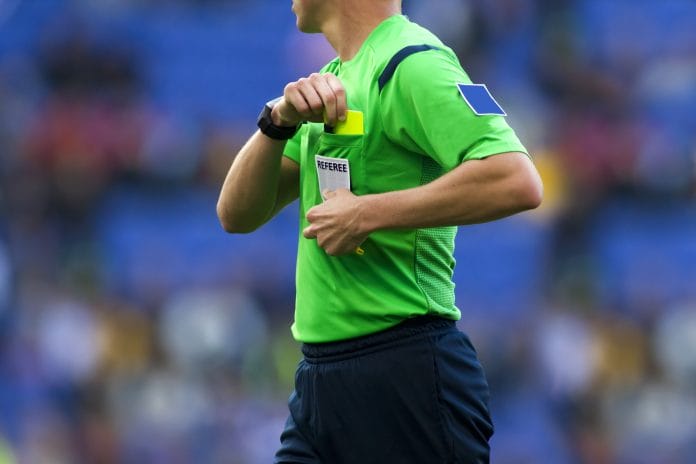
Player conduct is also coming under greater scrutiny. Players who cover their mouths with their hand, arm or shirt during confrontational situations will now receive a red card. The rule does not apply to normal conversations between players.
In another disciplinary measure, players who walk off the pitch in protest of a refereeing decision will be sent off, while teams that cause a match to be abandoned will automatically forfeit the game. The same punishment applies to team officials who encourage players to leave the field.
To tackle timewasting, referees will use visible five-second countdowns for throw-ins and goal-kicks. Failure to restart play within the allotted time will result in possession being awarded to the opposition for throw-ins, while delayed goal-kicks will lead to the opposing side receiving a corner kick.
Substitutions will also be accelerated. Once the substitution board is displayed, players leaving the pitch will have just 10 seconds to exit using the nearest boundary line. If they fail to do so, their replacement can only enter at the first stoppage after one minute has elapsed following the restart.
New medical protocols have also been introduced. Outfield players who receive treatment on the pitch must remain off the field for at least one minute after play resumes. Exceptions will apply for goalkeepers, head injuries, concussions, collisions and situations involving penalty takers.
The tournament will also feature mandatory three-minute hydration breaks in each half, with referees given flexibility to determine the most suitable moment for the stoppage based on match conditions.
FIFA is also seeking to discourage teams from using injuries as unofficial tactical timeouts. While no formal sanctions have been introduced, FIFA’s chief refereeing officer Pierluigi Collina said officials would actively prevent teams from gathering around coaches during injury stoppages.
“We will not allow the teams going to the benches when a goalkeeper is lying on the ground injured,” he said. “The goalkeeper has the right to be injured, but the players do not have the right to leave the field of play to have some sort of time out with their respective coaches.
“I’m afraid we didn’t get a shared solution (on sanctions), a solution agreed by everybody. For this season, IFAB didn’t take any decision. Certainly something will be done in the future. For the time being, we rely on players’ understanding of the problem.
“We told them, ‘Be aware that we know’ so what we can avoid is having all the players off the field of play. There are captains, there are coaches, so certainly referees will be ready to face something like this if it should happen.”
The new regulations will take effect during the World Cup in the United States, Mexico and Canada, marking one of the most extensive updates to football’s laws in recent years.


