


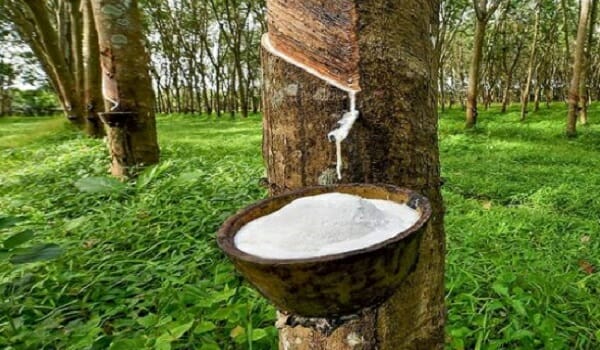
Malaysia’s natural rubber (NR) production declined 8.8% month-on-month in April 2026, even as exports and rubber prices recorded strong gains, according to data released by the Department of Statistics Malaysia.
Natural rubber production fell to 18,515 tonnes in April from 20,310 tonnes in March. However, output remained 2.8% higher compared with the 18,008 tonnes recorded in April 2025.
Smallholders continued to dominate the sector, accounting for 88.5% of total production, while estates contributed the remaining 11.5%.
Malaysia’s natural rubber stockpiles also declined during the month, falling 6.2% to 130,698 tonnes from 139,387 tonnes in March.
Rubber processors held the majority of stocks, accounting for 76.9% of total inventories, followed by rubber consumer factories at 23.0%, while rubber estates represented only 0.1%.
Despite lower production and inventories, exports of natural rubber rose significantly.
Malaysia exported 37,360 tonnes of natural rubber in April, up 12.7% from 33,137 tonnes in March.
China remained the largest export destination, absorbing 50.8% of Malaysia’s total natural rubber exports. Other key markets included Germany (15.8%), the United States (4.7%), the United Arab Emirates (4.2%) and Portugal (3.7%).
The export performance was supported by demand for rubber-based products, including gloves, tyres, tubes and rubber thread.
Rubber gloves remained Malaysia’s largest rubber-based export product, with export value surging to RM1.4 billion in April from RM900 million in March, representing a 52.4% increase.
Meanwhile, rubber prices continued to trend higher during the month.
The average monthly price of concentrated latex rose 13.4% to 754.69 sen per kilogram in April from 665.40 sen per kilogram in March.
Similarly, the average price of scrap rubber increased 5.7% to 691.26 sen per kilogram, compared with 654.27 sen per kilogram a month earlier.
The combination of higher export demand, declining inventories and stronger commodity prices suggests continued support for Malaysia’s rubber sector, despite lower monthly production levels. Higher latex and scrap rubber prices may also provide some relief to smallholders, who account for the vast majority of the country’s natural rubber output.


