



Biomass producer Weng Yat Resources Sdn Bhd is targeting more than RM60 million in annual revenue from biomass exports to Japan after signing a memorandum of understanding with Japan-based Daya Synergy Borneo Co Ltd (DSB).
The agreement will see both parties develop a biomass supply platform to support Japan’s renewable energy and decarbonisation agenda, with commercial shipments expected to begin in January 2027.
The partnership follows a planned trial shipment of 10,000 metric tonnes of wood pellets this year, which will serve as a precursor to larger recurring monthly supply arrangements. Long-term supply agreements are expected to be finalised by the end of 2026.
Weng Yat is also aiming to capture 5% of Japan’s biomass import market within the next three years.
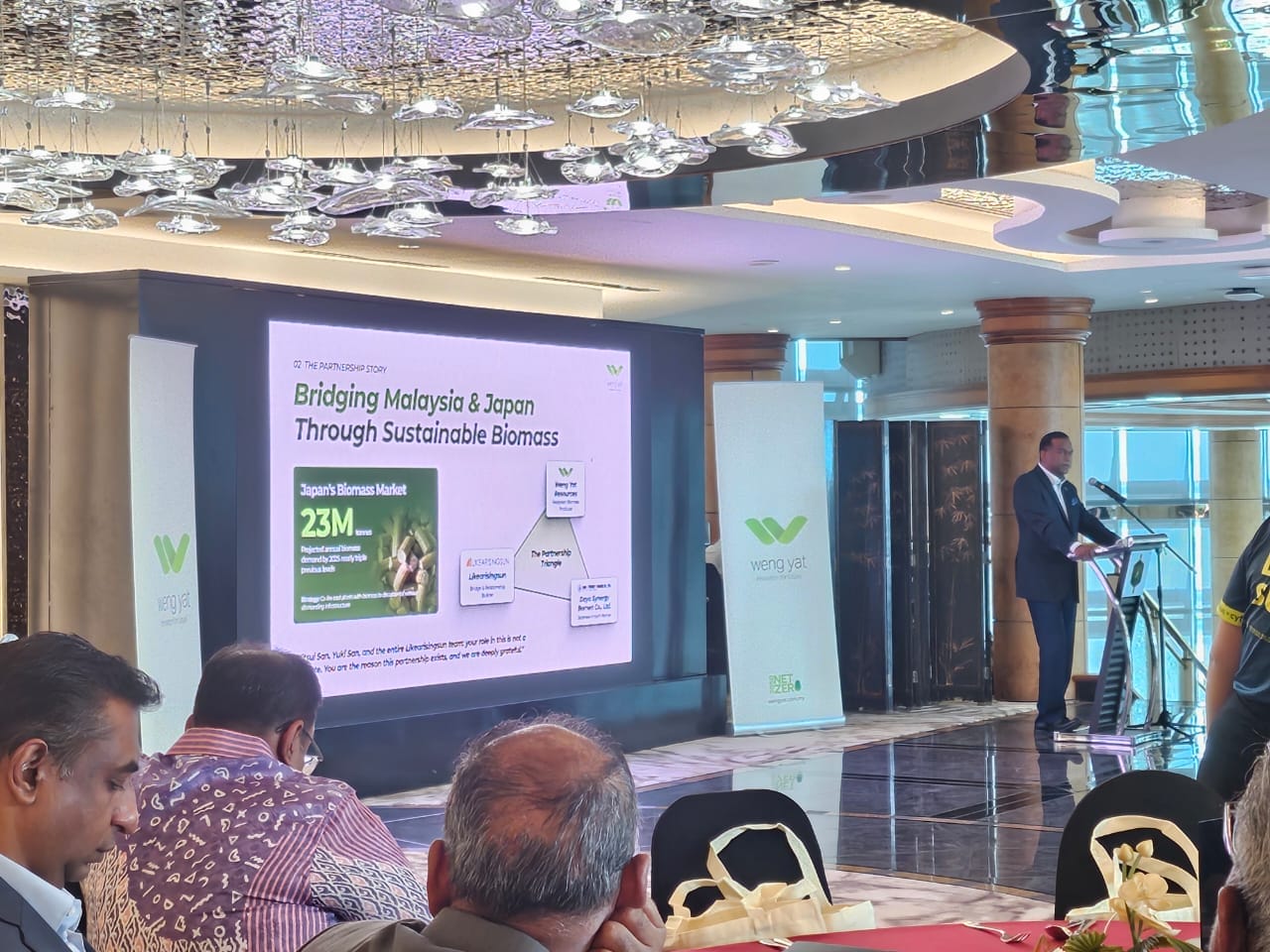
Japan remains one of the world’s largest biomass importers, consuming an estimated seven million tonnes of palm kernel shells (PKS) and nine million tonnes of wood pellets annually. Demand for empty fruit bunch (EFB) pellets is also growing as power producers seek alternative biomass feedstocks.
Under the agreement, DSB will facilitate market access into Japan through its existing network of biomass traders and power generation companies, while Weng Yat will leverage its production capabilities and feedstock supply network in Malaysia.
Weng Yat currently maintains long-term supply arrangements with 24 palm oil mills nationwide, securing access to an estimated one million metric tonnes of empty fruit bunches annually for biomass production.
Established in 2007, the company operates biomass facilities across Peninsular Malaysia and Sarawak. Its Tronoh, Perak facility currently produces about 6,000 metric tonnes of wood pellets monthly.
The group is expanding its biomass operations with a new EFB pellet production line capable of producing 5,000 metric tonnes per month, scheduled to begin operations in 2027. It is also developing a new facility in Kapar, Klang, which will increase production capacity for wood pellets, sawdust and wood chips.
Weng Yat reported a combined annual turnover of approximately RM150 million across its biomass, automotive and scaffolding businesses.
The company said the partnership forms part of its strategy to convert agricultural and industrial biomass waste into higher-value export products while supporting the growing demand for renewable energy fuels in Japan.


