


By Professor Dato Dr Ahmad Ibrahim
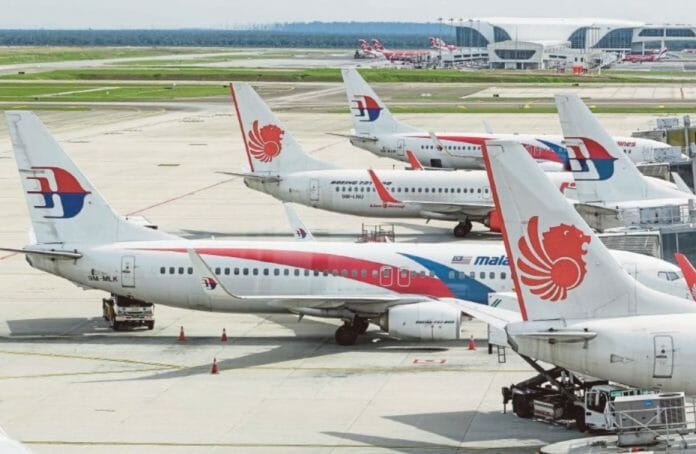
Does this sound familiar? A passenger booked a flight from Boston to Singapore. The ticket carried the logo of a major US airline. But the plane that took off? A Japanese carrier. The connecting leg? A Southeast Asian budget airline. Welcome to the world of code-share agreements—a quiet but ingenious pillar of modern aviation, allowing airlines to sell seats on each other’s flights, expand their networks, and generate revenue from routes they don’t actually operate. As elaborated in a recent podcast forum at UCSI university, the outgoing MD of Malaysian Airlines explained that the code share model is now a popular business strategy in aviation. It is also about sharing risks.
What has struck some is that, if this works for airlines, why in the world don’t private universities do the same? Imagine a small liberal arts college in rural Ohio. It has a fantastic philosophy department, but zero engineering faculty. A prospective student wants both a humanities foundation and a computer science major, which is becoming popular these days. Under today’s rigid system, that student must choose—or transfer. But what if that Ohio college had a “code-share” agreement with a tech-focused university two states away? The student enrolls at the liberal arts college for semesters one, two, and four, studying ethics and writing. For semester three, they “fly” virtually (or physically, for a summer) to the partner university, take core engineering courses, and the credits transfer seamlessly. The diploma bears both names—or the home university’s name, with the partner listed as “academic collaborator.”
Just like the airlines case, both institutions win. The liberal arts college keeps tuition revenue from a student it couldn’t otherwise serve. The tech university fills seats in courses that might have had spare capacity. Students gain a customised education without the bureaucratic nightmare of formal transfers, lost credits, or reapplying. So why isn’t this happening? Three reasons have been cited. First, credentialing pride. Universities are religious about their degree requirements. The idea that a student might take “their” core course at another institution is often seen as dilution, not synergy. Airlines don’t care whose plane you sit on as long as you buy the ticket; universities care very much whose stamp is on the transcript.
Second, accreditation and financial aid. In many countries, the US especially, federal aid, credit hours, and accreditation are still tethered to a single “home institution.” A code-share model would require regulators to allow two universities to share responsibility for a single student’s degree progress—and share liability. No standard framework exists thus far. So why not create one?
Third, inertia and silos. Airline alliances (Star Alliance, SkyTeam, OneWorld) emerged because carriers realised cooperation was cheaper than competition on every route. Universities, by contrast, still see each other mostly as rivals for the same shrinking pool of 18-year-olds. They haven’t yet felt the existential pain that forces cooperation—though with falling birth rates and rising tuition skepticism, that pain is coming.
Some for-profit online platforms already offer something similar: “course sharing” consortia like Acadeum, where colleges swap seats in low-enrollment classes. But these are mostly transactional—a student takes one class, not a joint degree. What we are proposing is deeper: a two-year/three-year split, co-branded degree, revenue-share, the whole code-share package.
Skeptics will say education isn’t a flight. A flight from A to B is a discrete service. Learning is a coherent journey. But that’s exactly wrong: coherence is what a code-share curriculum would design for. Done badly, it’s a patchwork. Done well, it’s a deliberate fusion of strengths no single university possesses.
So here’s a challenge to every private university provost reading this: call your counterpart at a university with complementary strengths—not a competitor, but a partner. Ask: what would we need to offer a single Bachelor’s degree in Environmental Data Science (your ecology, their data analytics)? And then work backwards through the accreditation maze. Aviation regulators solved this decades ago. It’s time educators stopped pretending the sky is the limit—and instead learned to share it.
— The author is affiliated with the Tan Sri Omar Centre for STI Policy Studies at UCSI University and is an Adjunct Professor at the Ungku Aziz Centre for Development Studies, Universiti Malaya.


