


South Korea’s stock market is heading towards a moment it has been chasing for years. According to Bloomberg, investors are now watching closely to see whether MSCI will take the first step towards reclassifying the country as a developed market when it publishes its annual market review on June 23.
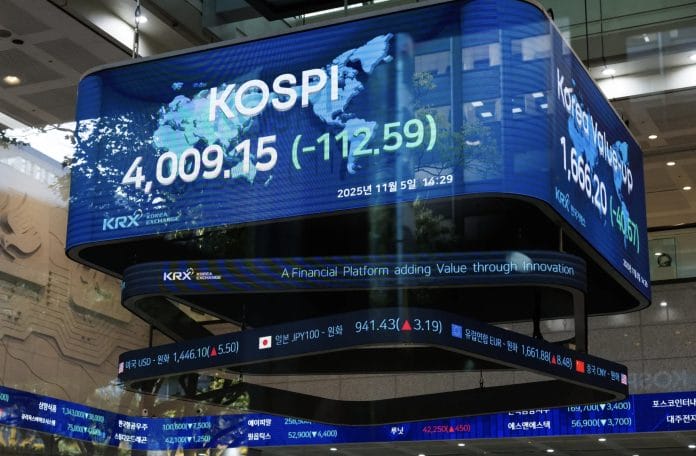
The timing comes after a remarkable run for Korean equities. The Kospi has surged more than 90% this year, making it the world’s best-performing major stock index as investors have poured money into artificial intelligence-linked stocks. However, the rally has come with sharp swings, with the market repeatedly triggering exchange safeguards in recent days as volatility intensified.
While most investors and strategists interviewed by Bloomberg expect MSCI to keep South Korea in the emerging-market category for now, many see an eventual upgrade as increasingly likely. The view among market participants is that recent reforms are moving in the right direction, but that MSCI may want more time to assess whether those changes are permanent.
South Korea’s case is unique because of its size. The country currently accounts for around 23% of the MSCI Emerging Markets Index, making it the benchmark’s second-largest constituent. Analysts say no market with such a large weighting has made the jump from emerging- to developed-market status in recent years, highlighting the significance of any future upgrade.
At the same time, some investors question whether the MSCI label matters as much as it once did. South Korea has become one of the main ways for global investors to gain exposure to the AI boom, with Samsung Electronics and SK Hynix dominating the Kospi. For many fund managers, investing in Korea is increasingly viewed as a semiconductor and artificial intelligence trade rather than a traditional emerging-market bet.
By most conventional measures, South Korea already looks like a developed economy. Its stock market has nearly tripled in value over the past year to around US$4.4 trillion, briefly overtaking India to become the world’s sixth-largest equity market. Korean companies also play a critical role in global semiconductor, battery and manufacturing supply chains.
The biggest hurdle has long been market accessibility. MSCI removed South Korea from its developed-market watchlist in 2014, citing restrictions on currency trading and other barriers faced by foreign investors. More recently, the index provider has continued to point to shortcomings in foreign-exchange reforms and compliance requirements.
Seoul has since introduced several measures designed to address those concerns. Short selling has resumed, extended trading hours are set to begin in July, and President Lee Jae Myung’s administration has made capital-market reform a key policy priority. Those changes have strengthened expectations that South Korea is moving closer to meeting MSCI’s requirements.
An upgrade could bring meaningful benefits. BNP Paribas Securities estimates developed-market inclusion could attract around US$30 billion in fresh inflows from benchmark-tracking funds. It could also help narrow the long-standing “Korea Discount”, the valuation gap that has historically left Korean stocks trading below many developed-market peers.
Supporters of reclassification also argue that it could attract a broader pool of long-term investors focused on governance, sustainability and shareholder returns.
With foreign investors having pulled more than US$78 billion from Korean equities this year despite the market’s strong gains, a shift in investor base could help reduce volatility over time while reinforcing South Korea’s position at the centre of the global technology supply chain.


