



A perpetual calendar that can sit untouched for more than two months without losing time sounds like a contradiction. Yet that is exactly what the Traditionnelle Twin Beat Perpetual Calendar delivers.
First introduced in 2019, it takes one of watchmaking’s most demanding complications and reworks it around a simple question: how do you make a mechanical watch more usable in real life, not just impressive on paper?
The answer is a dual-frequency movement that changes how the watch behaves depending on whether it is being worn. Developed by Vacheron Constantin, the Twin Beat® System lets the wearer switch between two operating modes using a case-side push-button at 8 o’clock.
Active mode runs at 5 Hz for precision when worn, while Standby mode drops to 1.2 Hz to dramatically reduce energy consumption when the watch is not in use. A hand on the dial shows which mode is active at a glance.
That switch is what makes the 70-day power reserve possible. Instead of relying on a single constant rate, Calibre 3610 QP is built around two independent gear trains powered by a coaxial double barrel.
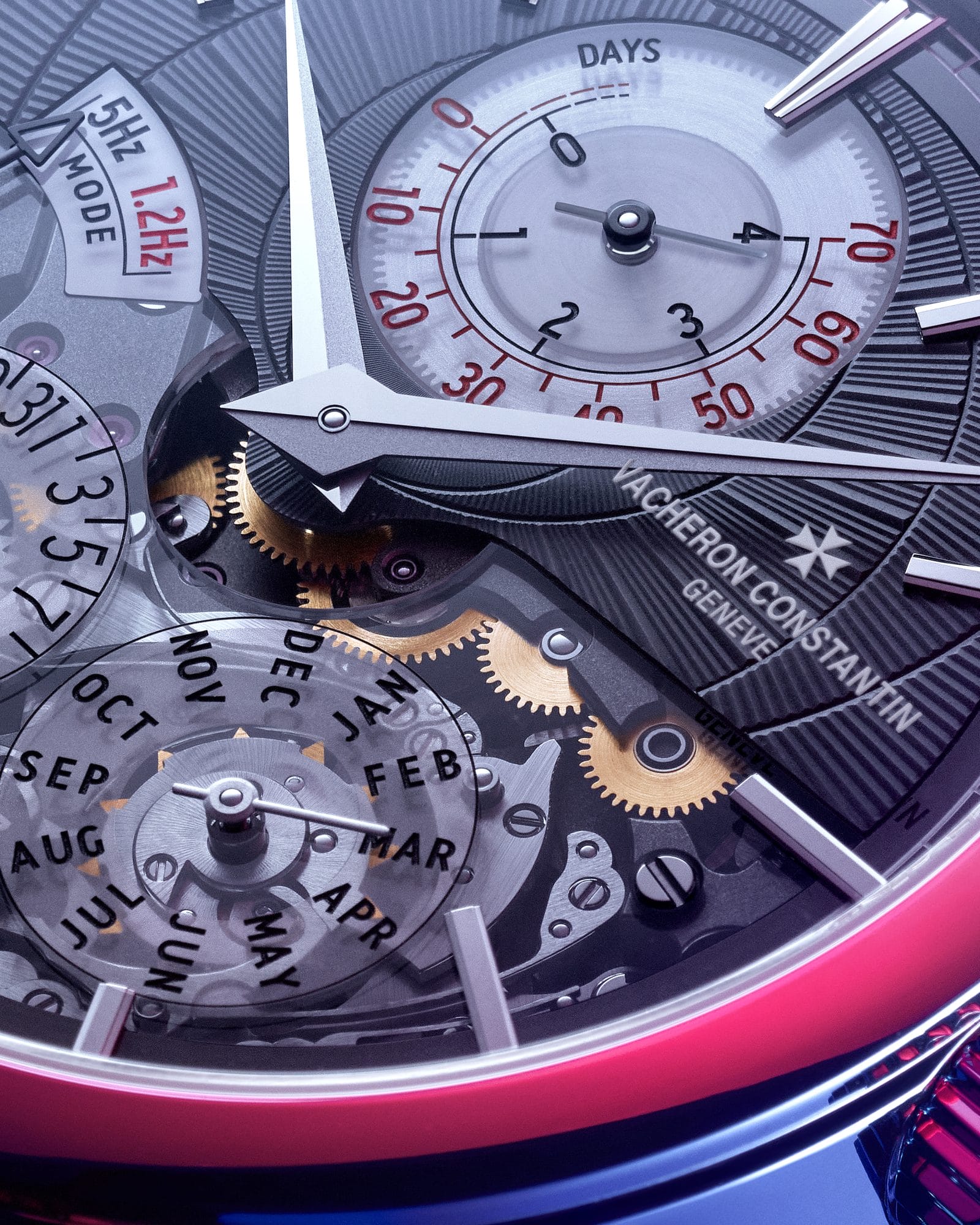
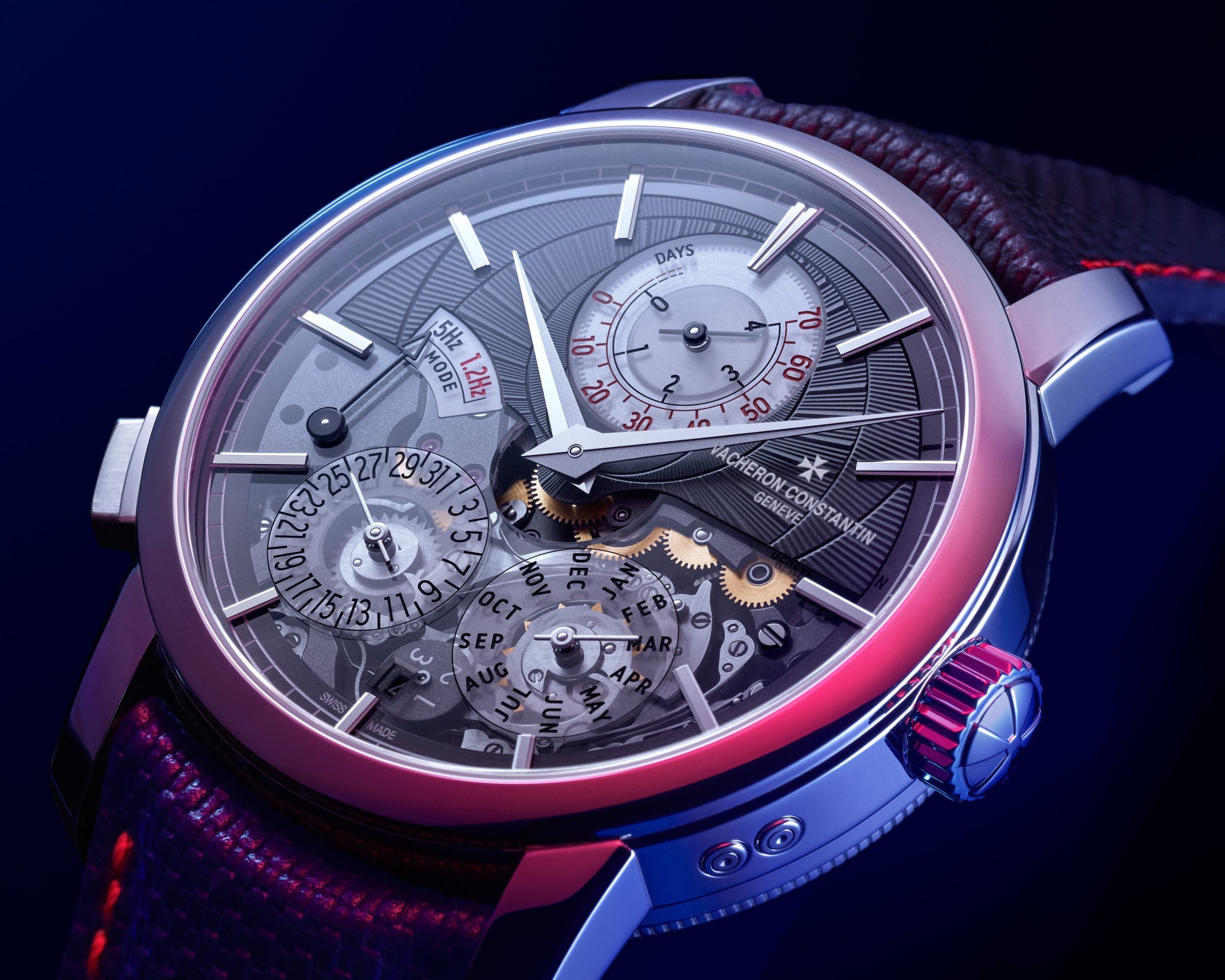
In Standby mode, the movement conserves energy without shutting down timekeeping or the perpetual calendar functions. In practical terms, the watch can be left unworn for over two months and still be ready to go without resetting.
That matters because the perpetual calendar is only as reliable as its power supply. The mechanism is designed to account for varying month lengths and leap years, automatically tracking the Gregorian calendar until 2100. But without consistent energy, even the most advanced calendar will drift or stop. The Twin Beat system solves that by reducing mechanical strain rather than compromising the complication itself.
Inside the movement, the engineering is tightly focused on efficiency. Calibre 3610 QP uses three differentials to manage energy distribution, switch between the two gear trains, and track power reserves from both barrels.
A redesigned instant-jump calendar mechanism reduces the torque normally required for date changes, helping preserve stability, especially in low-frequency mode. The result is longer autonomy without disrupting the precision needed for a perpetual calendar.
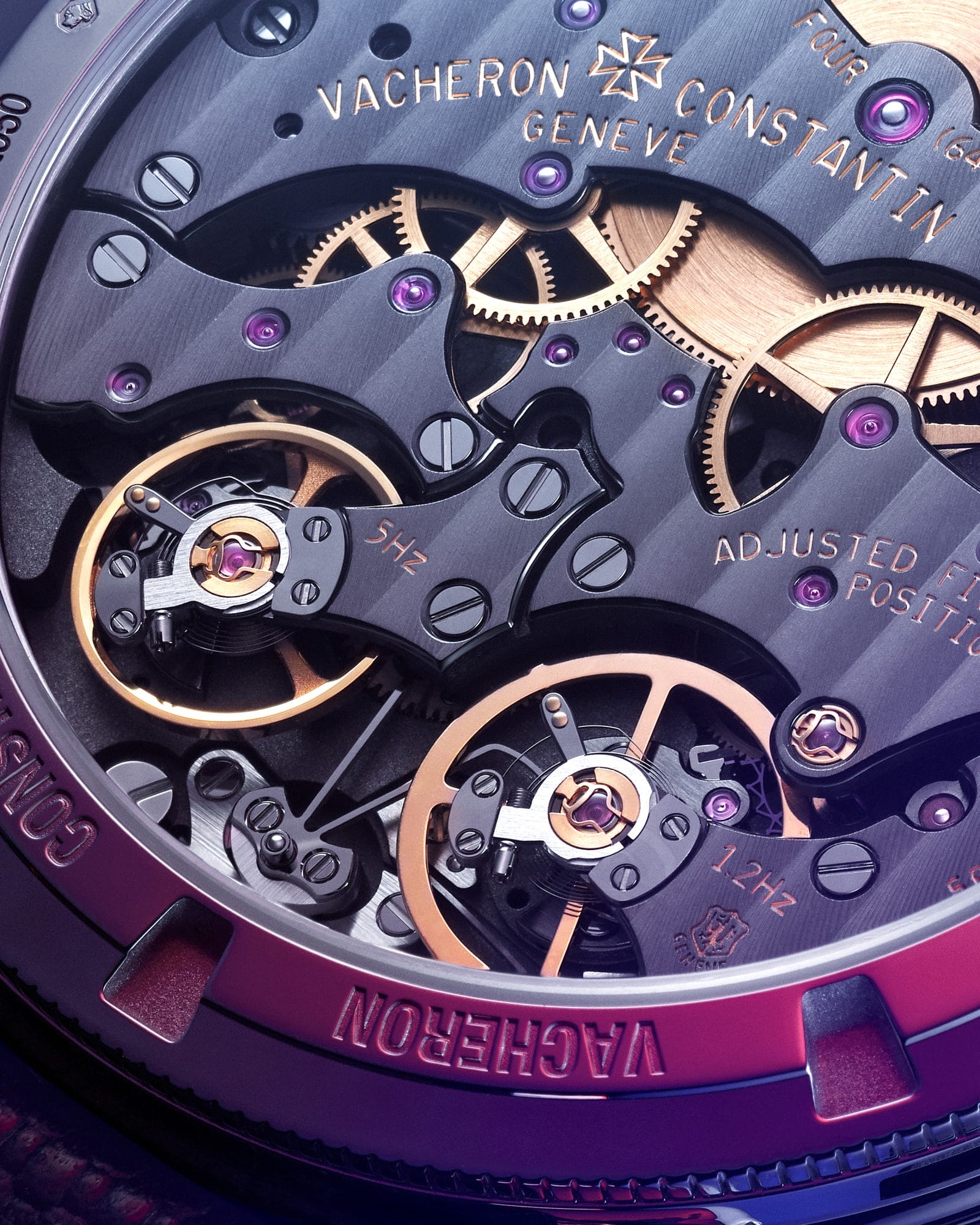
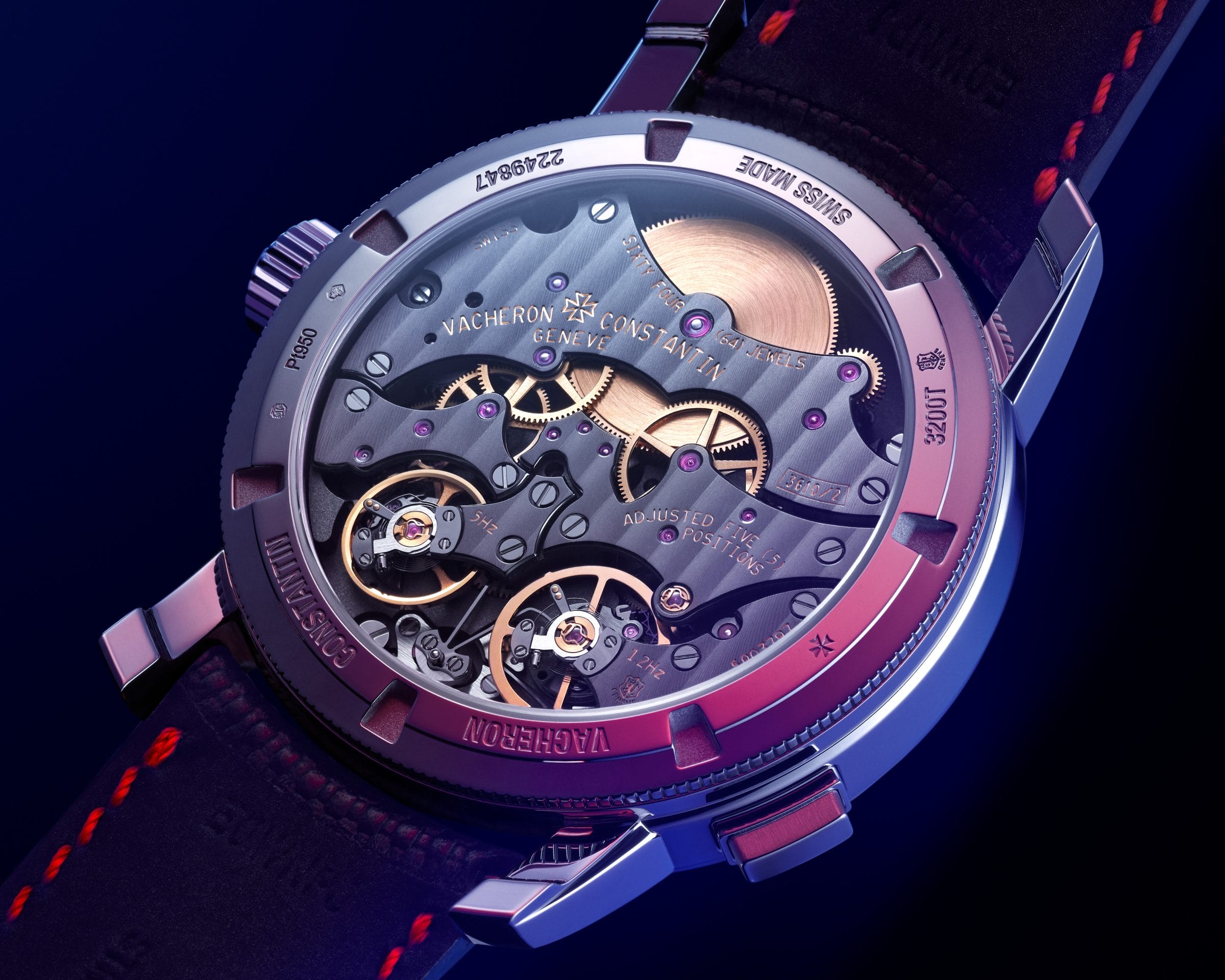
There is also a clear emphasis on control at the smallest scale. The Standby balance wheel operates at 1.2 Hz and uses an ultra-thin 0.015 mm hairspring developed specifically for this calibre. These refinements are not decorative details—they are there to keep amplitude stable over long periods, which is essential if the watch is expected to run for weeks without interruption.
Visually, the watch integrates its mechanics into the design rather than concealing them. The dial combines an open sapphire structure with a slate-grey, hand-guilloché upper section, creating a layered view of the movement beneath.
Sandblasted surfaces and NAC-treated components introduce a contrast between industrial textures and traditional finishing, while faceted dauphine hands and applied markers ensure the display remains clear and easy to read.
The case follows the familiar proportions of the Traditionnelle line, but the execution feels more contemporary. Measuring 42 mm in platinum and 12.3 mm thick, it maintains a restrained profile given the complexity inside. A textured calfskin strap and platinum pin buckle complete the design, keeping the emphasis on function rather than excess detail.
Overall, the Twin Beat approach is less about adding complication for its own sake and more about changing how a perpetual calendar fits into daily use.


