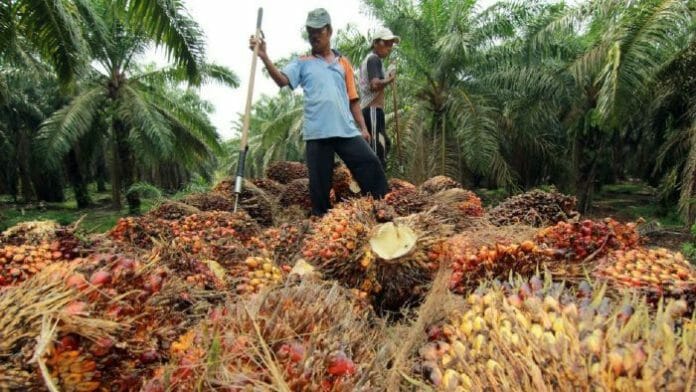
Malaysia’s palm oil production declined 6.9% month-on-month to 1.51 million tonnes in May 2026, as oil palm trees entered a temporary resting phase following a period of stronger-than-usual output, according to the Malaysian Palm Oil Board (MPOB).
The lower production was also partly attributed to fewer harvesting days during the month, with May recording two public holidays compared with none in April.
Despite the monthly decline, Malaysia’s palm oil export performance remained resilient. The drop in May shipments was largely expected following weaker purchasing activity in March and April, when buyers adopted a more cautious approach amid heightened palm oil price volatility.
However, cumulative palm oil exports from January to May 2026 increased by 783,000 tonnes or 13.8% year-on-year.
The strongest export growth came from India, Kenya and Vietnam, which collectively recorded an increase of 749,000 tonnes during the period.
The Sub-Saharan Africa and ASEAN markets have continued to strengthen their position as important destinations for Malaysian palm oil. In the first five months of 2026, both regions accounted for 36% of Malaysia’s total palm oil exports, compared with 25% five years ago in 2022.
The global vegetable oil market has seen significant price divergence in the first half of 2026, with US soybean oil and rapeseed oil outperforming other major oils.
US soybean oil prices rose 59% year-to-date, while rapeseed oil gained 16%, supported by the US biofuel mandate and restrictions under the 45Z biofuel tax credit scheme, which favour North American feedstocks.
In contrast, South American soybean oil, sunflower oil and Malaysian palm oil recorded more moderate gains of between 8% and 10%.
The sharp premium in US soybean oil prices since March has weakened its competitiveness in international markets. US soybean oil exports fell to just 11,000 tonnes in May 2026, the lowest level in 19 months.
Market conditions are expected to keep US soybean oil exports subdued if the price premium persists, increasing global reliance on South American supplies.
As of mid-June, US soybean oil was trading at a premium of around US$580 per tonne compared with Argentine soybean oil.
Meanwhile, Indonesia’s exportable palm oil supply is expected to tighten from late third quarter into the fourth quarter of 2026 following the implementation of the B50 biodiesel policy in July.
The policy, combined with stagnant production growth and stronger domestic demand, could reduce export availability from the world’s largest palm oil producer.
Oil World estimates Indonesia’s palm oil production will remain broadly unchanged at 49.4 million tonnes in 2026, while exports and domestic consumption in the first four months of the year increased by a combined 2.2 million tonnes, or 15%.
The tighter Indonesian supply outlook could encourage global buyers to increase sourcing from Malaysia, supporting demand for Malaysian palm oil.
However, higher fertiliser costs following the US-Iran conflict could weigh on future production growth, as elevated input costs may discourage fertiliser application among smallholders in Malaysia and Indonesia.
The impact from reduced fertiliser usage is expected to emerge only after a time lag.
Despite supportive supply factors, elevated vegetable oil inventories in major importing markets could limit immediate upside for palm oil prices.
India’s vegetable oil stocks reached a 17-month high of 2.2 million tonnes in May, while China’s vegetable oil inventories climbed to nearly 2.0 million tonnes, the highest level recorded in 2026.
The higher stock levels, driven by weaker near-term consumption amid inflationary pressures, may temporarily reduce import demand from these major markets.
Looking ahead, crude palm oil (CPO) prices are expected to trade within the RM4,400 to RM4,650 per tonne range in July, supported by tightening Indonesian supply prospects and rising concerns over a potential El Niño event.
While Malaysian and Indonesian plantations have yet to experience significant weather impact as of June, the possibility of a stronger El Niño developing from July or August has increased.
A stronger El Niño could result in lower rainfall and drier conditions across Southeast Asia, Australia and India. However, the impact on palm oil yields is expected to appear only after a lag of nine to 12 months.
The upside for palm oil prices could nevertheless be capped by elevated vegetable oil inventories and weaker biodiesel economics, as gasoil prices have fallen below palm oil prices in the futures market.
Overall, Malaysia’s palm oil market is expected to remain supported by tighter regional supply dynamics, although demand recovery and global inventory levels will remain key factors influencing price direction.