


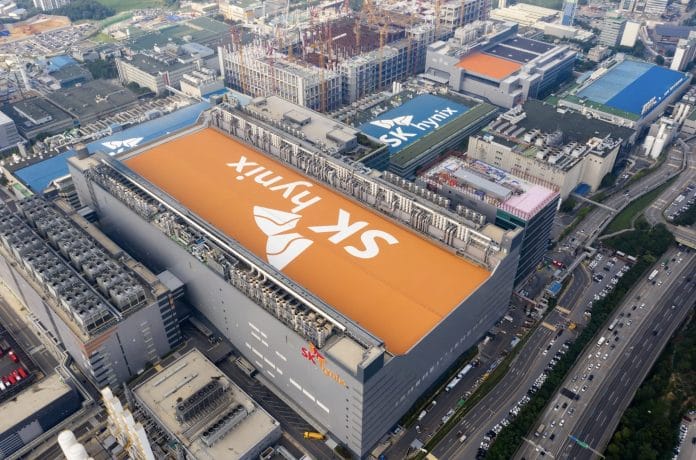
SK Hynix has overtaken Samsung Electronics to become South Korea’s most valuable listed company, marking a dramatic reversal of fortunes driven by the global artificial intelligence (AI) boom and surging demand for advanced memory chips.
Reuters reported that the memory chipmaker’s market capitalisation climbed to about 2,082.5 trillion won (US$1.35 trillion) after shares jumped 5.7%, narrowly edging past Samsung Electronics, which has held the top valuation spot since 2000.
The milestone underscores SK Hynix’s transformation into a key global supplier of high-bandwidth memory (HBM), a critical component used in AI systems developed by major technology firms including Nvidia and Google. The company’s shares have surged more than 340% this year, propelling it ahead of rivals Micron and Samsung in market value.
The rally reflects a broader structural shift in the semiconductor industry, where specialised AI-linked memory products have replaced traditional commodity chips as the key growth driver, giving suppliers stronger pricing power and strategic importance within AI infrastructure.
SK Hynix now commands around 61% of the global HBM market, far ahead of Samsung’s 17% and Micron’s 21%, according to industry estimates, highlighting its dominant position in the fastest-growing segment of the memory market.
Samsung, while disputing valuation comparisons that exclude preferred shares, has acknowledged SK Hynix’s ascent comes as AI reshapes demand dynamics across the semiconductor landscape.
The shift marks a striking turnaround for SK Hynix, which two decades ago faced debt distress and near-sale to Micron, before undergoing a long restructuring under SK Group ownership.
The company’s fortunes swung sharply in recent years, from steep losses during the 2023 memory downturn to record operating profits in 2024, as AI-driven demand accelerated investment from global tech giants.
The rally also places growing pressure on Samsung’s broader semiconductor strategy, with SK Hynix narrowing the gap in DRAM output capacity and expected to continue faster production expansion through 2028, according to industry estimates.


