Malaysia is in the final stage of finalising its national carbon tax policy, with initial implementation expected to focus on high-emission sectors such as iron, steel and energy, according to the Ministry of Finance.
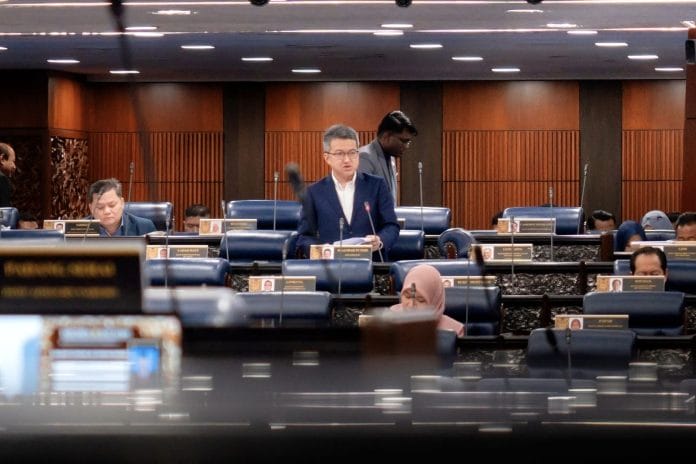
Deputy Finance Minister Liew Chin Tong said the policy rollout is aligned with Malaysia’s broader commitment to achieve net-zero carbon emissions by 2050. He was responding in the Dewan Rakyat to Datuk Ahmad Amzad Mohamed @ Hashim (PN-Kuala Terengganu) on the status and timeline of the carbon tax under Budget 2026.
“The purpose of the carbon tax is not to generate higher revenue, but to establish carbon pricing so that carbon emissions carry a cost to be borne by the sectors involved,” he said.
Liew added that the tax rate will be introduced in phases to ensure that it does not place excessive pressure on industry players during the transition period.
He also clarified that the carbon tax will not be imposed on small companies, but will instead target large industrial sectors that are major contributors to greenhouse gas emissions.
The government’s approach is seen as part of a gradual regulatory shift aimed at balancing environmental commitments with industrial competitiveness, particularly in emissions-intensive sectors that are expected to face the earliest impact of the policy once implemented.