


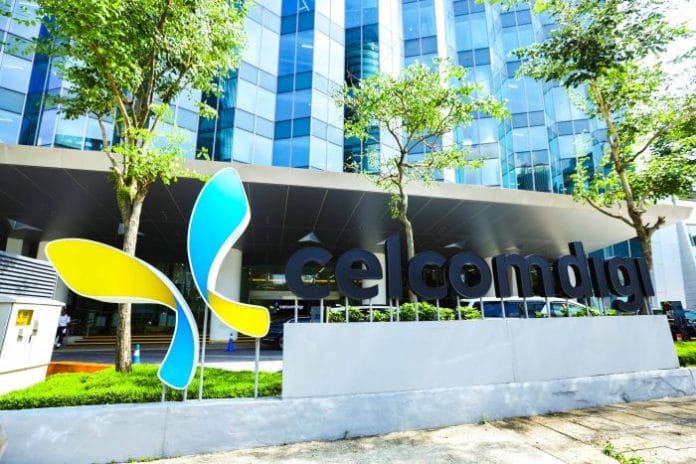
The domestic telecommunications sector is entering a more favourable phase as mobile operators adopt greater pricing discipline and long-standing uncertainties surrounding the country’s single wholesale 5G network begin to ease, according to Hong Leong Investment Bank (HLIB) Research.
In its second-half 2026 sector outlook, HLIB maintained an “Overweight” rating on the telecommunications sector, citing improving industry fundamentals, resilient service revenue growth and attractive valuations.
The research house named Telekom Malaysia (TM) and CelcomDigi as its top sector picks.
HLIB said the most significant development during the first half of 2026 was the emergence of more rational pricing behaviour across the mobile industry after years of intense competition.
CelcomDigi initiated the first round of repricing in January by increasing its entry-level prepaid plan from RM25 for 40GB to RM30 for 50GB.
Maxis subsequently revised both its Hotlink prepaid and postpaid offerings, while U Mobile, traditionally regarded as the industry’s most aggressive price competitor, also raised entry-level prepaid and postpaid prices in April from RM25 and RM38 to RM28 and RM45, respectively.
Although the revised plans offer larger data quotas, HLIB believes operators are positioned to monetise rising mobile data consumption more effectively.
“Monthly mobile data usage has started to exceed legacy plan quotas for many subscribers, allowing operators to better monetise continued data consumption growth as users migrate to higher-value plans,” the report said.
While average revenue per user (ARPU) has already shown positive trends during the first half of the year, HLIB believes the benefits of recent price increases have yet to be fully reflected in operators’ earnings.
As subscribers continue migrating to new plans, the research house expects gradual ARPU improvement throughout the second half of 2026, supporting service revenue growth with limited customer churn.
It said current guidance from CelcomDigi and Maxis for low single-digit service revenue growth in 2026 remains achievable.
More importantly, HLIB believes the coordinated pricing actions demonstrate that competitive intensity has structurally moderated as operators prioritise profitability while managing heavy investments in 5G infrastructure.
HLIB also believes concerns surrounding Digital Nasional Berhad (DNB), Malaysia’s wholesale 5G network operator, are nearing resolution.
The research house said speculation earlier this year over a potential acquisition of U Mobile by Maxis had created uncertainty, as such a move could have required Maxis to fund a second nationwide 5G network while absorbing U Mobile’s loss-making operations.
However, HLIB believes the likelihood of such a scenario is diminishing.
The report expects a turning point by the end of the third quarter when DNB’s share transfer process is completed, allowing Maxis and CelcomDigi to begin jointly optimising the 5G network and improving DNB’s cost structure.
The research house said market valuations currently continue to reflect DNB as an earnings overhang despite improving industry conditions.
Maxis and CelcomDigi are currently trading at around 7.9 to 8.0 times EV/EBITDA, below their historical five-year average of 8.6 to 9.6 times, while offering dividend yields of approximately 5.5%.
In the fixed broadband segment, HLIB noted that competition continues to focus on customer acquisition through speed upgrades, device bundling and promotional offers rather than aggressive price cuts.
Although CelcomDigi led fibre broadband subscriber additions during the first quarter through bundled mobile and broadband packages, industry pricing has remained resilient.
The report also highlighted the ongoing review of the Mandatory Standard on Access Pricing (MSAP), with a decision expected in the third quarter and implementation likely by year-end.
While lower wholesale broadband access pricing could emerge from the review, HLIB expects operators to retain part of the savings to strengthen margins rather than trigger another round of retail price competition.
HLIB said Telekom Malaysia and Time dotCom remain well-positioned to benefit from Malaysia’s expanding broadband infrastructure and data centre development, while both companies continue optimising their balance sheets through higher dividend payouts.
Among mobile operators, CelcomDigi stands out as the largest beneficiary of improving pricing discipline, supported by ongoing cost optimisation efforts that are expected to drive further margin expansion.
The research house also maintained a positive view on Axiata Group, citing potential asset monetisation initiatives that could unlock shareholder value.
However, HLIB cautioned that renewed price competition, further delays in DNB’s share transfer process or a slower-than-expected path towards DNB’s operational self-sustainability remain key downside risks for the sector.


