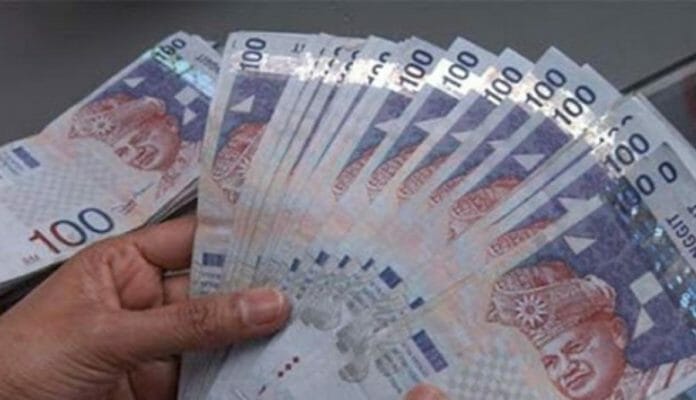
After being the best performing currency in the region, the ringgit has been under pressure ever since the Middle East conflict brkoe out and energy prices soared. However, analysts were quick to remark that despite such volatility, the local currency has remained resilient.
Looking ahead, Kenanga Research noted that ringgit is expected to strengthen modestly against the US dollar next week if upcoming US inflation data reinforces expectations that the Federal Reserve will keep interest rates on hold.
The research house expects the US dollar-ringgit exchange rate to trade within RM4.05 to RM4.10, with risks tilted towards further appreciation of the local currency should US inflation continue to moderate and geopolitical tensions remain contained.
The ringgit traded around RM4.07 to RM4.09 against the US dollar during the week after renewed tensions in the Middle East briefly lifted demand for the greenback.
According to Kenanga, fresh US-Iran military strikes pushed global oil prices higher, strengthening the US dollar in the early part of the week before the ringgit stabilised around the RM4.07-RM4.08 range.
The higher oil prices also fuelled concerns that inflation in the United States could remain elevated, potentially delaying any shift towards easier monetary policy by the Federal Reserve under Chairman Kevin Warsh.
As a result, investors adopted a cautious stance, reducing exposure to higher-yielding currencies during periods of heightened market volatility before selectively returning to carry trades as sentiment improved.
Kenanga said financial markets will closely monitor several key US economic releases next week, particularly the June Consumer Price Index (CPI), Producer Price Index (PPI), retail sales data and Federal Reserve Chair Kevin Warsh’s testimony before Congress.
Market consensus expects headline US CPI to decline by 0.1% month-on-month, signalling a continuation of the disinflation trend.
A softer-than-expected inflation reading could strengthen expectations that the Federal Reserve will maintain an extended pause in its rate cycle, reducing support for the US dollar and encouraging investors to trim long-dollar positions.
Investors will also be watching China’s second-quarter gross domestic product (GDP) data, alongside developments in the Middle East, to gauge their impact on global risk sentiment and commodity markets.
Kenanga’s base-case scenario assumes tensions between the US and Iran remain intermittent without causing prolonged disruptions to global energy supplies.
While elevated oil prices could keep some hawkish pressure on the Federal Reserve, the research house believes continued moderation in US inflation would ultimately support a weaker US dollar and improve the outlook for emerging market currencies, including the ringgit.
From a technical perspective, Kenanga described the US dollar-ringgit trend as neutral.
It said a sustained move below RM4.06 could pave the way towards RM4.05, while the RM4.08-RM4.09 range remains an important resistance level for the US dollar.