



Latest data presented in the Dewan Rakyat by Transport Minister Anthony Loke reveals a deeply alarming reality regarding the nation’s road safety.
As of 31 May 2026, a total of 912 individuals were arrested for driving under the influence (DUI) of alcohol or drugs, with 48 fatal crashes recorded within just the first five months of this year.
Former Board Member of the Malaysian Institute of Road Safety Research (MIROS) Shahrim Tamrin strongly emphasizes that these figures are not mere statistics; they are a critical distress signal proving that existing Transport Ministry’s policy framework is broken.
“The trajectory of this data is terrifying. On paper, annual arrest figures show a sharp decline over recent years—from 3,299 arrests in 2023, dropping to 2,468 in 2024, and further down to 1,820 in 2025.
“Logically, fewer arrests should reflect safer roads. Yet, we are witnessing the exact opposite: the 48 fatal DUI crashes in just the first five months of 2026 have already matched the total fatalities recorded for the ENTIRE YEAR of 2023 (48 cases).
“This is a criticism that our enforcement on the ground has gone soft, while the severity and risk to rakyat lives remain dangerously high. Presiding over a decline in enforcement while body counts spike is a reckless gamble with public safety,” Shahrim said.
The Certainty of Being Caught Beats the Severity of Punishment
Addressing public outrage claiming that current laws are toothless, Shahrim—a staunch road safety advocate—offered a grounded criminological perspective, taking a sly dig at the current state of affairs.
“The issue isn’t simply that penalties are too lenient; it is that the existing laws completely lack a real deterrent effect.
“In criminology, the statistical probability of actually getting caught alters human behavior far more than merely inflating fines or stacking prison years on a book.”
Malaysia beefed up its statutory DUI penalties a few years ago under the amendments to the the Road Transport Act (RTA 1987) six years ago.
“Yet, what good is a heavy hammer if nobody is swinging it? Enforcement must be drastically scaled up through constant, unpredictable random breath testing operations and modern technological deployment.”
Shahrim expressed deep frustration with the authorities’ perennial habit of playing catch-up—waiting for a horrific tragedy to occur before rolling out reactive, only to response with a knee-jerk reaction rather than being proactive, practising sustained preventable framework.
Reiterating the Call to Amend RTA 1987: Look at the 2010 APAD Blueprint
To give the law real teeth, Shahrim reiterated a concrete, ironclad working paper that he submitted three months ago to the Ministry of Transport, titled the ‘DUI Road Safety Plan 2026–2035.’
He challenged the government to adopt a bold, existing domestic blueprint by amending the Road Transport Act 1987 (RTA 1987) to allow for the mandatory seizure and forfeiture of vehicles used in DUI offenses.
“We don’t need to reinvent the wheel or look halfway across the globe for legal precedents.
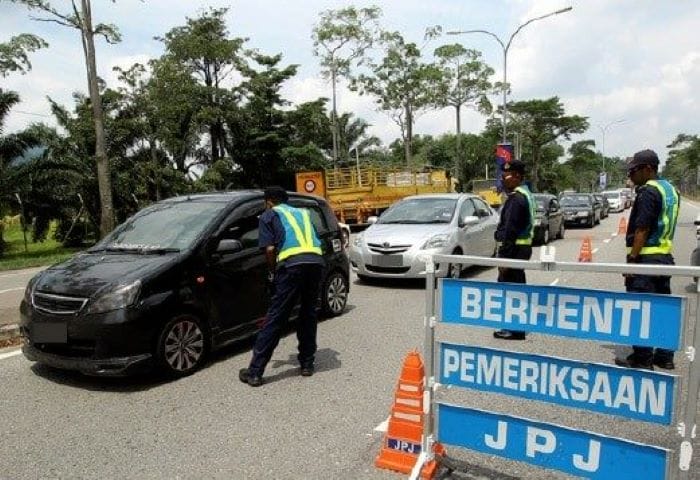
“Under Section 80 of the Land Public Transport Act (APAD) 2010, the Road Transport Department (JPJ) already possesses absolute power to seize and forfeit commercial lorries for overloading violations. In fact, 465 commercial vehicles were permanently confiscated last year alone for carrying too much weight.
“If the establishment has the political will to permanently strip a company of its asset over excess sand and gravel to protect road surfaces, it is utterly absurd that we fail to deploy the exact same measure against lethal weapons driven by drunk or drug-impaired drivers,” Shahrim argued.
Under his proposed framework, vehicles driven by repeat DUI offenders, those with excessively high blood alcohol concentration (BAC), drug-impaired drivers, or any DUI case causing death or grievous hurt will be impounded immediately at the scene.
Upon conviction, the vehicle will be legally forfeited by court order and sold at public auction after a 90-day holding period.
The auction proceeds would be split:
· 50% to a newly established DUI Victims Compensation Fund (DVCF) to provide direct financial lifeline to victims and families who have lost their breadwinners.
· 50% to the Road Safety Trust Fund to directly finance enforcement technology, field logistics, and targeted education campaigns.
Global Models & Technological Integration
Shahrim cited international evidence proving that an aggressive combination of asset forfeiture and technology drastically crushes habitual or repetition rates:
· Latvia & Belarus: Latvia enforces aggressive vehicle forfeiture for DUI offenses, successfully seizing thousands of vehicles since inception, while Belarus permits asset forfeiture for a second DUI offense within 12 months, completely disregarding vehicle ownership status.
· Sweden, Canada, & Australia: These nations mandate the installation of Alcohol Interlock systems (breathalyzer devices integrated into the ignition that prevent the vehicle from starting if alcohol is detected) for specific offender categories seeking license reinstatement.
Concluding his remarks, Shahrim maintained that Malaysia’s battle against DUI mayhem lies in integrating institutional consistency, technological interventions and uncompromising penalties.
“I firmly stand by my position that Malaysia must introduce a robust vehicle forfeiture mechanism for repeat DUI offenders, high-BAC drivers, drug-related cases, and incidents resulting in death or injury,” he said.
Several nations have already proven the effectiveness of this iron-fist approach. On top of that, Sweden, Canada, and some parts of Australia mandate alcohol interlocks so a vehicle physically cannot be turned into a weapon if the driver is impaired.
The gold standard is a blend of relentless enforcement, tech integration, rehabilitation, and punishments that hit where it actually hurts.
If an individual chooses to operate a vehicle while intoxicated, turning it into a public threat, the law must send an unequivocal message: you risk losing not just your license, but the very machine you used to commit the crime.
Fines can be forgotten, but losing your car sticks with you forever. The most effective punishment is one that changes behavior, not one that just adds ink to a law book.
“The 912 individuals arrested in just five months are a ticking clock. We cannot afford seasonal enforcement or bureaucratic lethargy.
“Every single preventable DUI death is a policy failure. I sincerely hope the Government and the Ministry of Transport look at these numbers with genuine seriousness, discard the habitual temporary fixes, and execute the structural road safety reform to protect Malaysian lives on the road,” he concluded
Shahrim Tamrin, Road Safety & Sustainable Transport Advocate (Former MIROS Board Member 2019-2022)


