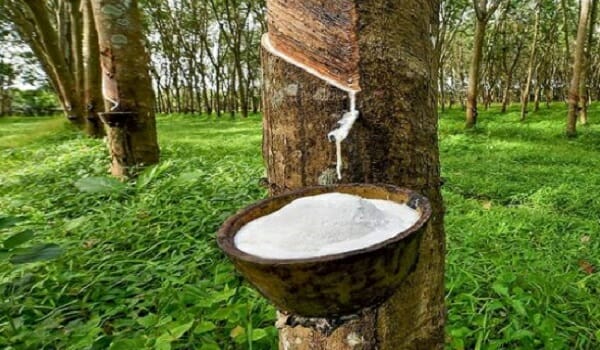
The domestic natural rubber (NR) production rebounded in May 2026, rising 9.1% month-on-month, although output remained below the level recorded a year earlier, according to the Department of Statistics Malaysia (DOSM).
Malaysia produced 20,198 tonnes of natural rubber in May, compared with 18,515 tonnes in April. However, production was 16.7% lower than the 24,256 tonnes recorded in May 2025.
Smallholders continued to dominate the country’s rubber production, contributing 89.4% of total output, while estates accounted for the remaining 10.6%.
Natural rubber inventories declined for the second consecutive month, with total stocks falling 6.2% to 122,658 tonnes in May from 130,698 tonnes in April.
Rubber processors held the bulk of inventories, accounting for 77.8% of total stocks, followed by rubber consumer factories at 22.0%, while rubber estates represented just 0.2%.
Malaysia’s natural rubber exports fell sharply during the month, declining 23.1% to 28,741 tonnes from 37,360 tonnes in April.
China remained Malaysia’s largest export destination, accounting for 42.7% of total natural rubber exports in May. Other major markets included Germany (14.6%), the United States (11.2%), Türkiye (4.3%) and India (3.8%).
The country’s rubber export earnings continued to be supported by downstream products, particularly rubber gloves, tyres, tubes and rubber thread.
Rubber gloves remained Malaysia’s largest rubber-based export product, generating RM1.2 billion in export value during May. However, glove exports declined 14.1% from RM1.4 billion recorded in April, reflecting softer demand and lower shipment volumes.
Despite weaker exports, natural rubber prices strengthened during the month.
The average monthly price of concentrated latex rose 1.1% to 763.16 sen per kilogram in May, compared with 754.69 sen per kilogram in April.
Meanwhile, scrap rubber posted a stronger increase, climbing 8.2% to 747.78 sen per kilogram, up from 691.26 sen per kilogram in the previous month.
International rubber prices also moved higher. According to the World Bank Commodity Price Data, the average price of Technically Specified Rubber (TSR 20) increased 7.3% to USD2.21 per kilogram in May from USD2.06 per kilogram in April.
Similarly, the Singapore/Malaysia (SGP/MYS) rubber benchmark rose 7.2% to USD2.69 per kilogram, compared with USD2.51 per kilogram a month earlier.
The recovery in monthly production and firmer global rubber prices point to improving supply conditions, although annual output remains under pressure. At the same time, declining exports and lower glove shipments highlight continued challenges in external demand, particularly for Malaysia’s rubber manufacturing sector.
China’s position as Malaysia’s largest natural rubber export market underscores the industry’s continued reliance on demand from the world’s biggest manufacturing economy, while global price movements will remain closely tied to industrial activity and automotive production in key export markets.