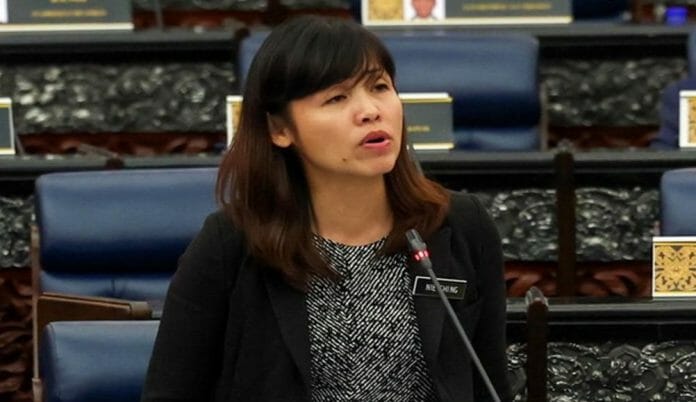
The Communications and Multimedia (Amendment) Bill 2026 seeks to strengthen Malaysia’s legal framework for communications by enhancing the Universal Service Provision (USP) framework to better support national security, Deputy Communications Minister Teo Nie Ching said.
Tabling the Bill for its second reading in the Dewan Rakyat on Wednesday, Teo said the amendments to the Communications and Multimedia Act 1998 (Act 588) were necessary to ensure the existing framework remains relevant and responsive amid growing cybersecurity threats, geopolitical tensions and the country’s increasing reliance on communications infrastructure.
She said the current communications and multimedia landscape has evolved significantly since the USP framework was introduced, requiring regulations that are better aligned with present-day challenges.
“However, the communications and multimedia landscape has become increasingly complex, with the country’s growing dependence on networks, application services and communications infrastructure.
“This development requires a regulatory framework that is more responsive, targeted and aligned with current needs.
“The people, as the end users, face risks such as service disruptions, security breaches, data leaks, misuse of access, disruption to critical systems and uncertainty in service continuity if initiatives involving network facilities, network services or application services are not properly coordinated and regulated,” she said.
Teo said the current provisions under Chapter 5 of Part VIII of Act 588 do not specifically provide for national-level USP initiatives to safeguard national security.
To address the gap, the government is proposing a National Universal Service Provision Initiative that would enable the Communications Minister to direct the Malaysian Communications and Multimedia Commission (MCMC) to implement initiatives related to national security using the existing USP framework.
She said decisions on national security matters would continue to be determined by the National Security Council under the National Security Council Act 2016, while the amendments would provide a clearer legal basis for MCMC to implement the initiative. The Bill also proposes amendments to Section 202 of Act 588 to facilitate its implementation.