Incumbent Chennah assemblyman Anthony Loke faces a knife-edge contest against Barisan Nasional candidate Siow Kong Choon, with two political observers rating his chances at 50-50 and warning that defeat in the seat he has held since 2013 could severely weaken his standing as DAP secretary-general.
With polling set for Aug 1, Chennah has become a critical test of whether Loke’s constituency record, national stature and role as Transport Minister can overcome weak Malay support, dissatisfaction with the government and intensifying identity-based sentiment.
Speaking exclusively to BusinessToday, Universiti Teknologi MARA Faculty of Law senior lecturer Dr Ikmal Hisham Md Tah and political analyst Dr Ahmad Zaharuddin Sani both placed Loke’s chances of survival at just “50-50” and a loss would carry repercussions far beyond the state seat, potentially shaking confidence in his leadership and DAP’s broader electoral appeal.
Their assessments point to a contest in which every bloc matters, particularly Malay voters who may be less receptive to DAP and non-Malay voters whose support for the government can no longer be taken for granted.
Malay Support Could Decide Loke’s Fate
Dr Ahmad Zaharuddin shared that Loke’s most pressing challenge now is whether he could win enough Malay support while maintaining a sufficiently commanding majority among non-Malay voters.
“I don’t think he can get 10% of the Malay vote, which is crucial. And among non-Malays, can he secure 60% of the vote?” he said to BusinessToday.
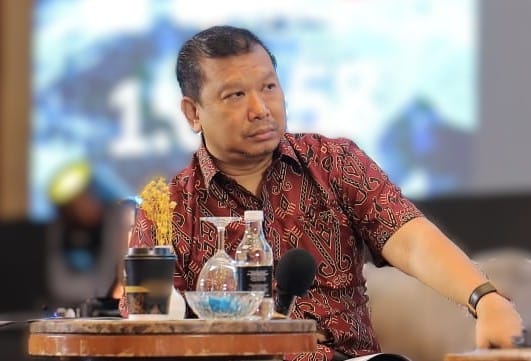
He explained that a significant erosion in either voter bloc could place the DAP leader in serious danger, regardless of his national profile or ministerial position, further underlining the vulnerability facing Loke in a mixed constituency.
Dr Ikmal, meanwhile, similarly pointed to unfavourable Malay sentiment towards Pakatan Harapan (PH), alongside signs of dissatisfaction among some Chinese voters with the current government.
He said cultural and customs-related controversies in the state could also influence the contest, particularly among Malay voters concerned about Loke’s perceived interference in Negeri Sembilan’s traditional customs.
“In this election, one must observe various issues, not just development and economic progress, but also culture and sentiment, especially among Malays who are concerned about customs practices that have existed for a long time,” he said.
Dr Ikmal argued that the caretaker state administration’s handling of matters involving Negeri Sembilan’s four traditional chieftains had aggravated sentiment within sections of the Malay community.
These concerns, he said, could make it significantly harder for Loke to campaign solely on administrative performance, infrastructure delivery or national political stature.
More Than One Seat At Stake

Dr Ikmal highlighted that a defeat in the state seat not only ends Loke’s tenure as Chennah assemblyman, it would also tarnish his image as a leading figure within the Chinese community, even if he remained Seremban MP and Transport Minister.
“His national positions might survive, but his political authority and perception of electoral strength would inevitably decline,” he added.
Echoing this sentiment, Dr Ahmad Zaharuddin commented that a loss would invite difficult questions about Loke’s authority as DAP secretary-general.
Political leadership, he said, depends not only on control of the party machinery but also on personal electoral legitimacy.
“A secretary-general who is unable to defend his own state constituency would face intensified scrutiny over his political judgement and the direction in which he is taking the party,” Dr Ahmad Zaharuddin added, while emphasising that the repercussions could be especially severe because Loke is not considered a marginal or little-known candidate; he is among DAP’s most prominent national leaders and has built a reputation around administrative competence and a relatively moderate political style.
Overall, Dr Ahmad Zaharuddin said Loke’s defeat would therefore be interpreted not merely as a rejection of a local representative, but as a warning that even national stature may no longer be sufficient protection against changing voter sentiment.
DAP’s Multi-Ethnic Credentials Face Crucial Test
On the other hand, Dr Ahmad Zaharuddin revealed that Chennah has long carried symbolic importance for DAP because it demonstrated that the party could compete beyond heavily urban, Chinese-majority constituencies.
“A defeat would strengthen claims by DAP’s opponents that its ability to appeal across ethnic lines had reached its limit, particularly among Malay voters,” he said, adding that losing that symbol would leave DAP facing uncomfortable questions over whether its current political positioning can still win support in genuinely mixed constituencies.
Defeat Could Reverberate Across PH
The implications would also extend to PH, which needs pivotal mixed constituencies such as Chennah to maintain its grip on Negeri Sembilan.

Dr Ahmad Zaharuddin said a defeat would do more than reduce the coalition’s seat tally; it could weaken PH’s wider argument that political stability, economic governance and administrative performance are sufficient to withstand identity-based electoral narratives.
The result would consequently serve as a verdict not only on Loke and DAP, but also on the government’s ability to retain the coalition of Malay and non-Malay voters that carried it into power.
Dr Ikmal went further, suggesting that a Loke loss could place additional pressure on DAP’s position within PH ahead of the party’s Aug 12 convention.
In his assessment, a serious defeat could even fuel internal debate over DAP’s future in the coalition and contribute to speculation about an earlier general election. Such outcomes remain highly uncertain, but they illustrate the scale of the political consequences some observers believe could follow an upset in Chennah.
Can Performance Still Defeat Identity Politics?
However, Dr Ahmad Zaharuddin said the central question was no longer simply whether Loke remained personally popular enough to survive.
“The deeper issue was whether Malaysian politics had entered a period in which even a respected and nationally recognised leader could be overwhelmed by identity politics.
“Should Loke retain Chennah, the result would affirm that competence, constituency service and moderate politics still carry electoral value.
Should he lose, the constituency could become a defining symbol of a more fragmented political landscape — one in which government performance alone is no longer enough to bridge deepening ethnic and cultural divisions.
“Competence alone is no longer enough,” Dr Ahmad Zaharuddin said.
Conversely, Dr Ahmad Zaharuddin said a victory in Chennah would allow the party to argue that consistent constituency service, administrative performance and moderate politics remain capable of overcoming campaigns driven primarily by race, religion and identity.
“It would also reinforce DAP’s position that it can remain electorally competitive outside its traditional urban strongholds,” he added.
Ultimately, Chennah has become more than a test of Loke’s local popularity. Victory would validate his record and DAP’s claim to remain competitive in mixed constituencies, while defeat could weaken his authority, expose the limits of the party’s multi-ethnic appeal and reverberate across PH — signalling that identity politics may now outweigh competence and incumbency even for one of Malaysia’s most prominent leaders.