


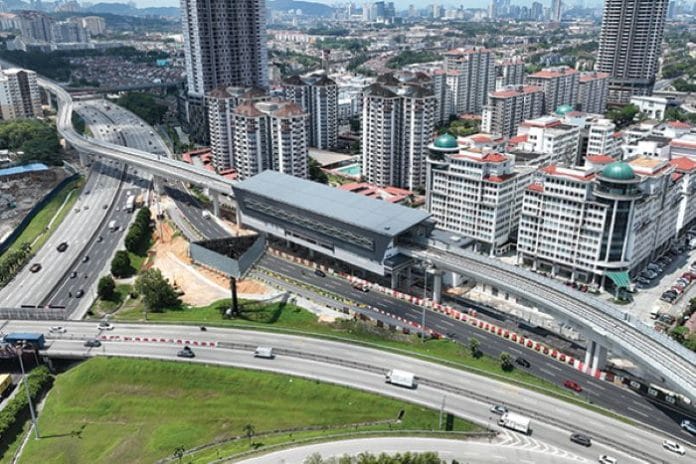
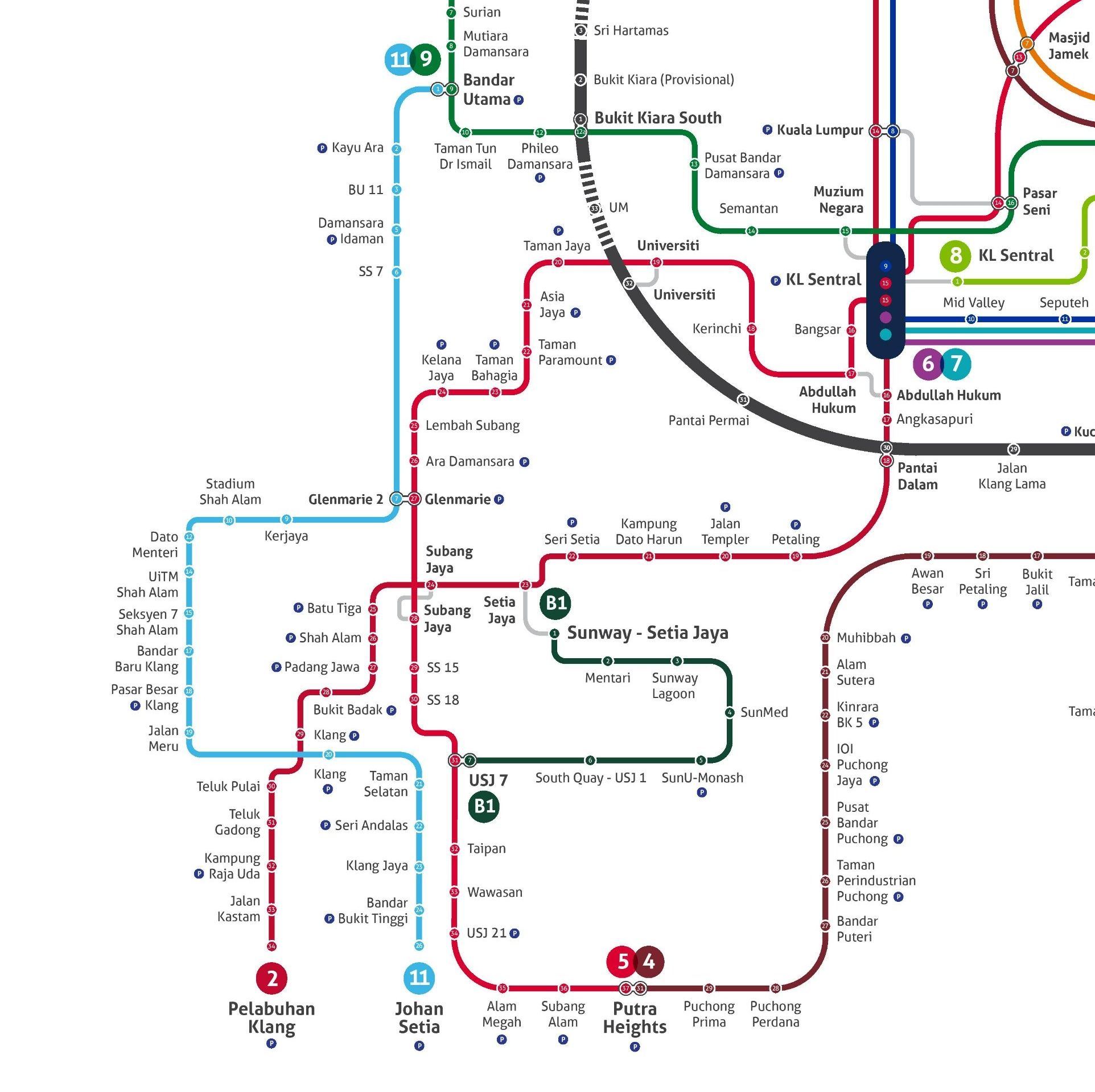
After more than a decade of anticipation, delays and redevelopment, the LRT3 Shah Alam Line officially began operations on 29 June 2026, connecting Bandar Utama in Petaling Jaya to Johan Setia in Klang. Spanning 37.8km with 20 operational stations and built at a cost of RM16.63 billion, the fully automated driverless line represents a major upgrade to Selangor’s public transport network.
One month after its launch, the focus has shifted from the excitement of a new rail line to how it actually fits into commuters’ everyday lives.
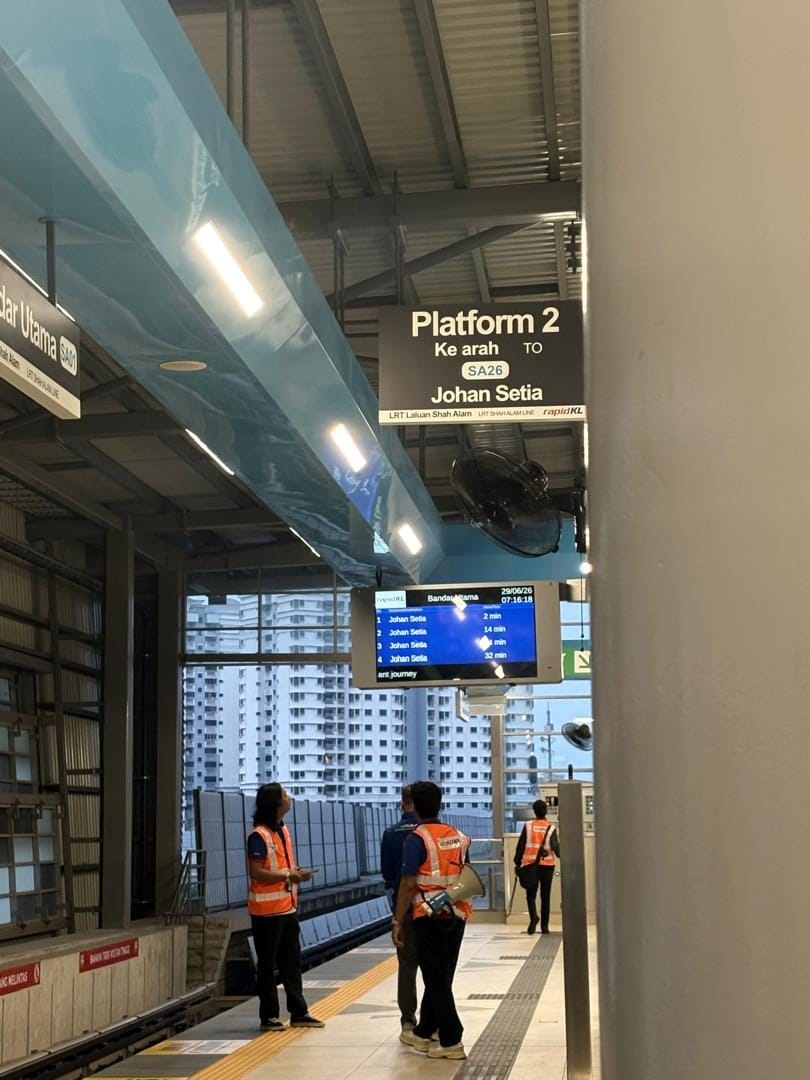
SA01 – Bandar Utama
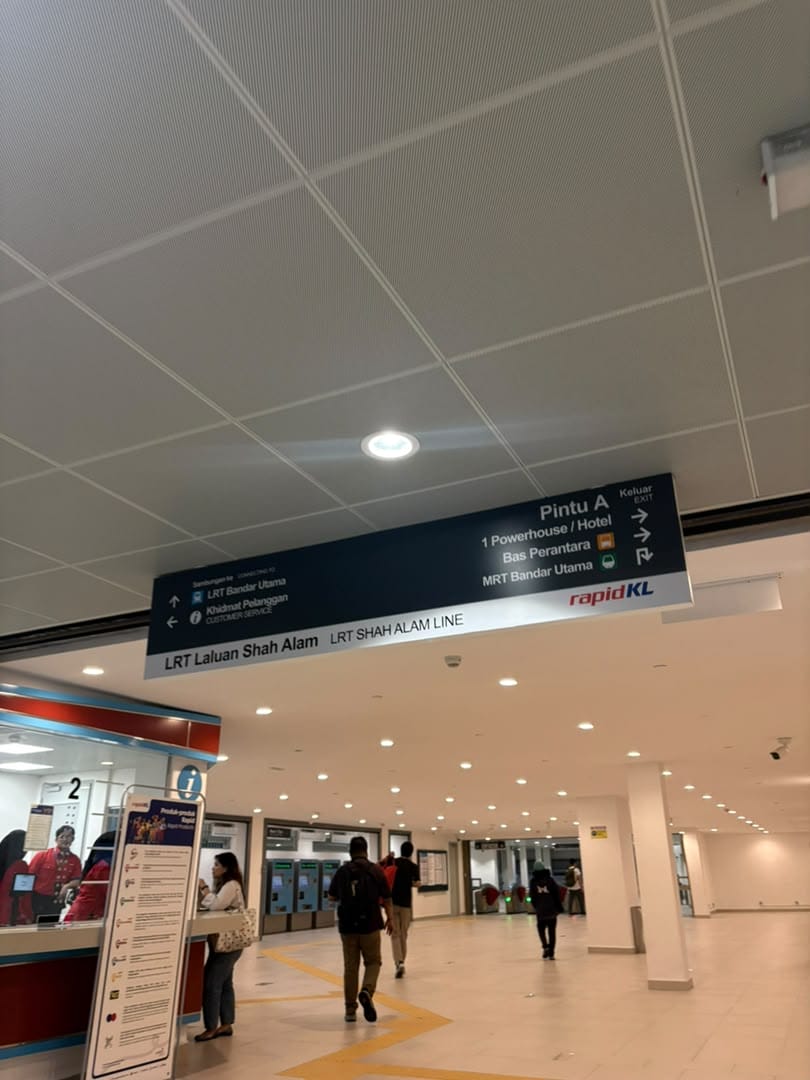
As the northern terminus of the LRT3 Shah Alam Line, Bandar Utama serves as the gateway into the network for many commuters, thanks to its direct connection with the MRT Kajang Line. During its first month of operations, the station has consistently been among the busiest along the route, attracting office workers, students and families eager to experience Malaysia’s newest rail line.
My Experience
Although Damansara Idaman is my regular stop for work, every journey from Bandar Utama reminds me why this station will likely remain one of the line’s busiest. Everything still feels fresh, from the ticketing machines and lifts to the spotless platforms.
The interchange with the MRT Kajang Line is fully covered and surprisingly comfortable. Even on hot afternoons, the walkway remains well ventilated, making the transfer much more pleasant than I initially expected.
One thing I did notice, however, was that the interchange route feels longer than necessary. Instead of taking what appears to be the shortest path, commuters are guided along a slightly longer route. I cannot say for certain whether this was intentional, but I suspect the design helps distribute passenger flow more evenly during peak hours rather than creating bottlenecks around the platforms.
What Other Users Experienced
During the free-ride period, YouTuber Sivan John described Bandar Utama as having a “pretty good crowd”, reflecting the excitement surrounding LRT3’s opening.
Accessibility also stood out for visually impaired commuter Razlan Ibrahim, who praised the tactile pathways for guiding users directly to essential facilities such as lifts, surau and accessible toilets.
Meanwhile, 70-year-old retiree Chan was pleasantly surprised by the MRT interchange, describing the covered walkway as shorter than expected while appreciating its ventilation and weather protection.
What I Like
- Excellent MRT connectivity
- The fully covered interchange makes changing between the MRT Kajang Line and LRT3 straightforward regardless of the weather.
- Modern station environment
- Everything still carries that brand-new feeling, from the QR-code ticketing system to the lifts and escalators.
- Comfortable waiting areas
- Compared to several older LRT stations, Bandar Utama provides noticeably more fans and benches, making waiting for the next train more comfortable.
- Accessibility
- The tactile pathways are thoughtfully designed, allowing visually impaired commuters to navigate independently to lifts, surau and toilets.
- QR-code tickets
- Replacing the traditional blue tokens with QR-code paper tickets gives the station a more contemporary feel.
What Can Be Improved
- The ticket vending machine interface could be made more user-friendly, particularly for first-time passengers.
- Although comfortable, the interchange could benefit from even clearer directional signage for those unfamiliar with the station.
SA02 – Kayu Ara
Situated between Bandar Utama and Bandar Utama 11, Kayu Ara primarily serves nearby residential neighbourhoods such as SS21 and Damansara Jaya. While it may not receive as much attention as its neighbouring stations, it quietly fulfils an important role for residents and Park & Ride users.
My Experience
Kayu Ara immediately feels calmer than Bandar Utama. The lower passenger volume creates a more relaxed boarding experience, especially during off-peak hours.
Its Park & Ride facility is also a practical addition, offering another transport option for commuters who still need to drive part of their journey before continuing by rail.
What Other Users Experienced
Residents appreciate finally having another rail option closer to home, while shoppers benefit from the station’s proximity to Starling Mall and Atria Shopping Gallery.
Many also welcomed the availability of the 350-bay Park & Ride facility.
What I Like
- Convenient Park & Ride
- The 350 parking bays provide flexibility for commuters travelling from surrounding residential areas.
- Peaceful atmosphere
- Compared to Bandar Utama, the station feels less crowded and more relaxed.
- Strategic location
- Close to established neighbourhoods as well as popular shopping destinations.
What Can Be Improved
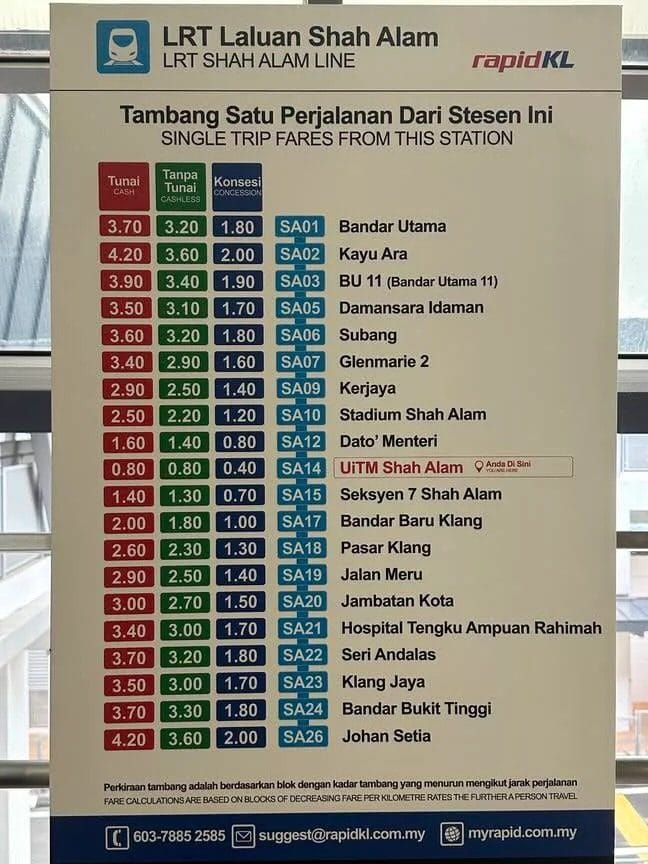
- The requirement to use the same Touch ‘n Go card for both parking and train travel to enjoy the RM4.30 daily parking rate may not be immediately obvious to first-time users.
- As ridership grows, additional retail outlets or conveniences within the station could further improve the commuter experience.
SA03 – Bandar Utama 11 (BU11)
Serving the Bandar Utama 11 township and nearby office developments, BU11 is one of the quieter stations along the northern section of LRT3. Rather than acting as a major interchange, it functions as a neighbourhood station with a distinctive architectural identity.
My Experience
BU11 may not attract large crowds, but its architecture immediately caught my attention. The station’s tanjak-inspired roof design gives it a unique character while allowing natural ventilation to flow through the station.
Its quieter surroundings also make waiting for the train surprisingly pleasant.
What Other Users Experienced
Several users have praised the station’s contemporary Malaysian-inspired architecture and the airy design, which creates a comfortable environment even during warmer afternoons.
What I Like
- Distinctive architecture
- The tanjak-inspired design gives the station its own identity while remaining practical.
- Natural ventilation
- The open concept helps improve airflow throughout the station.
- Relaxed atmosphere
- Lower passenger numbers create a peaceful commuting experience.
What Can Be Improved
- Additional retail kiosks or convenience stores could make the station feel more vibrant without compromising its calm atmosphere.
SA05 – Damansara Idaman
Located near Aman Suria and Dataran Prima, Damansara Idaman has quickly become an important station for both office workers and residents. A pedestrian bridge across the NKVE improves accessibility while the surrounding commercial developments continue to generate steady commuter traffic.
My Experience
Unlike many people who rode LRT3 simply to experience Malaysia’s newest rail line, Damansara Idaman has become part of my daily routine.
BusinessToday Malaysia’s office is located near Dataran Prima, making this my regular station whenever I travel to and from work. Instead of dealing with traffic congestion or searching for parking, the train has become a practical commuting option.
The pedestrian bridge connecting Aman Suria also makes crossing the NKVE much safer and more convenient than before.
What Other Users Experienced
Many commuters appreciate the station’s strategic location near offices, commercial developments and residential neighbourhoods, providing another transport option for those working around Dataran Prima and Ara Damansara.
The 150-bay Park & Ride facility has also been welcomed by commuters driving in from nearby areas.
What I Like
- A station that has become part of my daily commute
- Having reliable rail access near my workplace has genuinely changed how I travel.
- Improved connectivity
- The pedestrian bridge across the NKVE makes walking between surrounding neighbourhoods significantly easier.
- Strategic location
- Serves both office workers and residents living around Aman Suria, Dataran Prima and Ara Damansara.
- Park & Ride option
- Another convenient choice for commuters combining driving with rail travel.
SA06 – Subang (SS7)
Located near the Persada PLUS building at the NKVE Subang toll area, SA06 Subang serves the SS7 neighbourhood and nearby residential developments around Kelana Jaya. Despite its name, the station is not located directly within what many passengers may traditionally associate with “Subang”, making it one of the stations that may require some explanation for first-time users.
My Experience
Subang station is a good example of how station names can sometimes create expectations that do not fully match the actual location.
When hearing “Subang”, some passengers may assume the station would be closer to Subang Jaya’s commercial areas, but the station is actually more closely connected to SS7, Persada PLUS and the surrounding Kelana Jaya residential areas.
Once that is understood, however, the station makes practical sense. It provides another transport option for residents who previously depended heavily on cars, while also giving easier access to nearby destinations such as Paradigm Mall.
What Other Users Experienced
Residents around SS7 and nearby condominium developments welcomed the station as a convenient alternative to driving, especially for those working in Petaling Jaya or Kuala Lumpur.
The station also benefits shoppers and visitors heading towards Paradigm Mall, which has long been one of the area’s major commercial landmarks.
What I Like
- Convenient access to Paradigm Mall
- The station gives residents and visitors another way to reach one of the area’s biggest shopping destinations without relying completely on cars.
- Serves a dense residential area
- The surrounding apartments and condominiums provide a natural commuter base.
- Extends LRT3’s reach into established communities
- Instead of only serving new developments, the station connects existing neighbourhoods that have long needed better public transport options.
What Can Be Improved
- Station naming clarity
- The name “Subang” may confuse passengers unfamiliar with the area. Additional location references such as SS7 or nearby landmarks could help first-time users.
- More visible last-mile connections
- Clearer information on walking routes, feeder buses and nearby destinations would make the station easier to navigate.
SA07 – Glenmarie 2
As one of the most important stations on LRT3, Glenmarie 2 serves as the interchange between the Shah Alam Line and the existing Kelana Jaya Line. The station represents one of the biggest benefits of LRT3: allowing commuters from Shah Alam and Klang to connect more easily with the wider Klang Valley rail network.
My Experience
Glenmarie is probably the station where I felt the biggest difference between a station that works well operationally and one that still requires some adjustment from passengers.
The interchange itself is functional. The covered link bridge is a major advantage, especially during heavy rain or hot afternoons. Commuters do not have to worry about being exposed to the weather while transferring between lines.
However, the walking route can initially feel confusing.
After coming down the escalator, passengers heading towards the Kelana Jaya Line need to make what feels like a large U-turn. Instead of walking straight towards the interchange, the route requires passengers to:
- Walk down from the escalator.
- Turn right.
- Head towards the AFC gates.
- Continue straight.
- Make another turn before reaching the Kelana Jaya Line platform.
Interestingly, the route towards LRT3 feels much more direct.
I cannot confirm whether this was deliberately designed this way, but I suspect the longer walking path may have been planned to help distribute passenger movement and reduce congestion. Considering Glenmarie is expected to become one of the busiest interchange points on the line, managing passenger flow will become increasingly important, especially during peak hours.
What Other Users Experienced
YouTuber Sivan John described the interchange process as relatively simple, highlighting the covered link bridge and directional signs that guide passengers between both lines.
University student Colt Tan, 20, shared that using the Glenmarie interchange significantly reduced his journey time, cutting out around 10 train stops and saving approximately 30 minutes per trip.
Other users have also noted that parking around Glenmarie has become less congested since LRT3 began operations.
What I Like
- Major connectivity boost
- The interchange with the Kelana Jaya Line significantly expands the usefulness of LRT3.
- Covered interchange bridge
- The sheltered connection is one of the station’s strongest features.
- Modern design contrast
- The newer tanjak-inspired LRT3 station creates an interesting contrast with the older Kelana Jaya Line station.
- Time savings
- For many commuters, Glenmarie has transformed previously long journeys into much shorter trips.
What Can Be Improved
- Interchange route clarity
- While the current design may help manage crowds, clearer signs would make the experience less confusing for first-time users.
- Tap-out and tap-in transfer process
- Passengers must exit the LRT3 paid area and tap again when entering the Kelana Jaya Line, which some commuters find inconvenient.
- Walking distance
- Some users feel the bridge between both stations is longer than expected.
SA09 – Kerjaya
Serving the Hicom Glenmarie Industrial Park, Utropolis and UOW Malaysia, Kerjaya represents LRT3’s role beyond residential areas by connecting workplaces, industrial zones and educational institutions.
My Experience
Kerjaya has a different atmosphere compared to stations serving residential communities. Instead of being surrounded by malls or housing areas, the station reflects the working environment around Glenmarie.
It is a reminder that public transport is not only about bringing people home, but also helping them reach workplaces and campuses more efficiently.
What Other Users Experienced
Students from UOW Malaysia and employees working around the industrial area are among those who benefit most from the station.
The surrounding area is also known for workshops, automotive businesses and food spots, giving commuters more reasons to use the station beyond simply travelling to work.
What I Like
- Serves workplaces and education hubs
- The station connects employees and students who previously had fewer public transport options.
- Supports industrial areas
- LRT3 expands access beyond traditional city centres.
- Nearby food options
- The surrounding area has various eateries that can be explored by commuters.
What Can Be Improved
- The surrounding area currently has fewer immediate amenities compared to stations located near shopping centres or town centres.
- Better pedestrian links between the station and nearby destinations would improve accessibility.
SA10 – Stadium Shah Alam
One of the most anticipated stations on LRT3, Stadium Shah Alam represents the connection between the rail line and one of Shah Alam’s most recognisable landmarks. Although the new stadium complex is still under construction, the station already carries a sense of future potential.
My Experience
Stadium Shah Alam is one of the stations that feels designed with the future in mind.
Even before the completion of the new stadium, the station already stands out because of its sporting theme. Unlike typical stations that mainly focus on transport functions, this one feels like it was designed around the identity of the area.
The basketball court, badminton courts and running track immediately give the station a different character.
It feels less like a place where people simply arrive and leave, and more like a community space.
What Other Users Experienced
Sivan John described Stadium Shah Alam as one of the stations he was most looking forward to, especially because the area finally received its own LRT connection.
The station also became a talking point because of the contrast between the completed LRT facility and the stadium itself, which is still being rebuilt after the old structure was demolished.
What I Like
- Unique sporting identity
- The basketball court, badminton courts and running track make the station stand apart from others along the line.
- Future potential
- Once the new Shah Alam Stadium complex is completed, the station could become one of the busiest destinations on LRT3.
- Community-focused design
- It feels like more than just a transport facility.
What Can Be Improved
- Waiting for the stadium completion
- The station currently feels slightly ahead of its surroundings because the main attraction is still under development.
- More surrounding activities
- Once the stadium and sporting facilities are fully operational, the area will likely become much more vibrant.
Between SA10 Stadium Shah Alam And SA12 Dato Menteri: The Underground Experience
Although it is not a station itself, the tunnel section between Stadium Shah Alam and Dato Menteri is one of the most memorable parts of the LRT3 journey.
This section marks one of the few underground stretches on the line, with the train travelling through a 2.5km tunnel before emerging near central Shah Alam.
My Experience
The first thing I noticed was not the tunnel itself, but what disappeared once the train entered it.
The mobile signal.
For those few minutes underground, my internet connection completely disappeared. Messages stopped coming in, social media stopped refreshing and streaming services became unusable unless content had already been downloaded.
It can be slightly inconvenient, especially for commuters who rely on constant connectivity, but I also found something strangely refreshing about it.
In a world where everyone is constantly connected, those few minutes underground almost feel like an accidental digital break before the train returns above ground.
SA12 – Dato Menteri
Located in the heart of Shah Alam, Dato Menteri is one of the most significant stations along the LRT3 Shah Alam Line. Serving the state capital’s administrative and commercial centre, the station provides access to key destinations including the Sultan Salahuddin Abdul Aziz Shah Mosque, SACC Mall, PKNS Complex and UTC Shah Alam.
My Experience
Dato Menteri is one of the stations that best represents the transition of LRT3 from a suburban rail line into a city connector.
After leaving the underground tunnel from Stadium Shah Alam, the train emerges near central Shah Alam, giving passengers a different perspective compared to the more residential areas along the earlier sections of the line.
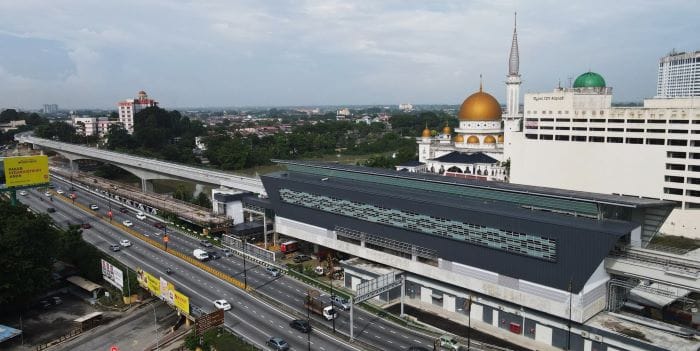
One of the nicest parts of the journey is the view of the Sultan Salahuddin Abdul Aziz Shah Mosque, also known as the Blue Mosque. Seeing its iconic blue dome surrounded by Shah Alam’s office buildings from the train gives the ride a sense of place, reminding passengers that this is not just another transport line but a connection into one of Selangor’s most important cities.
The underground stretch before reaching Dato Menteri is also one of the more unique parts of the journey. However, as mentioned earlier, mobile connectivity becomes almost non-existent while travelling through the tunnel. For commuters who are used to constantly checking messages or working during their train ride, this short interruption may take some adjustment.
What Other Users Experienced
Sivan John highlighted the underground section as one of the more interesting parts of the LRT3 journey, particularly because it differs from the elevated sections that make up most of the line.
Many commuters also appreciated Dato Menteri’s central location, as it allows easier access to government offices, shopping areas and Shah Alam’s city centre.
What I Like
- Iconic Shah Alam views
- The view of the Blue Mosque from the train is easily one of the most memorable sights along LRT3.
- Central location
- The station provides convenient access to SACC, PKNS and UTC Shah Alam.
- Unique underground experience
- Having an underground segment adds variety to a mostly elevated rail journey.
- Connection to Shah Alam’s identity
- Unlike some stations that mainly serve residential areas, Dato Menteri feels like a true city centre station.
What Can Be Improved
- Mobile coverage inside the tunnel
- While the underground section is relatively short, losing internet connectivity can be inconvenient for commuters.
- More clear pedestrian directions
- Additional walking guides towards nearby landmarks would help visitors unfamiliar with Shah Alam’s city centre.
SA14 – UiTM Shah Alam
Serving one of Malaysia’s largest public universities, UiTM Shah Alam is one of the stations where LRT3’s impact is perhaps most immediately visible. For thousands of students, the station provides a new level of independence by reducing reliance on cars, e-hailing services or family members for transportation.
My Experience
The significance of UiTM Shah Alam goes beyond simply having another train station.
For many students, especially those who do not own vehicles, having direct access to rail transport changes their daily routine. It makes travelling to malls, food destinations and other parts of the Klang Valley much easier.
The station also highlights one of LRT3’s biggest benefits: connecting communities that previously depended heavily on road transport.
What Other Users Experienced
The free-ride period encouraged many students to explore areas they previously might not have visited.
UiTM student Afifi Afzil Azami, 24, shared that he used the opportunity to take spontaneous trips to Klang after completing his exams, joining the wave of commuters participating in “cuti-cuti Klang” journeys.
For students, LRT3 has turned places that once felt far away into accessible day-trip destinations.
What I Like
- Major student connectivity boost
- UiTM students now have a more affordable and reliable alternative to driving.
- Encourages exploration
- The line makes it easier for students to visit malls, food spots and attractions across Selangor.
- Supports car-free mobility
- Young commuters can move around more independently.
What Can Be Improved
- More pedestrian-friendly connections and amenities around the station would further improve the student experience.
- Additional feeder services could help students travelling from areas further away from the station.
SA15 – Seksyen 7 Shah Alam
Known as one of Shah Alam’s more vibrant areas, Seksyen 7 is a popular destination for students, families and food hunters. The station provides access to a neighbourhood filled with restaurants, retail outlets and commercial activity.
My Experience
Compared to some quieter stations, Seksyen 7 immediately feels more lively.
The area has long been known for its food scene, shopping options and student population, particularly because of its proximity to UiTM. With LRT3 now connecting the area, it has the potential to become even more accessible.
One noticeable advantage is the availability of parking around the area, including spaces near the Seksyen 7 food court.
What Other Users Experienced
Social media user @aisyahwhy highlighted the availability of parking near the Seksyen 7 food court, making the station more convenient for people combining driving and rail travel.
However, locals also noted that the area can experience heavy congestion, particularly during festive periods such as Hari Raya.
What I Like
- Food destination access
- The station brings commuters closer to one of Shah Alam’s most popular food areas.
- Nearby shopping options
- Areas such as Jakel and surrounding commercial outlets benefit from improved accessibility.
- Good location for students
- Its proximity to UiTM makes it useful beyond normal commuting hours.
What Can Be Improved
- Traffic management
- Road congestion around Seksyen 7 remains an issue, especially during peak periods and festive seasons.
- Pedestrian experience
- Improving walking routes between the station and nearby destinations would make the area more pedestrian-friendly.
SA17 – Bandar Baru Klang
As LRT3 enters Klang, Bandar Baru Klang represents the transition from Shah Alam into Selangor’s royal town. The station serves nearby residential communities and provides access to important destinations such as KPJ Klang Specialist Hospital.
My Experience
The arrival into Klang feels like one of the biggest milestones of the entire LRT3 journey.
For decades, Klang residents have relied heavily on cars, buses and highways to travel around the Klang Valley. Seeing a rail connection finally reach the area gives the line a different emotional significance compared to newer developments.
What Other Users Experienced
The station has received positive feedback from residents who previously had limited public transport options.
However, one unusual challenge gained attention after the station opened: a monkey was spotted regularly around the station’s steel structure.
Prasarana advised passengers to keep their distance, as the animal had reportedly attempted to approach or attack people.
What I Like
- Improves access to Klang
- The station represents a major expansion of rail connectivity into the area.
- Useful for hospital access
- Nearby KPJ Klang Specialist Hospital makes the station valuable for patients, visitors and healthcare workers.
- Serves residential communities
- Residents around Bandar Baru Klang gain another alternative to driving.
What Can Be Improved
- Better management of unexpected wildlife encounters around stations.
- More surrounding amenities and pedestrian links would improve the overall commuter experience.
Facilities Across The Line: Small Details That Make A Difference
Beyond the stations themselves, one thing I noticed after using LRT3 regularly is that the experience is shaped by smaller facilities that are often overlooked.
Toilets And Shower Facilities
One feature that deserves more attention is the availability of shower facilities at some stations.
While most commuters may never need them, they can be genuinely useful for certain groups, including cyclists, long-distance commuters or anyone who needs to freshen up before arriving at work.
For a public transport system designed around reducing car dependency, small additions like this make a bigger difference than people may realise.
Surau Facilities
The surau facilities across LRT3 are among the features I appreciate most.
They are generally clean, comfortable and equipped with cold air-conditioning, creating a peaceful environment for commuters who need to pray during their journey.
However, because the stations are still relatively new, some surau facilities still lack basic items such as sejadah.
Some spaces can also feel limited during busier periods, although this is understandable as passengers are constantly coming and going rather than staying for long periods.
As ridership grows, improving these small details would further enhance the commuter experience.
SA18 – Pasar Klang
Located near Klang’s historic town centre, SA18 Pasar Klang is one of the stations that highlights LRT3’s potential beyond commuting. While many stations primarily serve residential areas, this stop connects passengers directly to one of Klang’s oldest commercial districts, including the wet market area and surrounding businesses.
My Experience
Pasar Klang was one of the stations I was most curious about because it represents a different side of the LRT3 journey.
Unlike stations surrounded by modern developments or office towers, this station brings passengers closer to the everyday character of Klang. It connects the rail network to traditional businesses, local traders and the town’s older commercial areas.
However, the experience also shows that having a station alone does not automatically transform an area overnight. The surrounding environment and businesses will determine whether commuters continue returning after the initial excitement fades.
What Other Users Experienced
During the free-ride period, UiTM students Afifi Afzil Azami and his classmate visited Klang after their exams, hoping to explore the town and find food. However, they found the market area quieter than expected, with more fruit and vegetable traders rather than the lively food destination they had imagined.
The station also provides access to Klang’s commercial centre, with a 100-bay Park & Ride facility available for commuters.
What I Like
- Direct access to Klang’s traditional market area
- The station connects commuters to a part of Klang that has long served local communities.
- Brings new visitors to older commercial areas
- LRT3 gives people who usually drive a reason to rediscover Klang.
- Park & Ride availability
- The facility provides flexibility for commuters from surrounding areas.
What Can Be Improved
- More activation around the area
- The surrounding businesses and attractions need to continue developing to encourage longer visits.
- Food and visitor information
- Better guides highlighting nearby food spots and attractions could encourage more people to explore beyond the station.
SA19 – Jalan Meru
Serving one of Klang’s major roads, Jalan Meru connects residents living along one of the area’s busiest thoroughfares. Compared to destination stations such as Jambatan Kota or Bandar Bukit Tinggi, it functions more as a practical neighbourhood stop.
My Experience
Jalan Meru represents the everyday purpose of LRT3.
Not every station needs to become a tourist destination or shopping hub. Some stations simply need to help people get to work, school and home more efficiently.
This station serves that role by providing rail access to a densely populated area that previously relied heavily on road transport.
What Other Users Experienced
Residents along Jalan Meru welcomed the additional transport option, particularly those travelling towards central Klang, Shah Alam or Kuala Lumpur.
What I Like
- Serves a populated residential corridor
- Provides a useful alternative for residents living along Jalan Meru.
- Improves Klang’s connectivity
- Adds another link between Klang communities and the wider Klang Valley.
What Can Be Improved
- The area around the station currently has fewer major attractions compared to other Klang stations.
- Better pedestrian connections to surrounding businesses would make the station more convenient.
SA20 – Jambatan Kota (Formerly Pasar Jawa)
Arguably one of the most emotionally significant stations on LRT3, Jambatan Kota serves the heart of Klang and connects passengers to historic landmarks, including Kota Bridge, Little India and the former Pasar Jawa area.
My Experience
If some stations represent the future of Klang, Jambatan Kota represents its past.
This is where LRT3 feels less like a transport project and more like a bridge between generations.
The station brings modern rail connectivity into an area filled with history, memories and cultural landmarks. For older Klang residents, arriving here carries a different meaning because many grew up around these streets.
What Other Users Experienced
YouTuber Sivan John described arriving at Jambatan Kota as a moment where “the nostalgia hits on a whole different level.”
He recalled visiting the area during the early 1990s, describing the old market area as chaotic but memorable, particularly childhood visits with family.
He also remembered eating chendol and chicken rice at the famous Emporium Makan, which has since been replaced by Klang City Square.
Another detail he noticed was the Klang River, which he felt looked much cleaner and healthier compared with previous decades.
The station has also encouraged first-time visitors to explore Klang on foot. Subang Jaya resident Shashi Dharan, 69, said he normally drove but decided to use the train to explore the area.
Retiree Chan, 62, also praised the pedestrian walkways, saying they were wide enough and comfortable compared with some city walkways.
What I Like
- Strong historical identity
- It connects passengers directly to Klang’s heritage areas.
- Encourages walking tourism
- Visitors can explore Little India, Kota Bridge and nearby attractions without needing a car.
- Emotional significance
- For longtime Klang residents, the station represents decades of waiting finally becoming reality.
- Improved pedestrian environment
- Wider walkways make exploring the area more comfortable.
What Can Be Improved
- No direct KTM Klang interchange
- Passengers still need to walk if they want to connect with KTM services.
- Some businesses have changed
- The area has lost some of its old food vendors and commercial character over time.
- Better signboards could guide visitors towards heritage locations.
SA21 – Taman Selatan
Serving the area around Hospital Tengku Ampuan Rahimah, Klang’s main public hospital, Taman Selatan provides one of the most practical benefits of LRT3: easier access to healthcare facilities.
My Experience
Public transport becomes most meaningful when it helps people reach places they genuinely need to visit.
A station near a major hospital may not seem as exciting as one near a mall or tourist destination, but it serves a much more important purpose for patients, visitors and healthcare workers.
What Other Users Experienced
Sivan John shared a personal connection with the area, recalling how he frequently visited the hospital with his late grandmother for medical appointments.
He described the roads around the area as carrying many unforgettable memories.
What I Like
- Hospital accessibility
- Provides another option for patients, visitors and staff travelling to Hospital Tengku Ampuan Rahimah.
- Serves surrounding residents
- Helps nearby communities reduce reliance on private vehicles.
What Can Be Improved
- More commercial facilities around the station would improve convenience for commuters.
- Clear walking routes towards the hospital would help first-time visitors.
SA22 – Seri Andalas
Located near the Seri Andalas area, this station provides another important connection for Klang residents. It also features one of the larger Park & Ride facilities along the line.
My Experience
Seri Andalas shows how LRT3 is designed not only for city centre travel but also for people living outside traditional urban cores.
The station gives residents a realistic alternative to driving, particularly for those travelling towards Petaling Jaya or Kuala Lumpur.
What I Like
- Large Park & Ride facility
- With 550 parking bays, it provides convenience for commuters who need to drive before taking the train.
- Serves a growing residential area
- Helps extend rail connectivity deeper into Klang communities.
What Can Be Improved
- The station name may still cause confusion among some users due to earlier references to Hospital Tengku Ampuan Rahimah.
- Better information about surrounding destinations would help passengers understand the station’s location.
SA23 – Klang Jaya
Located near Lotus’s Bandar Bukit Tinggi, Klang Jaya provides access to one of Klang’s established residential areas and commercial destinations.
My Experience
Klang Jaya feels like a practical everyday station.
It may not have the historical significance of Jambatan Kota or the future appeal of Johan Setia, but it serves the daily needs of residents who need reliable transport access.
What I Like
- Shopping accessibility
- The nearby Lotus’s Bandar Bukit Tinggi provides a convenient destination for commuters.
- Residential connectivity
- Helps residents around Klang Jaya access the wider Klang Valley.
What Can Be Improved
- More food and retail options immediately outside the station would improve the commuter experience.
SA24 – Bandar Bukit Tinggi
Serving one of Klang’s most developed townships, Bandar Bukit Tinggi is expected to become one of the more popular stations on the southern section of LRT3.
My Experience
Among the Klang stations, Bandar Bukit Tinggi feels like one of the areas with the clearest immediate demand.
With AEON Mall Bukit Tinggi, Bandar Botanik and GM Klang nearby, the station naturally connects transport with shopping and family activities.
What Other Users Experienced
Retired secretary Umah Rajendran, 53, welcomed the new connection, saying she was happy her children could experience city life more easily without depending entirely on cars.
The station also benefits from a 600-bay Park & Ride facility.
What I Like
- Direct access to AEON Mall Bukit Tinggi
- Makes shopping and leisure trips easier without driving.
- Large Park & Ride facility
- One of the biggest along the line.
- Strong surrounding developments
- Existing commercial and residential areas provide immediate demand.
What Can Be Improved
- Weekend crowds could become a challenge as more visitors use the station for mall trips.
- Better crowd management will be important during peak periods.
SA26 – Johan Setia
As the western terminus of LRT3, Johan Setia represents the final destination of the Shah Alam Line and perhaps its biggest symbolic achievement: finally bringing rail connectivity to Klang’s western side.
My Experience
Johan Setia feels like a station built for the future.
At the moment, there is still a sense that development around the station has yet to fully catch up with the infrastructure itself. Unlike Bandar Bukit Tinggi or Jambatan Kota, there are fewer immediate attractions nearby.
However, that may also be its biggest potential.
The station provides a foundation for future growth, and surrounding development could eventually transform the area into another important transport hub.
What Other Users Experienced
Sivan John described arriving at Johan Setia as an emotional moment, saying it was difficult to put the feeling into words.
Growing up in the area, he recalled travelling by buses and dealing with congested roads, never imagining that Klang would eventually have its own LRT line.
The station also features a 550-bay Park & Ride facility.
What I Like
- Symbolic importance
- It represents the completion of a rail connection many Klang residents waited years for.
- Future development potential
- The surrounding area has room to grow alongside the station.
- Large parking facility
- The 550-bay Park & Ride supports commuters from surrounding neighbourhoods.
What Can Be Improved
- Limited surrounding amenities
- Currently, there are fewer attractions or commercial activities immediately around the station.
- Future development will be important to ensure Johan Setia becomes more than just a terminus.
Final Thoughts: One Month Later, LRT3 Is More Than Just A Train Line
After a month of daily use, the biggest takeaway is that LRT3’s value goes beyond reducing travel time.
It has changed how people think about movement across Selangor.
For students, it represents independence. For retirees, it provides a chance to revisit places without relying on driving. For Klang residents, it represents a promise finally delivered after years of waiting.
From the modern facilities at Bandar Utama to the nostalgic streets surrounding Jambatan Kota and the future potential of Johan Setia, every station tells a different story.
There are still improvements needed, from clearer interchange layouts and better signage to additional amenities and stronger mobile connectivity in certain areas.
But perhaps the biggest compliment for any public transport system is when it stops feeling like a new project and starts becoming part of people’s everyday lives.
For me, that is exactly what has happened with LRT3. What began as a major infrastructure project has quietly become my daily route to work, proving that the success of public transport is not measured only by kilometres of track or the number of stations built, but by how naturally it fits into people’s routines.


